





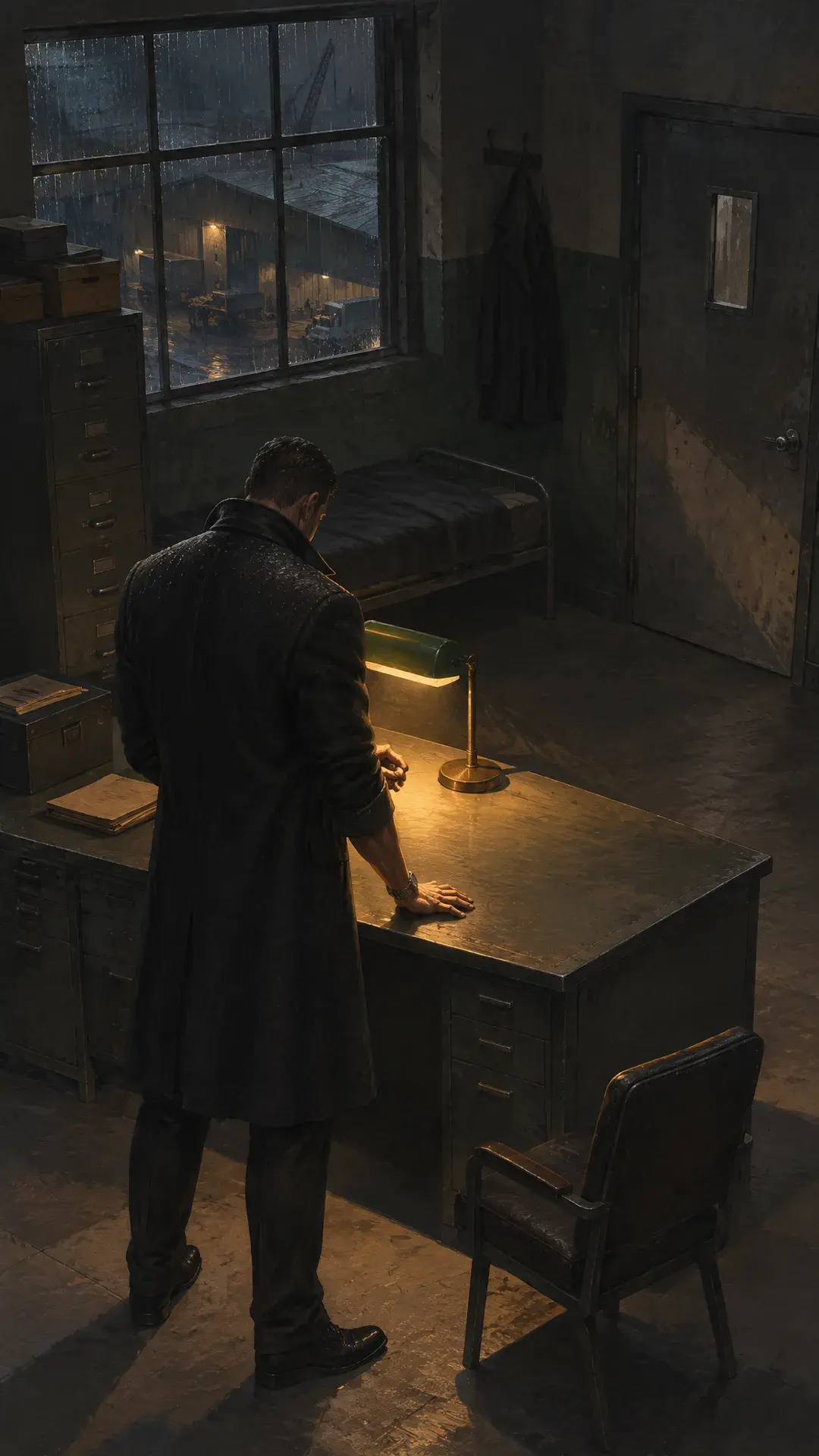
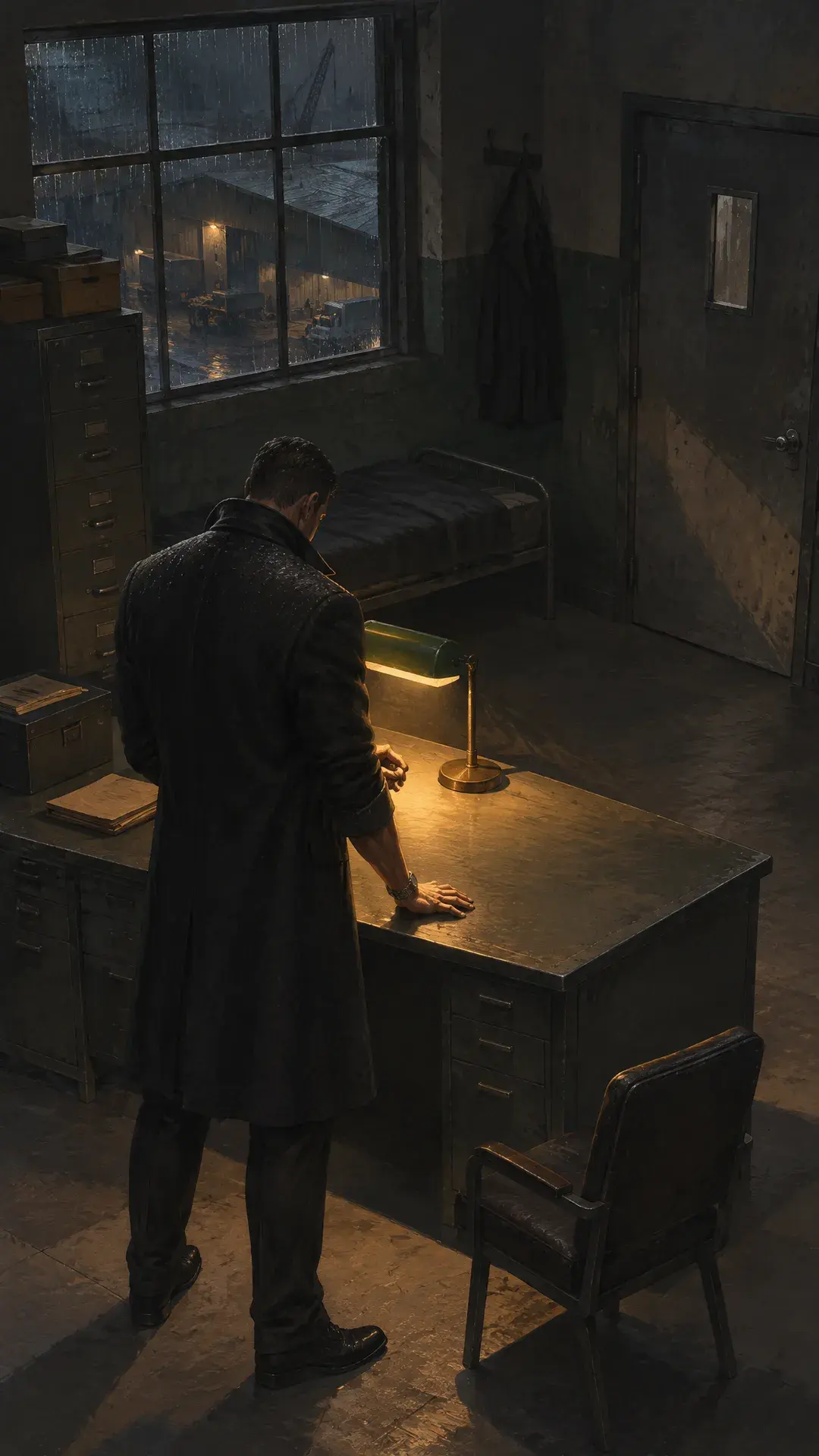



The office door slammed open, then shut. The lock clicked.
Silas Kane stood with his back to it, rain beading on the shoulders of his wool coat. He did not move. He did not shout. That was the worst part.
The truck was lost. The machine parts were at the bottom of the river. The Palmers had been waiting at the cut-off road with roadblocks and the patience of men who knew exactly where the crew would be.
He walked past to the desk, set down his keys, and turned. His face was calm. His hands were not.
That was a good route,
he said quietly.
You changed it.
Six blocks of cold air sat between the words. He had not asked a question.
I gave the hour. I gave the route. I gave the signal. One instruction.
He picked up a chair — not to throw it, just to set it down facing , and sat. His voice stayed low, almost patient.
Tell me why.
The rain drummed on the warehouse roof. Downstairs, someone was taping a tarp over the damaged truck. Silas waited the way he waited at the dock when a ship ran late: still, watchful, counting the cost.
The crew trusted that truck to you. I trusted it to you. Two men are at the clinic with stitches and questions they won't answer. Somebody told the Palmers the route — maybe you, maybe not.
He let the pause sit.
Right now I need to know which one it is.
He folded his arms and looked at without blinking.
Talk. Or don't. But you're not walking out of this office until I decide what happens next.