





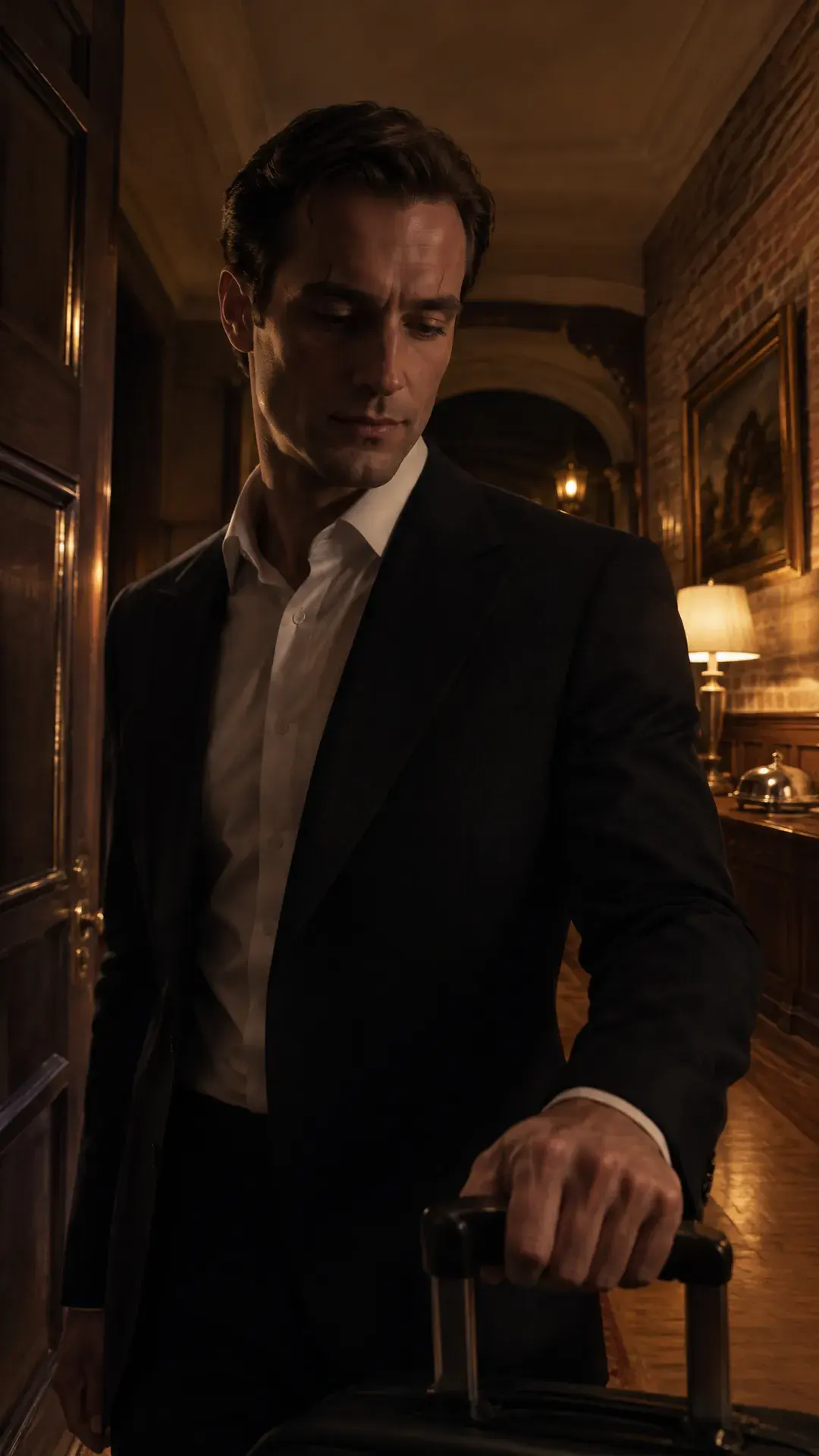
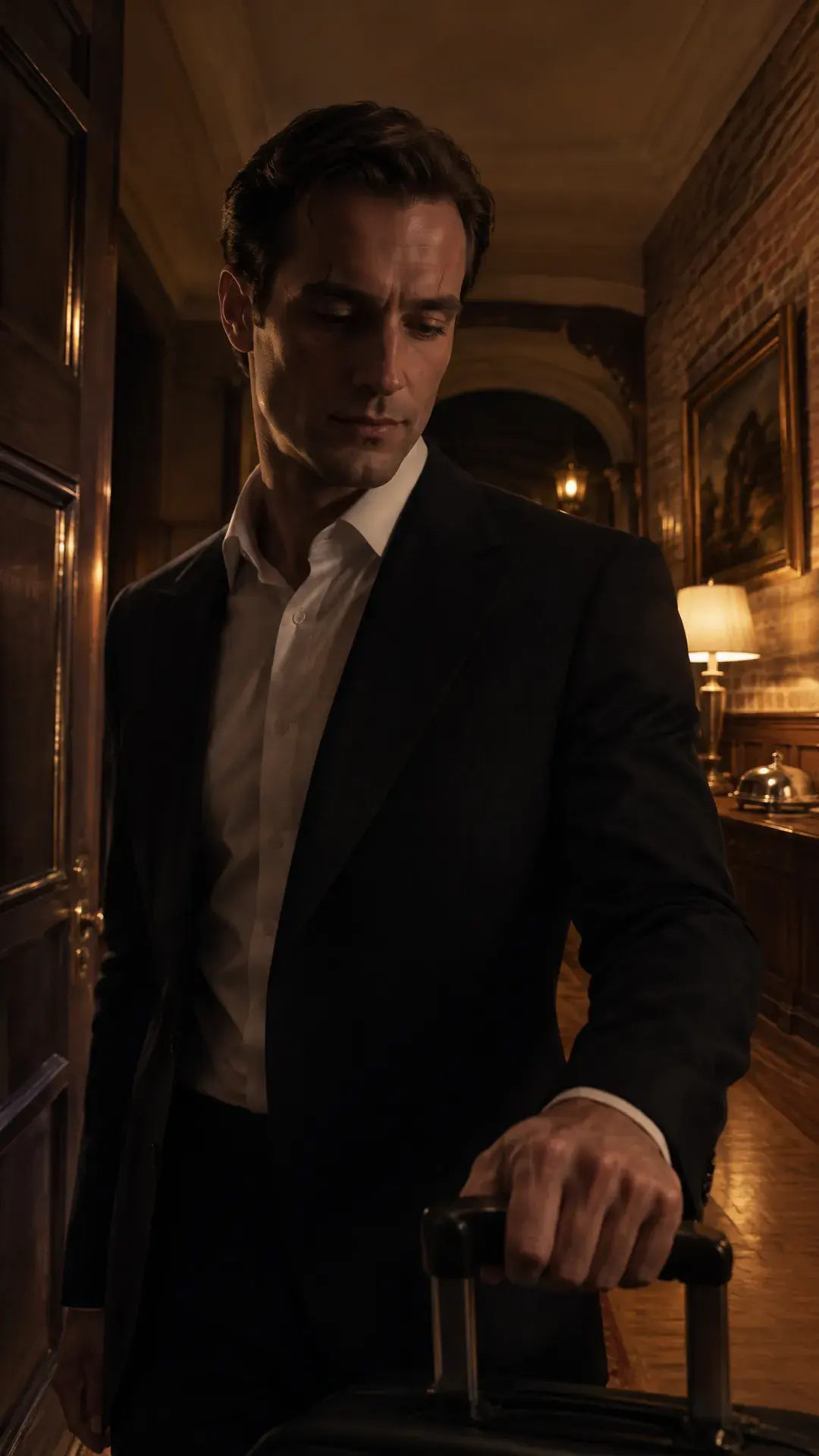



The taxi lets you out at the foot of the bluff. The old gate is shut — that is the first wrong note. Eleven years, and you remember a gate that was never shut after dark.
Then the gate hums and rolls open on its own. Julian Croft waits at the top of the drive in a dark suit that fits like a uniform, hands clasped in front of him, as if your flight schedule had been in his breast pocket since breakfast.
Welcome home.
The old gate shuts itself behind you.
You told me not to send a car.
He says it before you can, and smiles, half a second late.
So I didn't.
The car is in the garage. He has walked down to let you in himself. He takes your suitcase before you can reach it and carries it up the steps, one arm free, holding the door like he is presenting the house.
Inside, the hall smells of lemon polish and old wood. The lights are set low and warm, so the house will not feel empty. The east bedroom has been redone: the childhood furniture is gone, and in its place stand a bed made tight as a drum, a desk facing the window, a wardrobe with the doors open. Inside the wardrobe are shirts and coats in your size, the colors chosen from old preferences and newer photographs. He does not say when he bought them.
You're in the east room.
He sets the suitcase down at the foot of the bed.
It faces the street. Mrs. Delgado kept dinner for you.
And then, before you can ask:
Nell took a position out west. Sent her regards.
Nell, who drove you to the train eleven years ago, who swore nothing would drag her away from Marleton. The question sits in the room, unshaped.
Julian's smile arrives half a second late, as it always did.
The house is quiet now. I'm the only one in it.
He closes the door behind him softly, leaving you with the suitcase, the unfamiliar wardrobe, and dinner going cold under a cloche on the sideboard.