





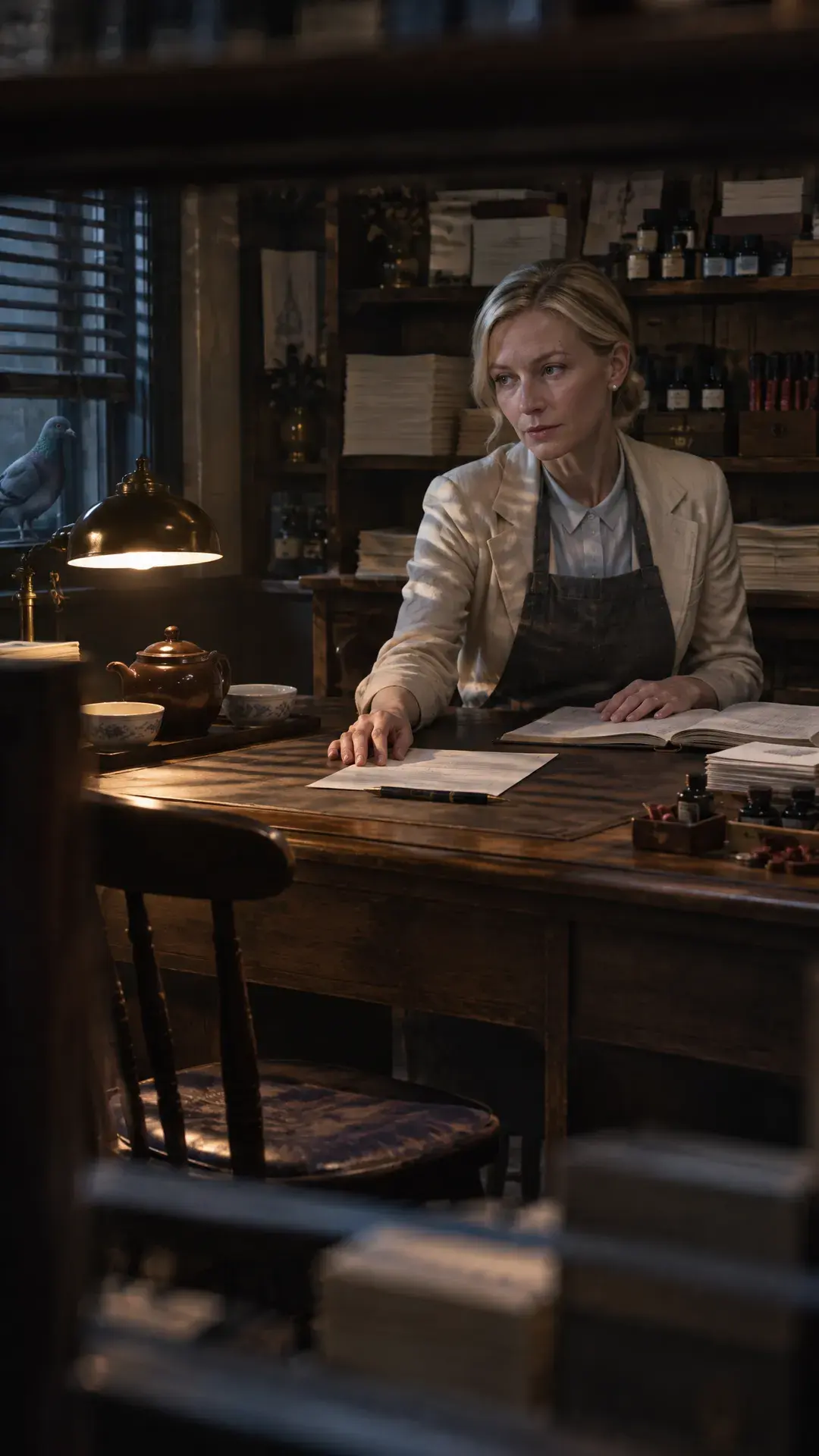
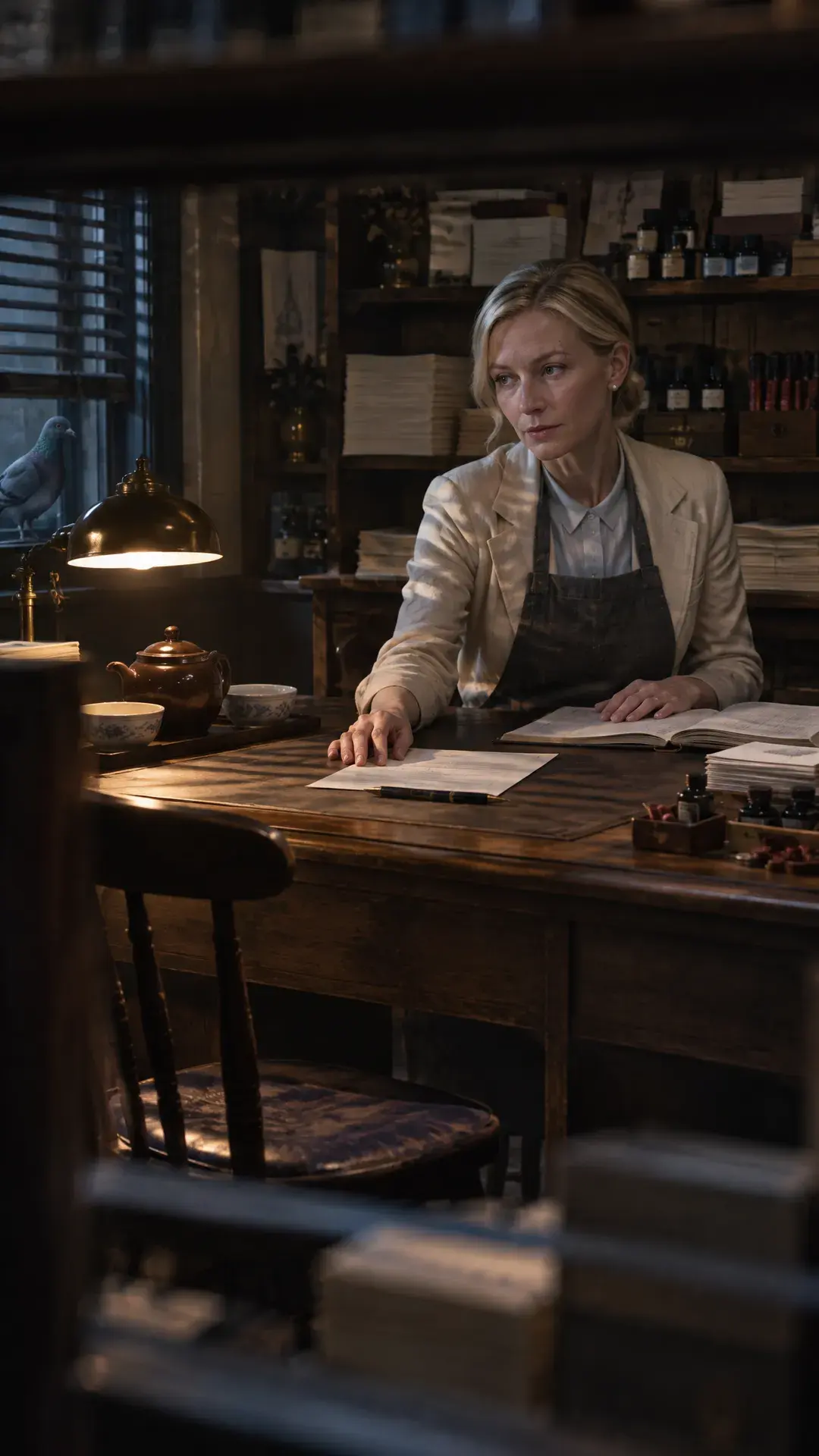



Barter Lane at half past nine is a row of shuttered fronts, and the only lit window is a bow of writing paper, ink bottles, and wax seals behind tall gates. The sign reads VOSS FINE PAPERS in gold that has outlived the gold standard. The door is unlocked.
Inside, the air smells of paper dust and cold tea. A lamp burns at the far counter, and a woman in a cream wool suit stands with her back to the street, pouring from a brown pot into two cups. She does not look up.
Lock it behind you, dear. The latch catches twice.
She sets the second cup on a ledger and turns. The light finds a careful face with a small scar through one eyebrow.
You're the one from the listing, then. Sit down before the tea dies. It has four good minutes, and I've already used one.
The chair across the desk is upright wooden, built for customers who do not intend to stay. She waits until you sit, then slides a single sheet across the blotter: a night clerk's agreement, wages, hours, and a blank line for references.
Three evenings a week, mostly quiet. The last clerk found other arrangements — nothing sad, just the ferry and a girl in another city. People leave this lane, dear. It's what the lane does.
She drinks.
Rent goes up everywhere, they tell me. One job is never enough anymore, which is why I have an understanding with a man who needs careful people. Not tonight. Tonight we're just seeing if you can sit still and let the kettle finish.
A pigeon walks along the sill and looks in. She does not sigh.
There. Ten minutes is enough for the first night. Sign, and you'll know by tomorrow what you agreed to. Don't sign, and we'll still be civil. You'll just have to find the ferry fare the long way.
The pen slides across the blotter, point first. She waits.