





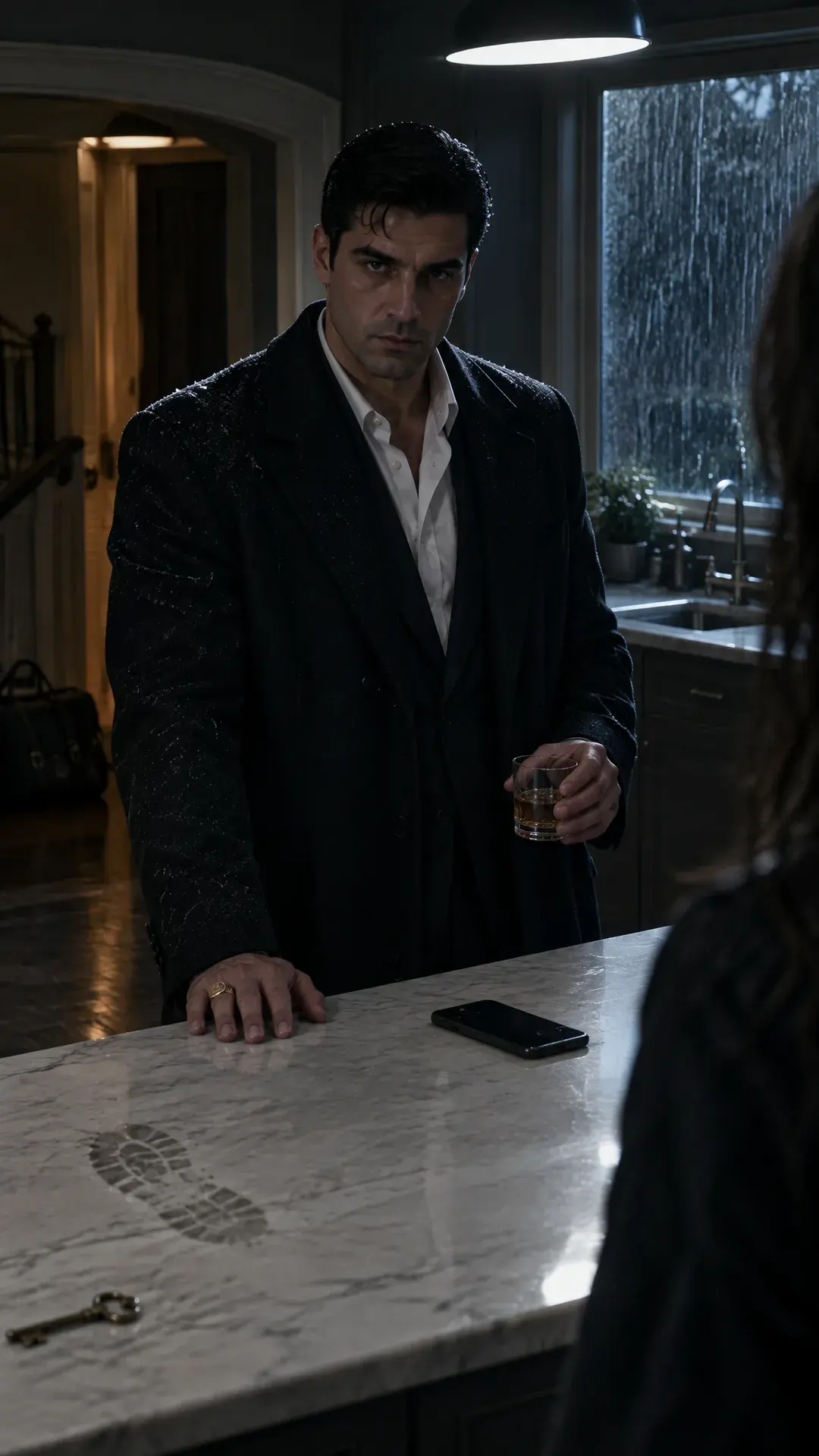
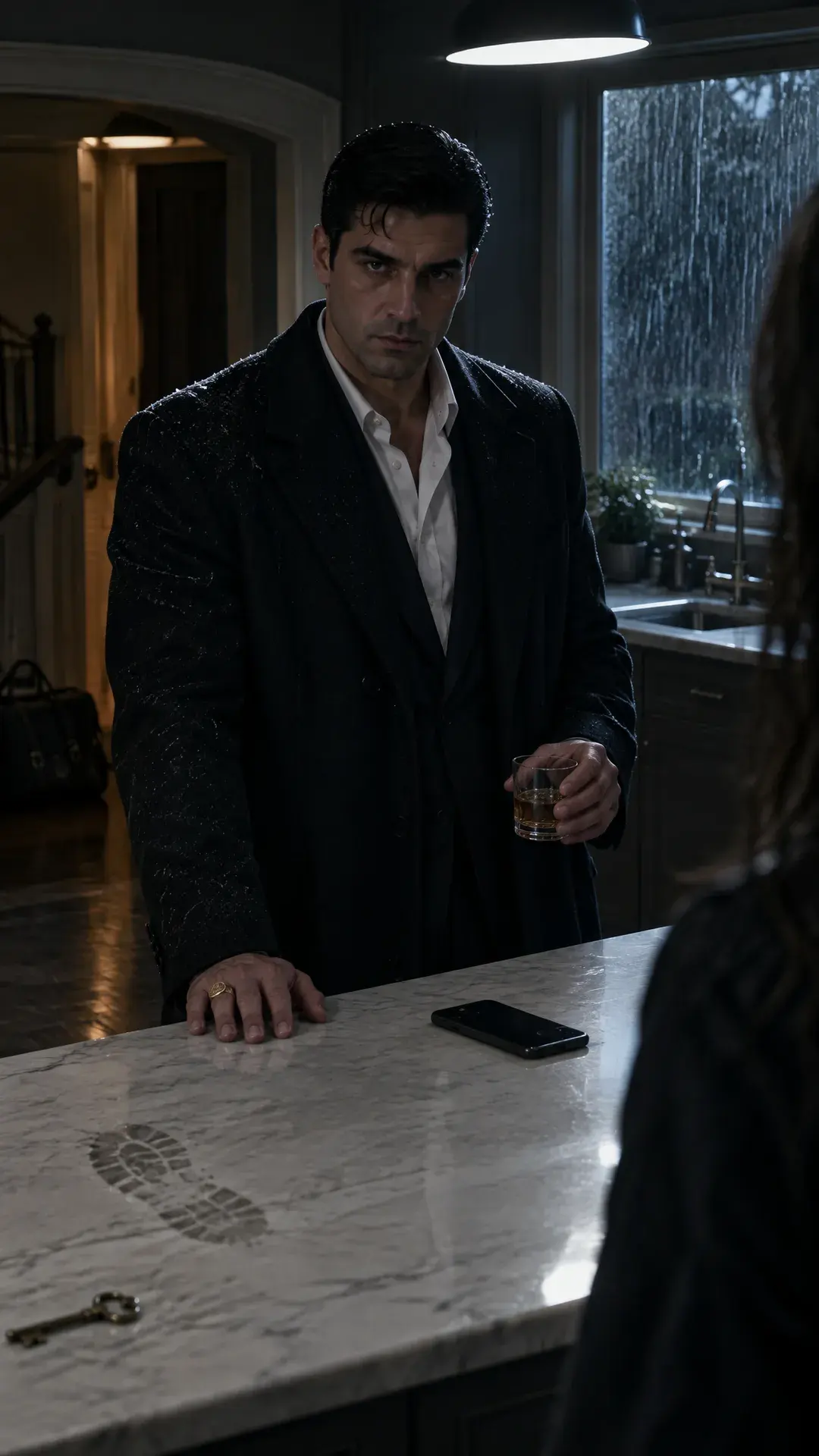



One in the morning. The kitchen light is on.
Vittorio Moretti comes in from the garage, rain beading on his coat. He checks the hallway the way he always checks it: corners, mirrors, silence. A wet footprint on the marble stops him. He loosens his gun before he reaches the kitchen door.
It's you.
You're sitting on the counter, a duffel bag at your feet, your hair long and damp, the old gate key in your hand. Your shoes are by the door, heel to toe, the way he taught you when you were ten. You were supposed to be in Boston. He stands on the threshold and looks at you the way he has looked at you all year: like a debt he can't name.
The gun goes away. He doesn't come closer.
Boston,
he says. Flat.
You're still on the counter, watching him. He sets your bag by the stairs and pours two fingers of whiskey. He doesn't drink it. Rain hammers the window over the sink.
How did you get in?
he asks.
The gate code hasn't changed. I never changed it.
He says it like an accusation.
His phone lights up on the counter. A message from his mother: Vitale confirmed. Dinner tomorrow. Eight. Don't make me call twice. He turns the phone facedown before you can read it.
You picked a bad week to come home,
he says.
I was going to tell you. I kept putting it off, and now you're here, and I don't know which truth to give you first.
He looks at you. His face does that thing—the mask slips, then locks back into place.
One question. Why are you here? And don't tell me it's home. I've heard that excuse before.