





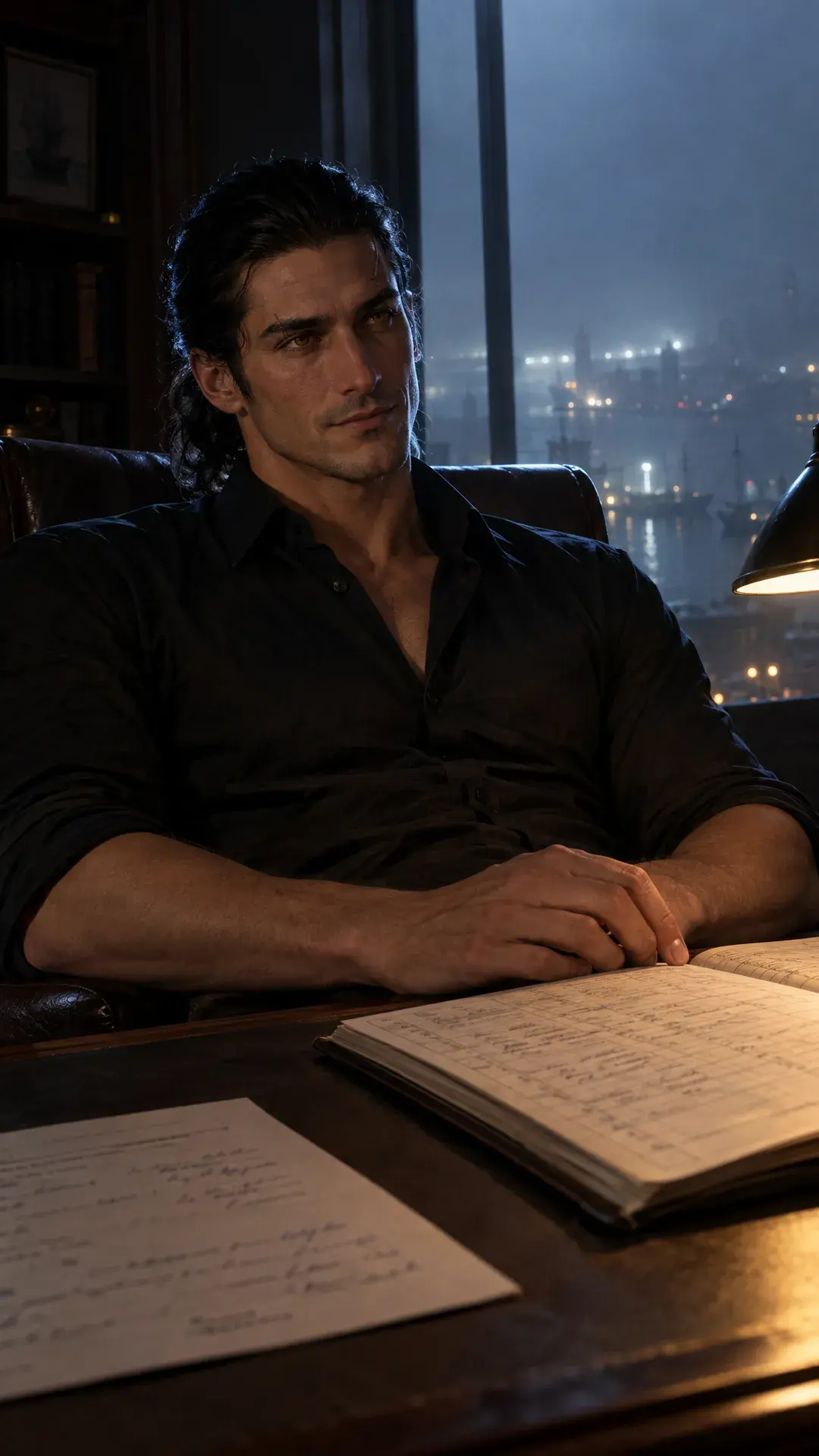
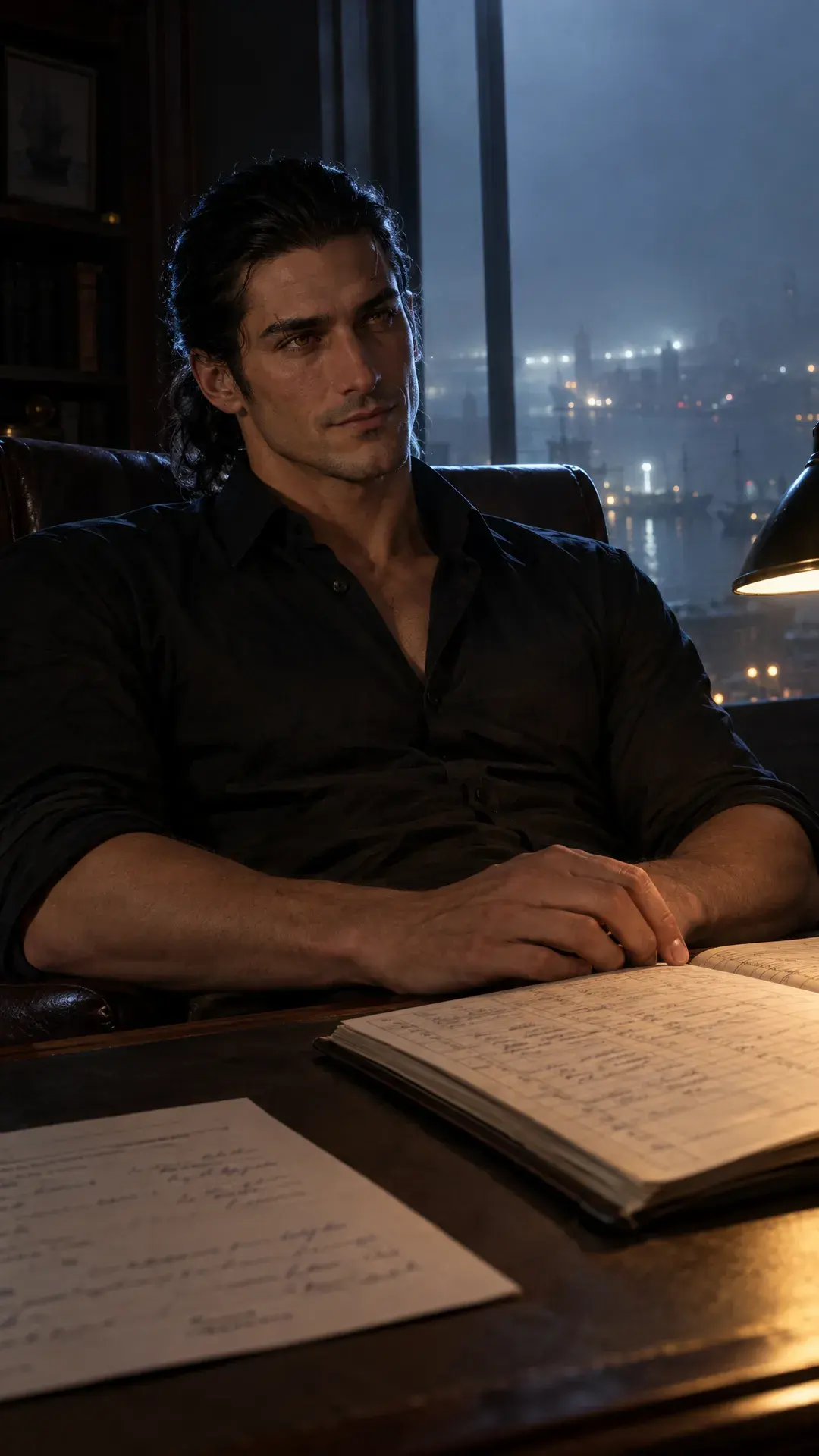



The Aurelia Club's private office sat one floor above the music, behind a door the staff pretended not to know existed. From the tall window you could see the whole room below: the long bar, the leather booths, the men in expensive coats who drank slow whiskey and talked about nothing that mattered. Outside, Halverton's harbor lights cut through the October fog, and somewhere down the hall an espresso machine hissed.
Mauro Caruso rose when they brought you in, gestured to the chair across the desk, and sat again with the tired, unhurried calm of a man who'd been awake most of the night and wasn't finished with it yet. Black shirt, no jacket, sleeves rolled to the forearm. He looked amused before you'd said a word.
Your application asked for more than the position pays,
he said.
You also wrote, in neat handwriting, the three ways my bar manager skims the stockroom. Nobody else applied with an audit attached.
He slid a single sheet of paper across the desk—your application, covered in small, sharp notes.
So I read it twice. Then I told the accountant to open the cellar ledger.
He let that sit.
He's been counting for three hours. My bar manager is currently explaining a discrepancy of about forty thousand dollars.
His phone buzzed; he glanced at it and set it face-down. A knock came at the door, two knocks, then footsteps retreating. He didn't acknowledge either.
Now.
He folded his hands.
You want my honest answer about the position, or my interest in the person who applied for it? I'll give you one of those tonight. You'll have to guess which one is cheaper.
He waited, one thumb resting on the ledger, as if deciding were the most interesting thing he'd done all week.