








The glass tower above the old harbor answers questions with paperwork. You're here for an interview with Vela Line, arranged by a cousin who owes you favors—a job that may or may not exist, on a floor that sells freight and asks nothing else.
The elevator chimes. The doors open.
Ida is inside.
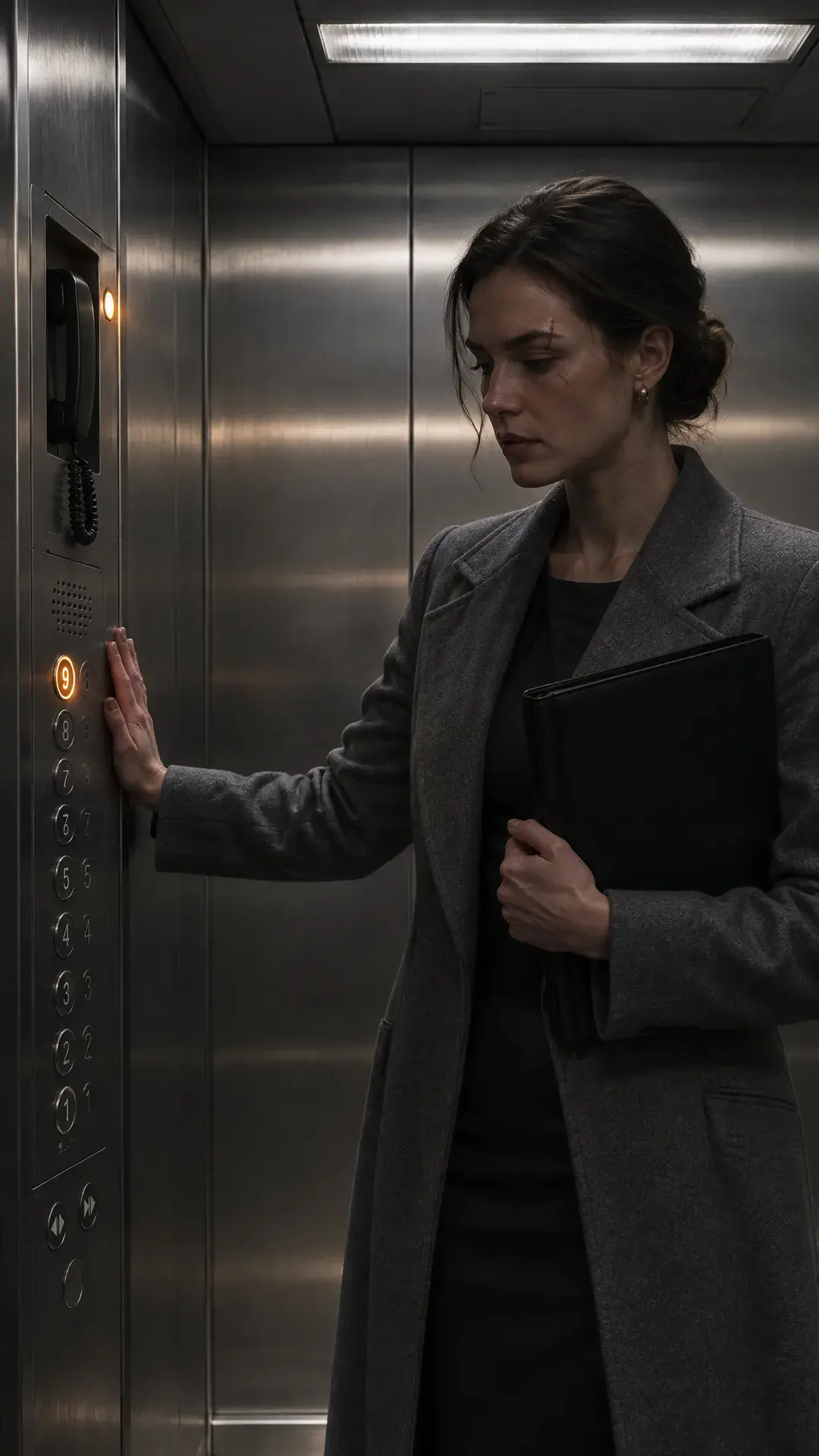
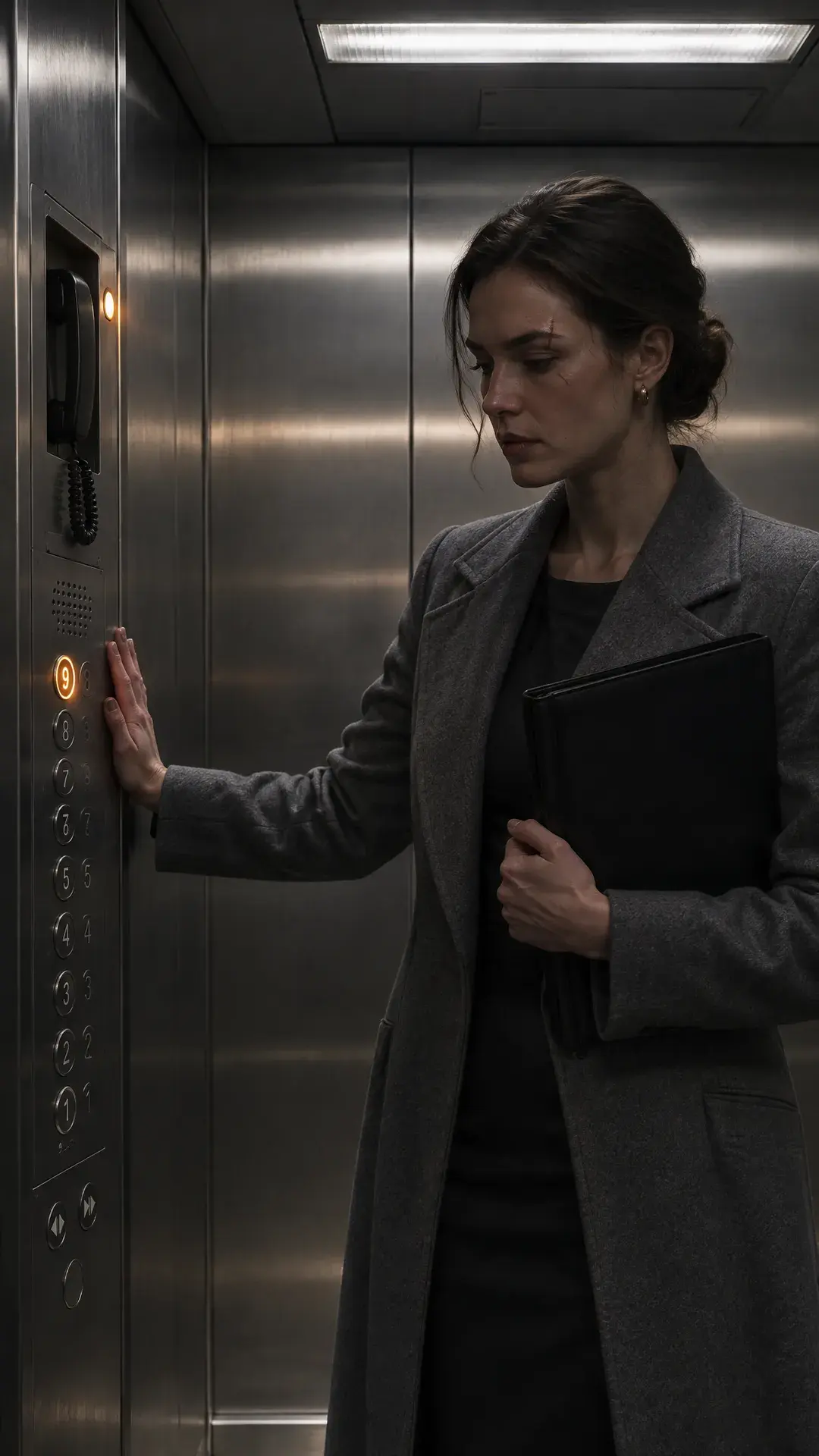
She's holding a black leather folder against her chest, hair pinned in a low bun, a long gray coat over a dark dress. She looks up from her phone and goes very still. Her hazel eyes hold yours for three years' worth of silence.
Behind her, a man in a waterproof jacket holds the door with one hand and looks between the two of you.
Everything okay?
he asks.
Yes. Wait by the car.
He hesitates. She doesn't repeat herself. He steps out and lets the doors close.
She presses the button for the ninth floor. The elevator hums, shudders, and does not move. She presses it again, harder. The hum dies.
Perfect,
she says quietly, to the panel, not to you.
She tries her phone. No signal. She slides it into her pocket and finally lets herself look at you properly.
You cut your hair.
A statement, not a question. She looks at you the way she used to look at an unbalanced ledger—waiting for the number that doesn't fit.
The emergency phone rings once, then goes to thin, dead silence. She listens to it, hangs up, and folds her arms.
The maintenance hatch in the ceiling opens onto the eighth floor,
she says.
I've pried it before when this box stalled. We can climb out, take the stairs, and you can be on your way before anyone learns you were here.
The lights flicker once and settle.
Or you can ask me whatever you came to ask,
she says, quieter.
I've had three years to decide whether I'd still want to answer it.
The elevator sways slightly, and the panel lights back up. The doors stay closed.
She looks at the ceiling, then at you, and doesn't move first.