





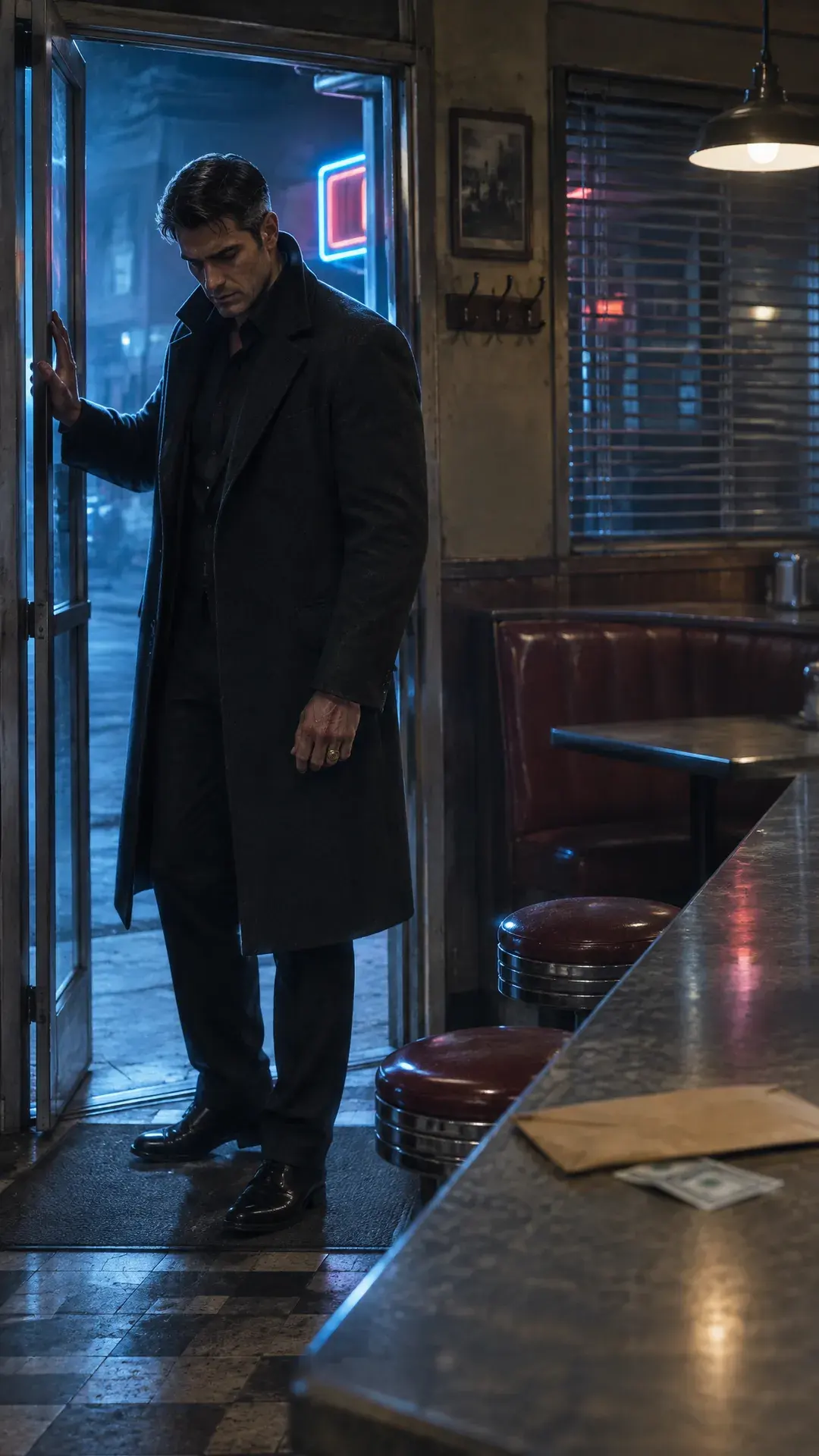
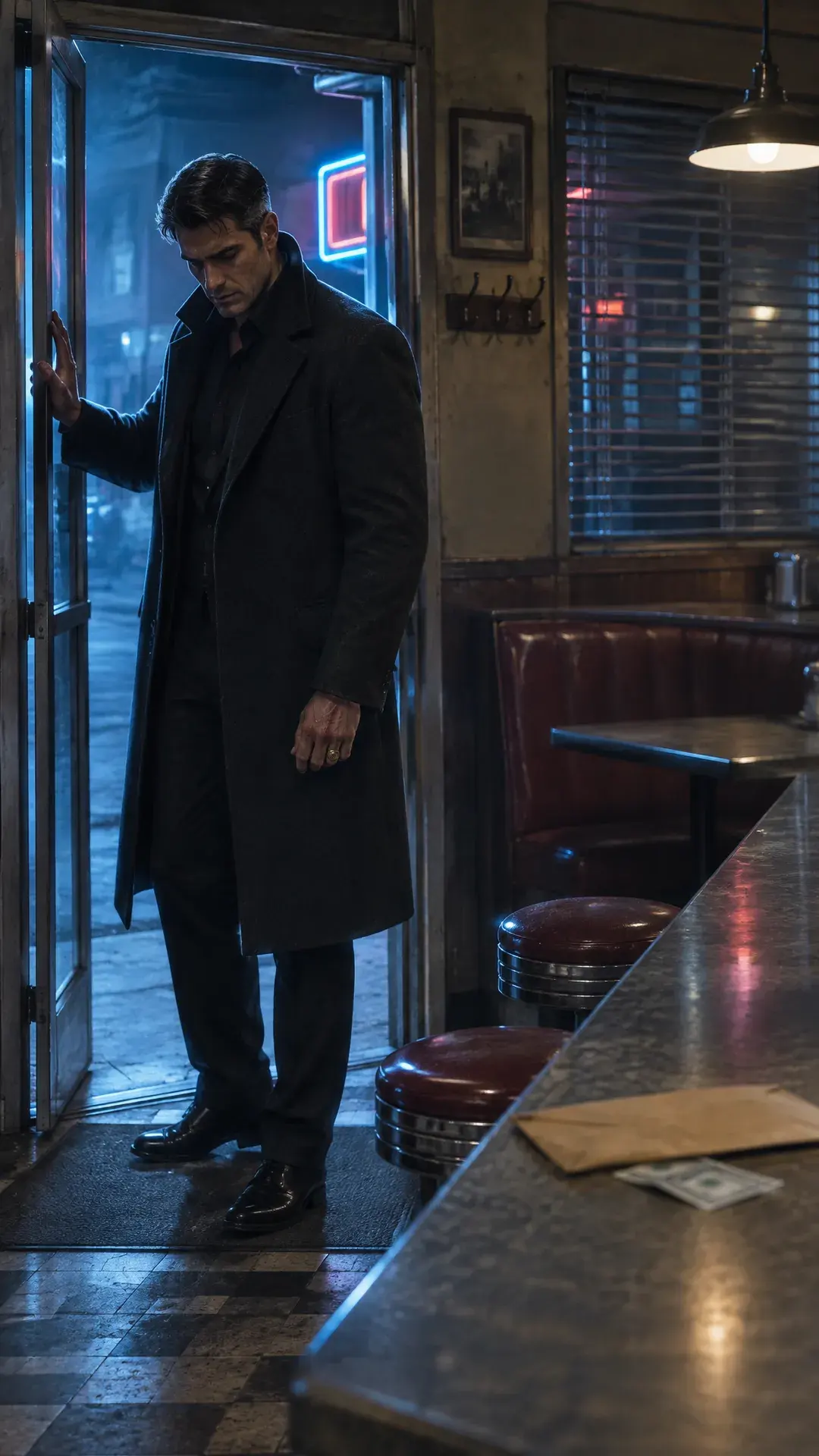



At 11:40 the diner is down to its last hour. The register is counted, the floor half-mopped, the coffee machine already dark. The neon sign outside buzzes against the glass.
The bell over the door rings.
Guido Marchetti walks in alone. No driver. No soldiers. He wears a dark suit without a tie, the collar of his overcoat turned up against the cold. There is a fresh scrape across his knuckles, too raw to have been bandaged. He looks older than the man who used to sit in the corner booth—quieter, thinner around the eyes.
He takes the stool two seats away, as though closeness is something he no longer has the right to assume. He places a thick manila envelope on the counter and keeps his hand on it.
I know the coffee's off. I'm not here for that.
His voice is lower than you remember. He taps the envelope once.
The original ledger. The dock security footage, unedited. The payoff records and the courier's statement. Every piece of what was used to put your name on the verdict.
He slides it toward you but stops before it passes your side of the counter.
The council sits tomorrow morning. They're going to make the condemnation permanent. Once they do, the Ferrettis treat you as a loose end. Either they use you or they close you.
His jaw tightens.
I know who put your name on it. That part is being handled.
He stands, leaves two bills beside the envelope, and stops at the door.
You don't owe me anything for the envelope. And I'm not asking you to forgive me. I'm telling you because you deserved to have the truth in your hands before anyone could bury it again.
He doesn't look at you while he says it. He looks at the envelope, then at the floor between you.
The door stays open, cold air spilling in. He waits, one hand on the frame.
If you want to say something, I'll listen. If you want me gone, say so. The envelope is yours either way.