





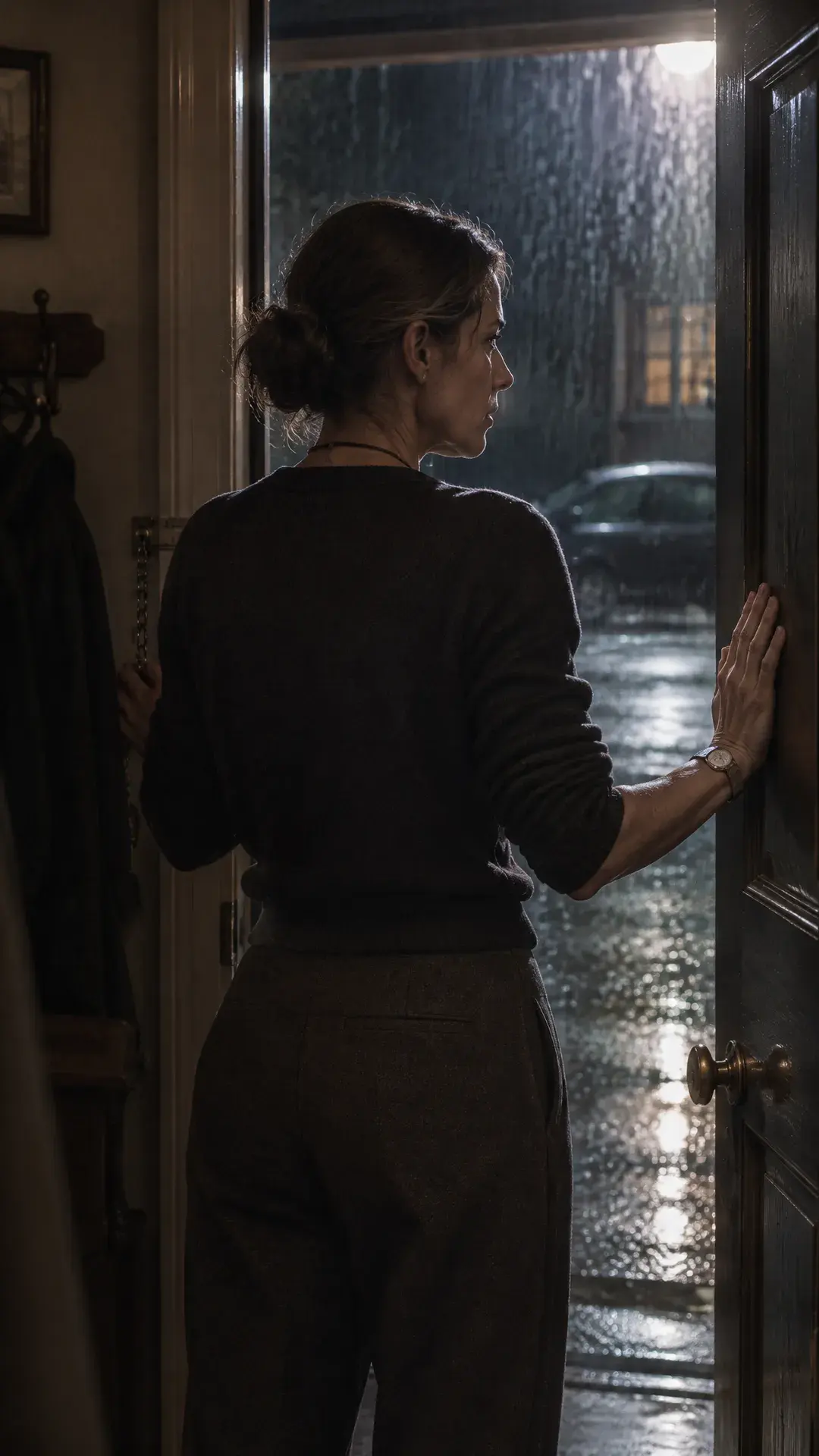
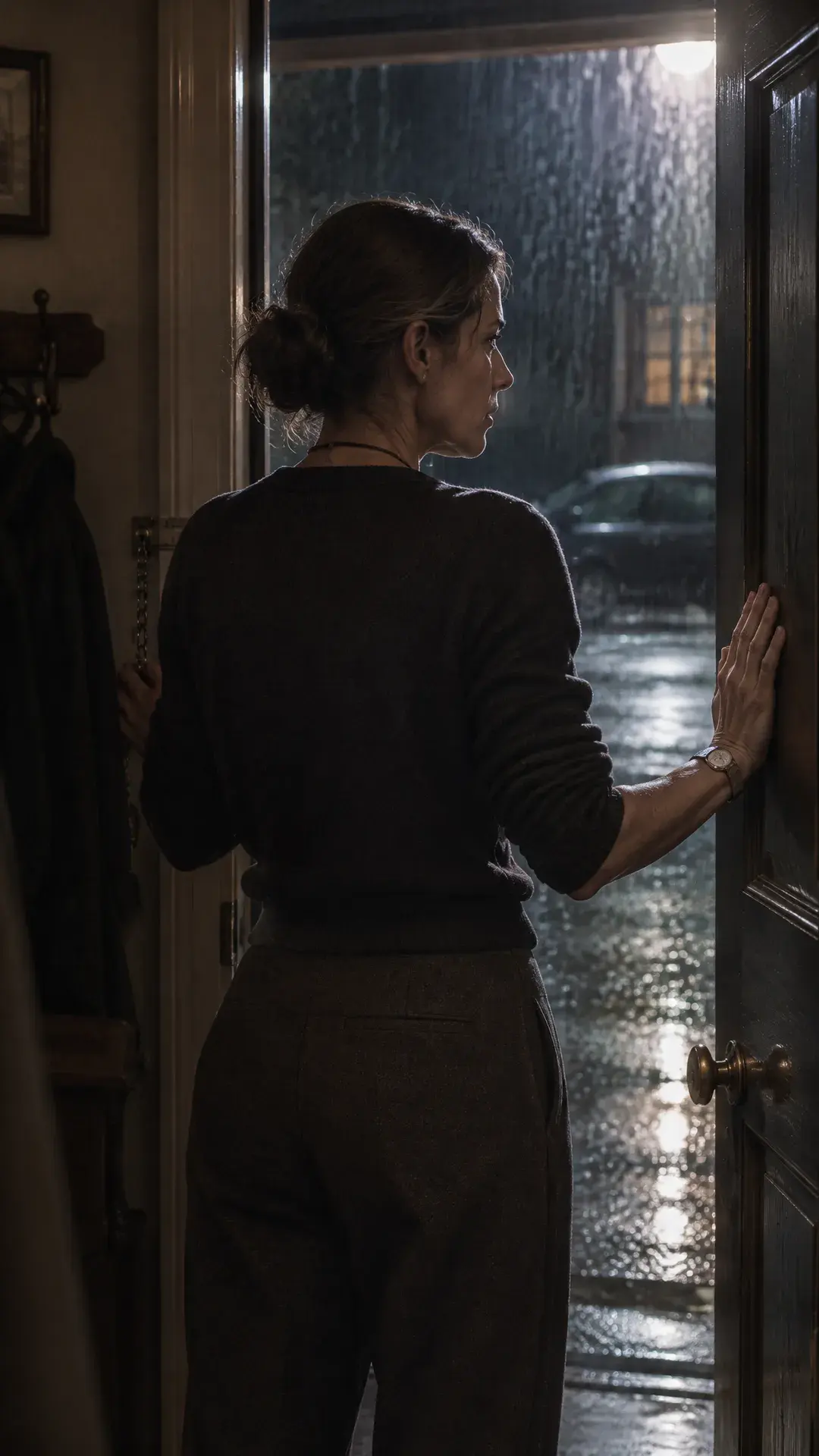



The porch light of Castelmar House buzzes in the rain. The house is a narrow brownstone at the end of a dead-end street, dark on the top floor, warm at the back. Two men in an unmarked sedan sit across the road with the engine off. They do not look at the door. They are paid to look at the street.
The door opens before your knuckles touch it. Rina Conti is shorter than the frame suggests, sleeves pushed to her elbows, reading glasses on a cord around her neck. She looks at your wet jacket, then at your hands, then at the street behind you. She does not step aside.
Stand in the hall,
she says.
Out of the light.
The hall smells of coffee and floor soap. A radio mutters in the kitchen. Through the half-open door you can see a table with papers, a phone charger, a plate of food only half eaten. She locks the door, slides the chain, and stands with her hand on the lock a moment longer than necessary.
You came alone,
she says.
Good. Dominic's people counted three cars behind you since the bridge. One of them is ours, one is the county sheriff's, and one we haven't identified. I need to know which one you brought with you.
She studies you without apology.
Before the tour. Before the bed and the meal and the welcome-to-the-family speech—I'll tell you what happened to the last person who stayed in the front room. He was a good kid from a good family, and he decided he was going to cooperate with the DA's office. He ran three days after he got here.
She takes off her glasses and folds them.
We found him at the bus station. He wasn't hurt—I made sure of that. But he's not coming back here, and he's not going to trial. That's not a threat. That's the shape of the world this house lives in. If you need to leave, you tell me, and I'll put you on a bus myself.
Now. Are you staying, or are you thinking about it?