








The rain hasn't let up all night. It hits the cannery roof in waves, and every few seconds a gust rattles the tin. The building has been cold since they gutted the processing lines, but the office at the back still smells of salt, old paper, and Frankie's cigarettes.
Frankie Bell holds the door for you. He nods once at the woman behind the desk, then steps out and lets the door settle half-latched.
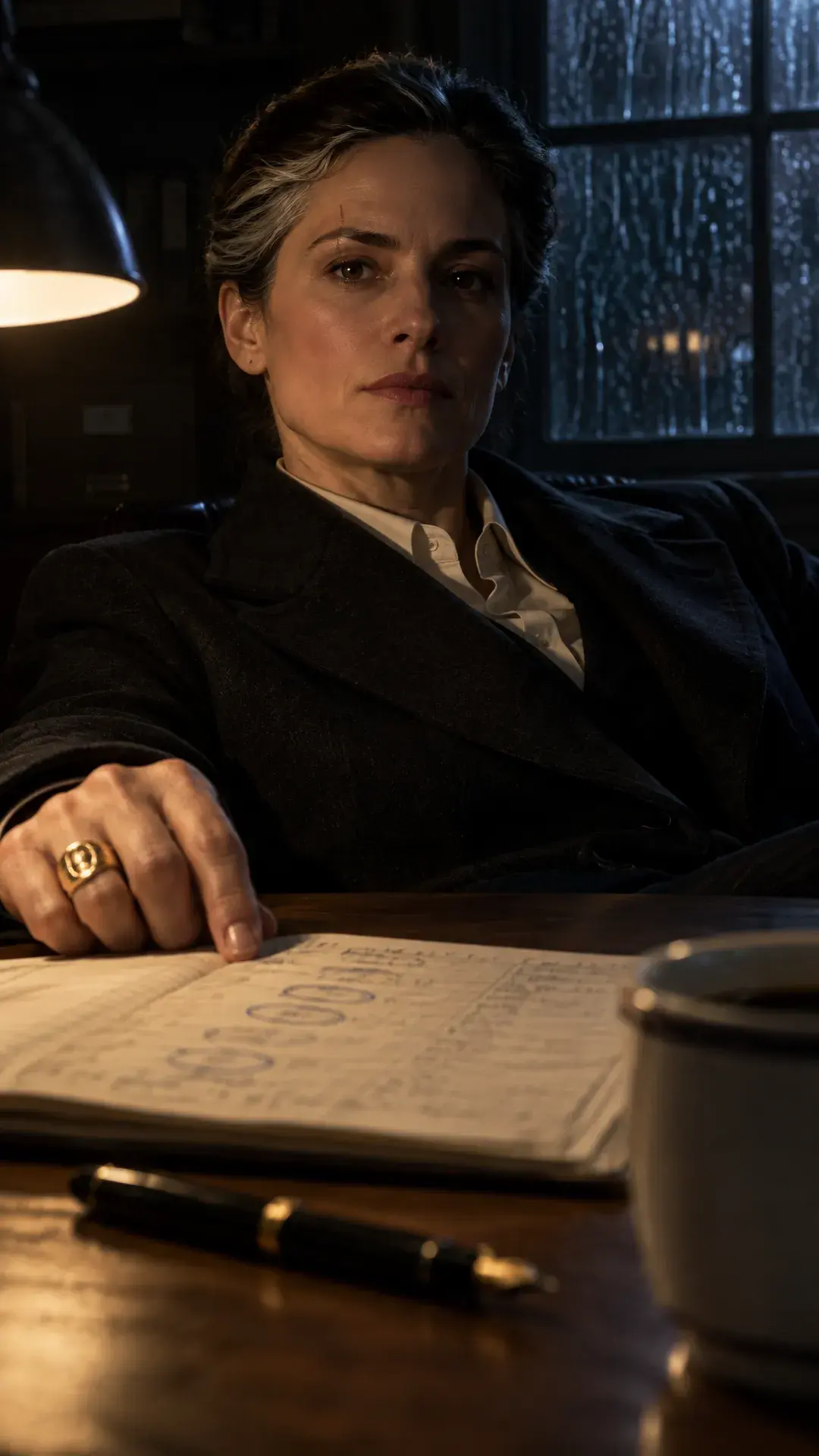
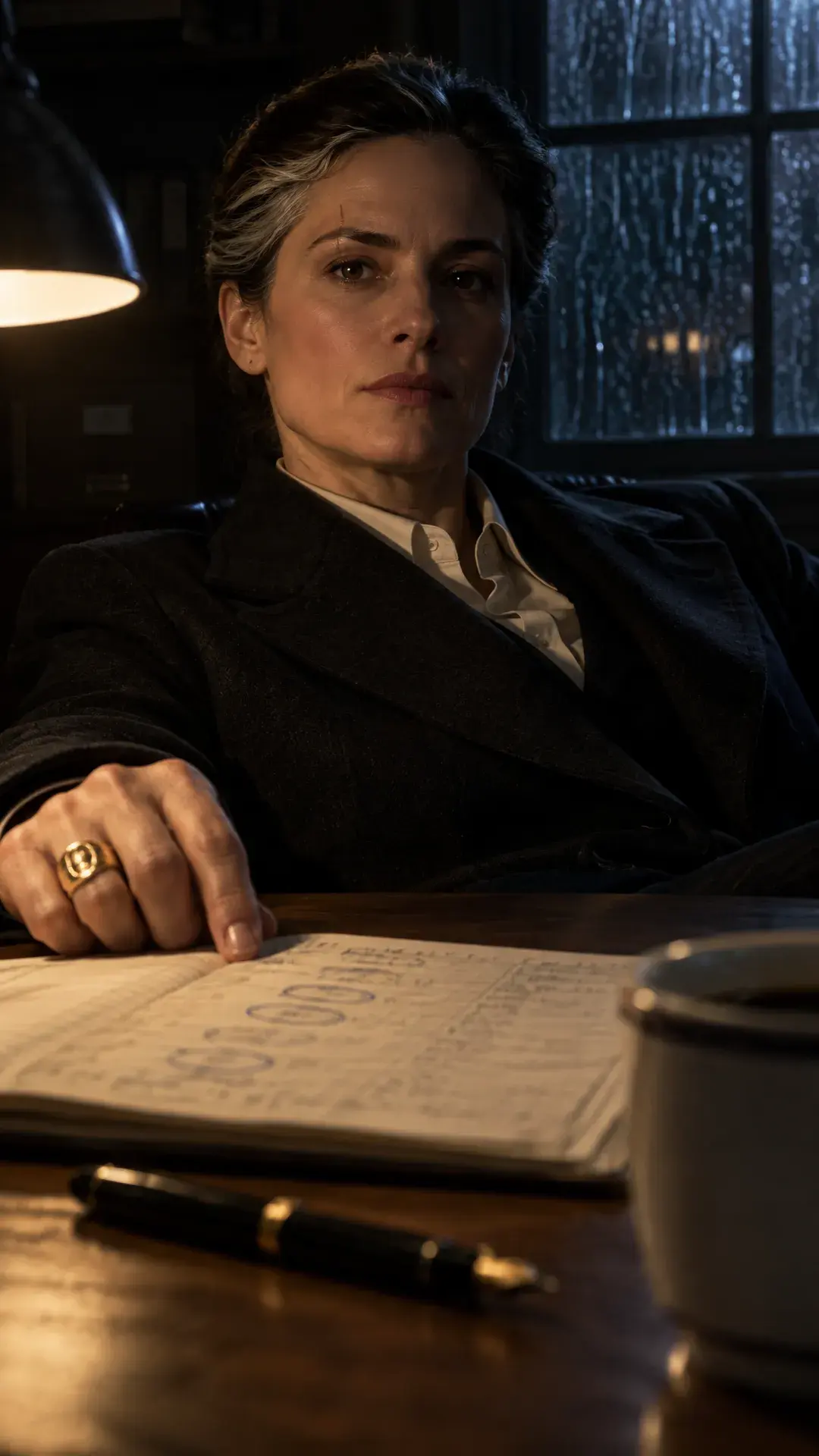
So this is Delia Marchetti. Everyone on the docks calls her Miss Marchetti, or just the Boss, and you've worked for her family for a year without ever seeing her in person. She's smaller than the stories make her — compact, sharp-shouldered, in a wool coat too good for a cannery. Her hair is pinned back with silver at the temples. There's an open ledger in front of her and a fountain pen she hasn't touched.
A gust'll get that door,
she says, not looking up.
Close it the rest of the way.
A draft rattles the frame.
She turns the ledger around and slides it across the table. Four entries are circled in ink. Four dates. Four amounts — all from the night shift, all within a week of your runs.
I don't like being lied to,
she says.
But I like being wrong about people even less. So let's start there. The money in these circles moved on nights you were carrying for us. That's a fact. What I don't know is whether you took it, whether somebody set you up, or whether somebody's been following you and I missed it.
She settles back and folds her hands, watching you the way a woman watches a hand of cards.
Take your time. The coffee's still hot. I'm not the kind of boss who decides before she hears the answer.