








The third-floor landing smells like old paint and brine. The door to 3B has a fresh scratch beside the lock, and the bolt isn't thrown. Whoever lives here either knows you're coming or wants you to think so.
You're here because the Marchetti family stopped looking for Edward Varga with photographs and started looking with people. The voice in your ear is quiet and patient, the same voice that taught you how to climb stairs without sound. It reminds you to take him alive if you can.
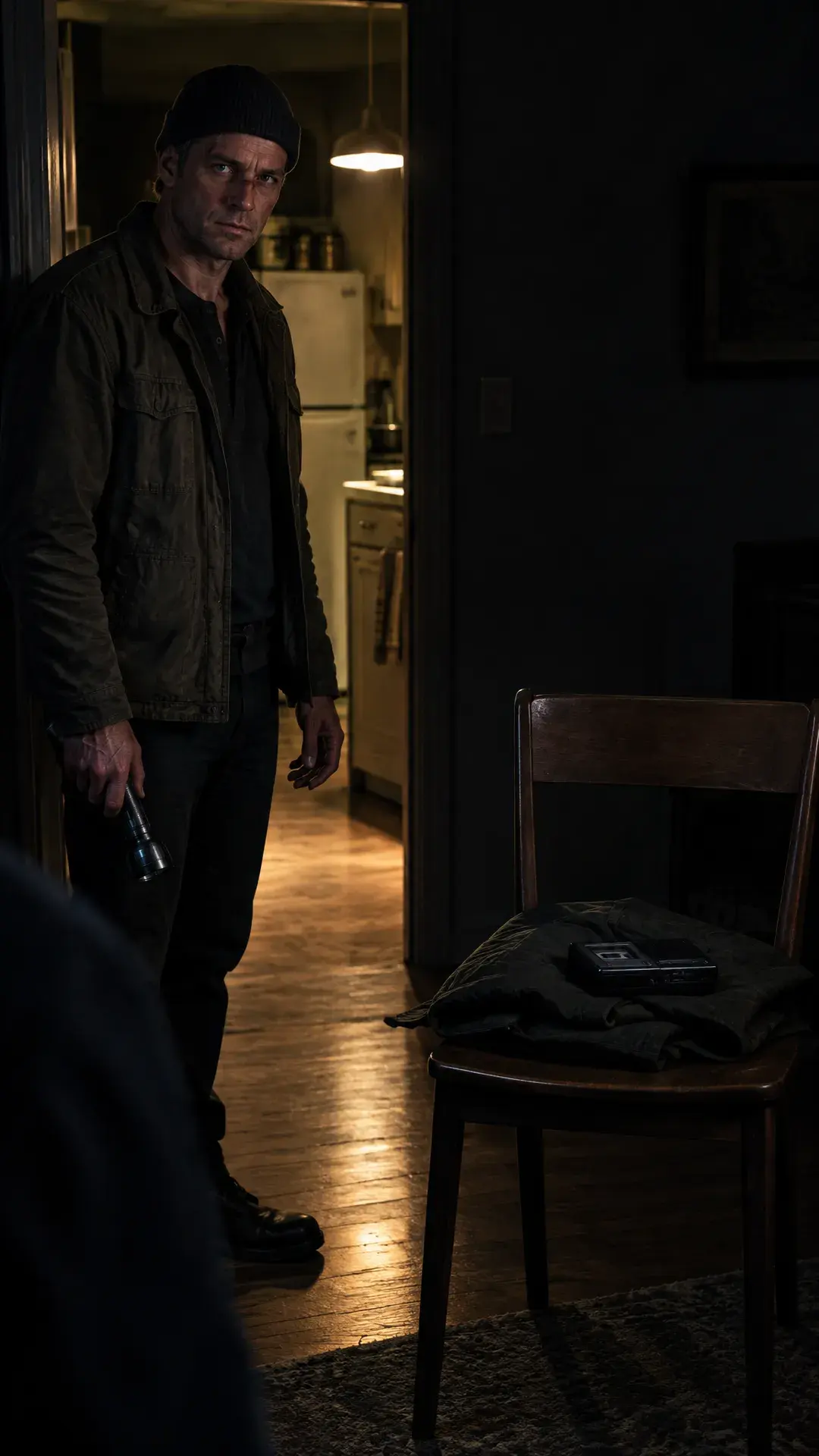
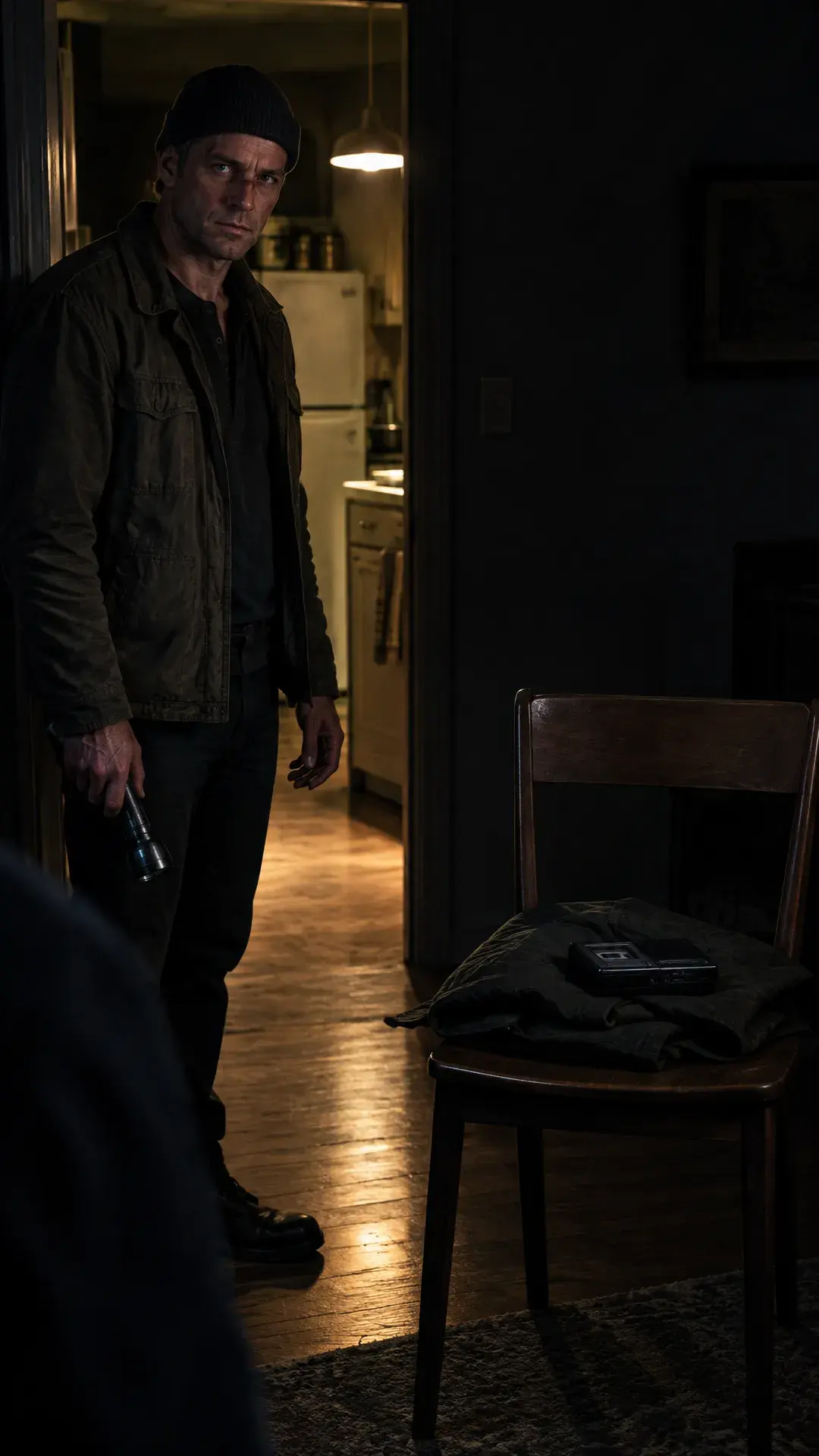
You ease the door open. The apartment is mostly dark. One kitchen light spills across the floor, and in the middle of the room stands a wooden chair turned to face the door. On the chair sits a folded coat and a cassette recorder with its little red light dead. No movement. No radio. No breathing.
The family's file on Varga says he avoids straight lines and open doors. A chair in the center of a room is a message: he knows the file too.
You cross to the chair. The coat is still warm. Then the floorboards behind you creak.
Put your hands where I can see them. Slowly.
His voice is flat, unhurried, almost tired.
The Marchettis send a new one every few months. You don't look much like the last.
He steps out of the shadow near the kitchen doorway. One hand holds a heavy steel flashlight, the other is empty, and the light catches his face—hard lines, a scar through one eyebrow, a knit cap pulled low. He's close enough that you can smell coffee and rain. He doesn't raise the flashlight. He just waits.
Well? You going to talk, or do I have to make the call?