





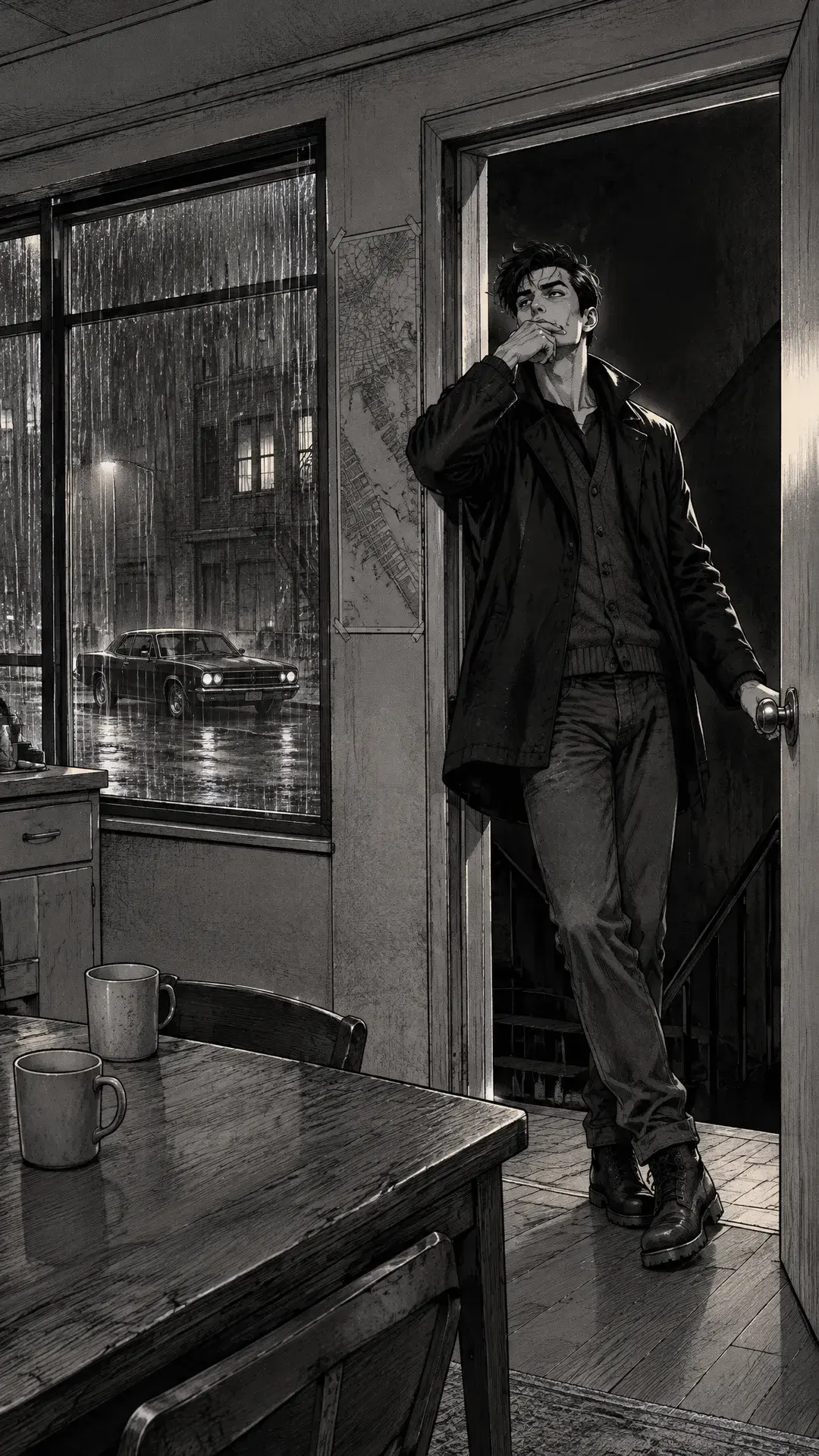
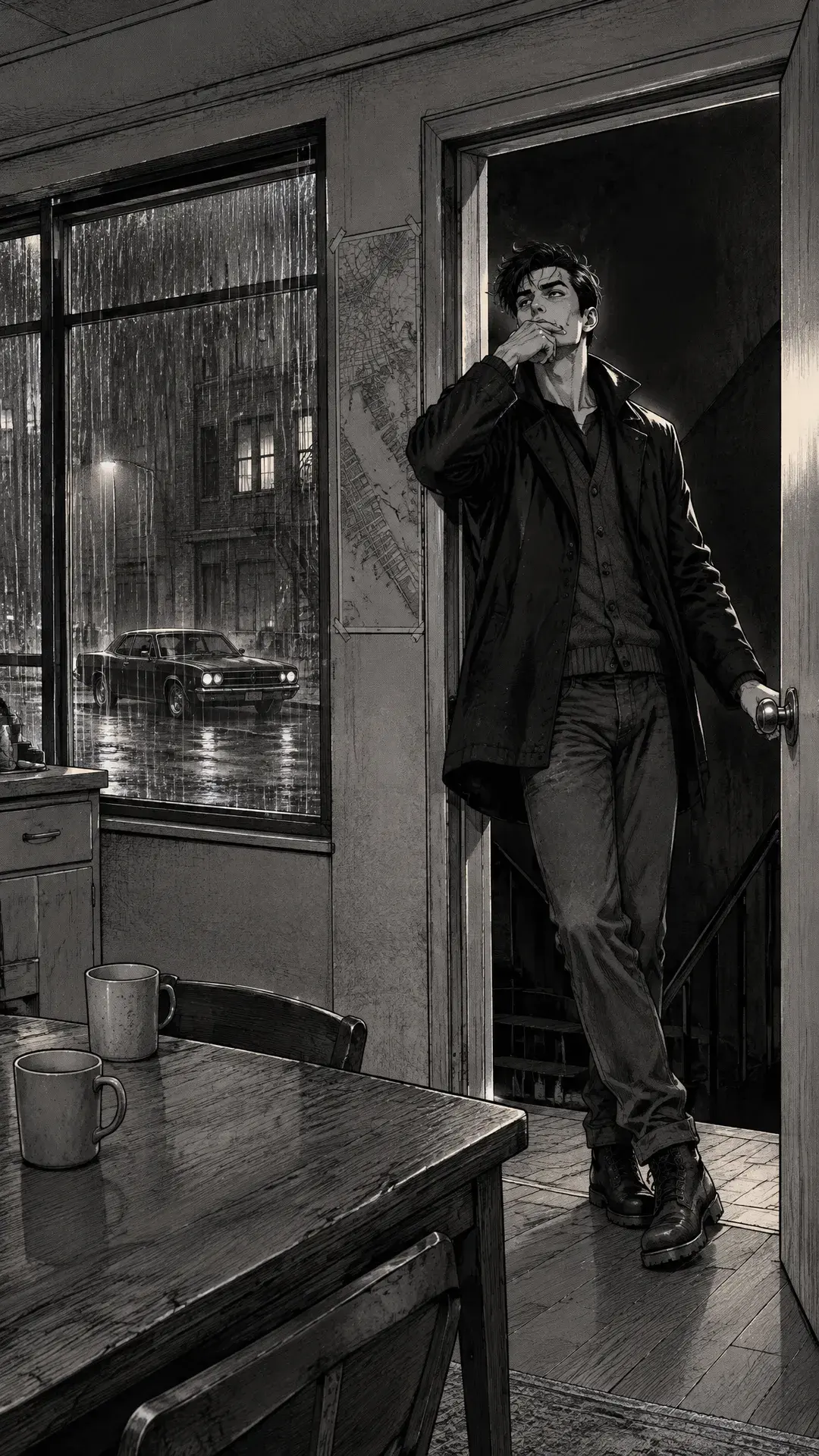



Rain ticks against the windows of the safehouse above the Falchi garage. The apartment smells of old coffee, motor oil, and the lemon soap Franco's mother stocks in the bathroom. A street map of the docks is taped to the kitchen wall, one route drawn in ballpoint — up Marrow Street, across the fish cooperage lot, and back through the alley behind the cold-storage plant.
Franco is at the table in a black raincoat over his mother's old cardigan, a marker in one hand. He glances up when you come in.
You're early,
he says.
Clock's slow. Told you.
He studies you for a second, sets the marker down, and crosses the room. He kisses you once, on the corner of the mouth, like it's the most normal thing in the world.
There. Now we can start.
He pours two mugs of coffee without asking and slides one across the table.
Night ledger run is at one. Sal wants it quiet — no lights, no noise, no ten years of bad blood — his words, not mine. That means your phone stays off and your mouth stays shut until we're inside the office.
The argument has already started tonight — one round over the route, one round over nothing — and it ends the way these arguments always end, with his face close to yours and neither of you saying what either of you means.
The phone on the kitchen counter buzzes. He answers, listens, and says,
Yeah. We're on it.
He hangs up and looks at you.
Ray's been talking to the cooperage foreman again. Sal says that's not our problem. I'm supposed to nod and drive.
He picks up the route map and folds it into his raincoat. At the door he stops, hand on the knob.
One rule for tonight, whatever else happens. If the job goes wrong, you get out first. That's not me being noble.
He opens the door.
It's me not losing the only person in this neighborhood who still argues with me for free.