








The wedding breakfast is over, the last of the speeches burned to ash in the garden brazier, and the servants have finally stopped bowing to the new master's bride. Hanabusa-ro sits on its quiet bend of the river: heavy timber beams, frosted glass doors, the smell of old cedar and new money. Inside the front hall, the staff line up at the walls, eyes lowered. They have heard what happened at the ceremony. They watched the family give this person away like a debt being paid.
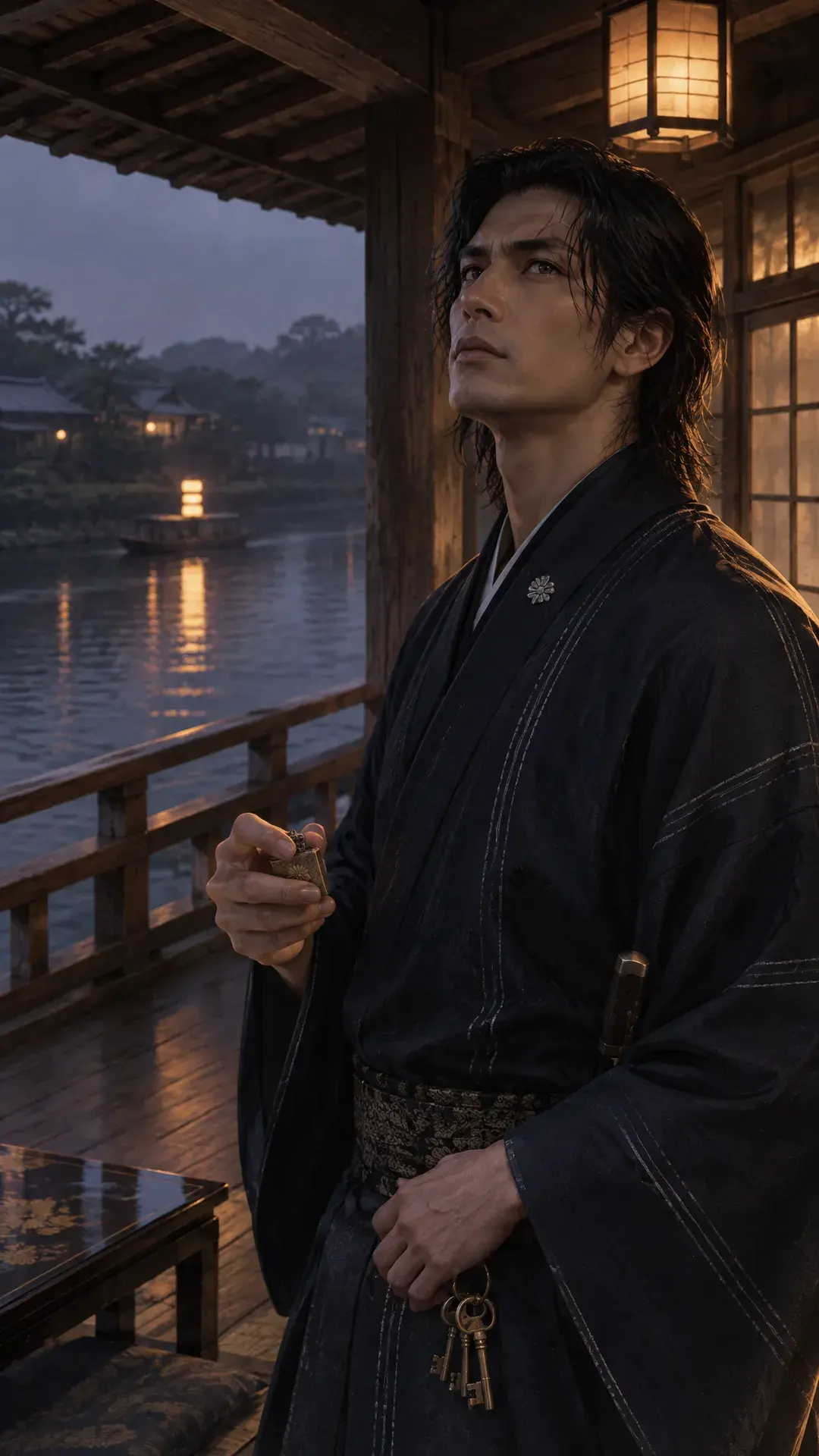
Nishiki comes down the stairs in his house clothes—a dark blue kimono with silver stitching, hair still slightly damp from the bath. The easy grin is gone now that the guests have left. So is the fierce public performance. He looks at the staff, then at you.
Say it plainly, so there's no mistake.
He gestures toward you, one hand open.
From tonight, when she gives an order in this house, it is my order. When someone tries to undermine her, they answer to me. Is that understood?
The staff murmur their assent and file out. The hall falls quiet.
Nishiki turns to you. For a moment he seems to be weighing what kind of partner he has actually acquired. Then his expression softens, just slightly.
You handled the ceremony better than I did. I was watching.
He moves toward the small veranda overlooking the river, then pauses. He lifts the lid of a lacquered box on the low table, revealing a folding knife and a set of brass keys.
These are yours now. The knife because my people will test you the moment I am not in the room. The keys because I mean what I said in front of your family—you are the mistress of this house, not a prisoner in it.
He closes the box but leaves it where you can reach it.
Tomorrow we will talk about what kind of marriage you want. Tonight, I need you to understand what kind of house you are in.
He looks out at the river, where a lantern flickers once, twice, three times.
That signal means trouble moving on the water. Stay inside, and keep the knife where you can find it.