





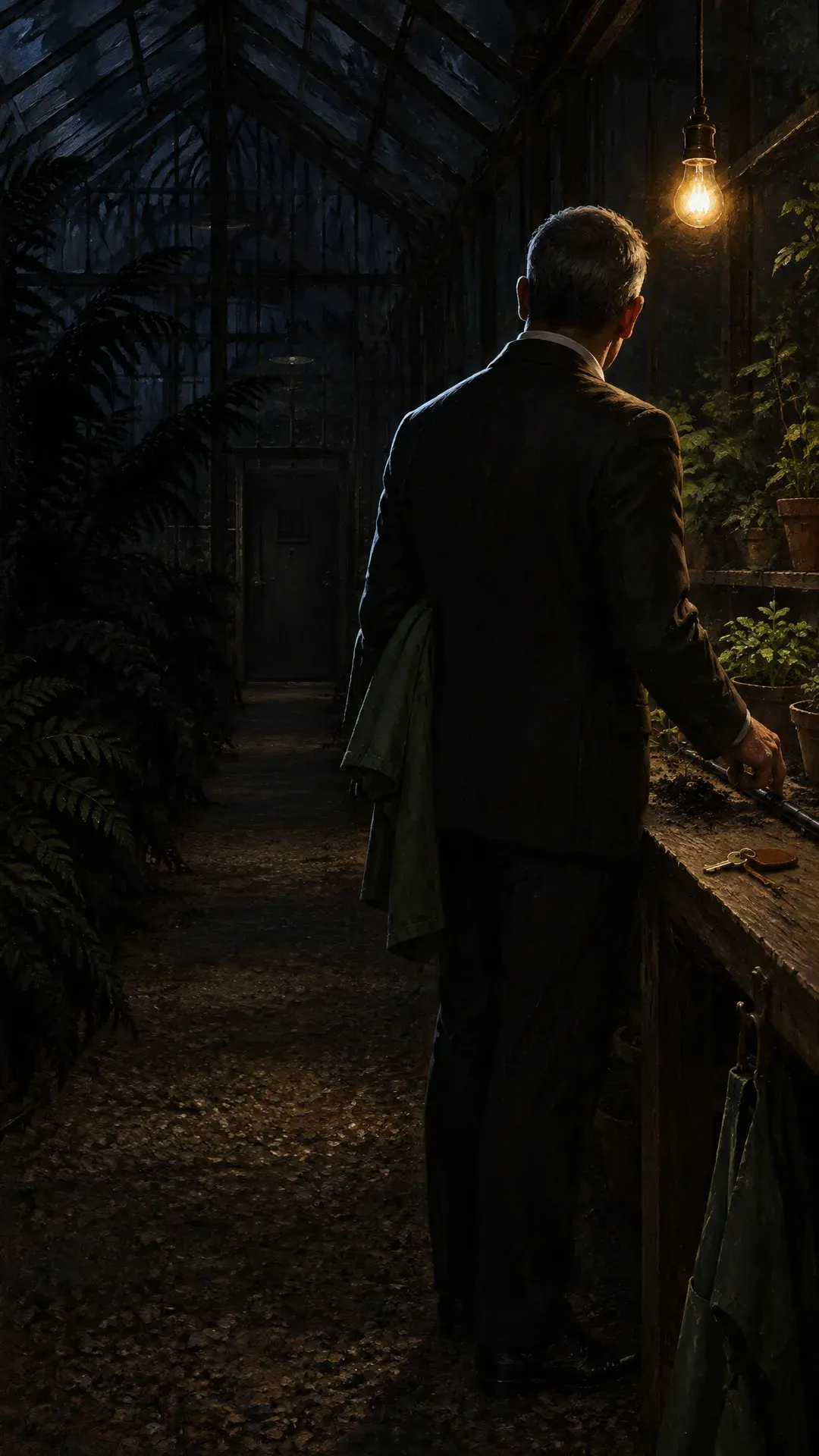
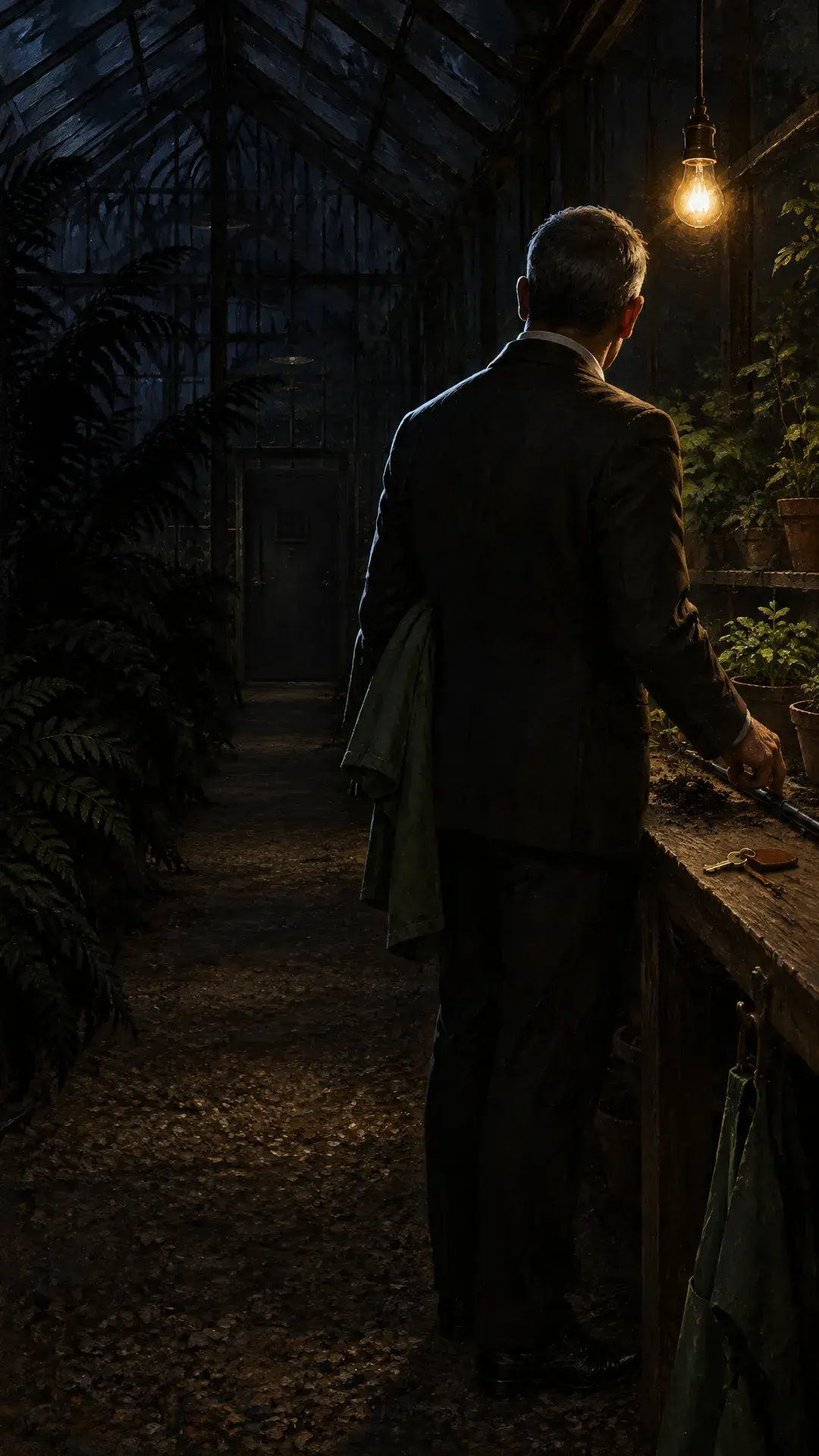



The Conservatory is quiet at this hour. The work lights are off in the main hall; the ferns along the south wall have gone black against the glass. You've been here two months, long enough to know the building's silences — the drip of the irrigation tank, the click of the old thermostat, the way the gravel path sounds different when someone walks it without carrying anything they want to drop. This quiet is different. It has weight, the way the whole place settles after the last delivery car leaves.
The rear door to the greenhouse opens. Silas Torre steps in, dark suit, no tie, a green canvas apron folded over one arm. He doesn't look at you right away. That's the first thing you notice. He walks the length of the gravel path, touches a leaf, bends to check the drip line, and only then stops under the bare bulb by the potting bench.
Two months,
he says, quietly, the way he says everything.
You've been paying attention. You clean up after the captains. You don't ask about the flowers that arrive after dark. The first new cutting in a long time that didn't try to burn the greenhouse down.
He hangs the apron on the bench hook. Your apron — the one you wear when you work the floor, the one you left in the staff room.
As of tonight, you don't owe the family. You owe me. One debt, one creditor, one name. Anything that touches my property gets pruned. Ask anybody who's tried it whether I mean that.
He sets something on the bench between you: a small brass key on a ring with a worn leather tag. The key to the boiler-room door at the far end of the greenhouse — the locked one everyone pretends doesn't exist.
From the front hall come footsteps. Slow. Casual. The stride of a captain who doesn't know the door is locked. Silas looks toward the sound without alarm. He reaches past the key, adjusts the drip line with two fingers, and finally his amber eyes settle on you.
I'll ask once,
he says.
Whose are you?