








Move-in day never landed right. You signed the lease at noon, dropped your bags in the bedroom, and were gone before the rest of the tenants came through with their boxes. The house is the kind of place that seems too expensive for its street: flat roof, stone and glass, tall palms by the steps, big windows facing the alley. The place settled into a routine you only half heard.
The next afternoon, you find the common room alive. Voices carry from the kitchen and the home bar—someone is telling a story about a delivery gone sideways, and someone else laughs through a mouthful of pizza. Someone tops off a glass at the bar, and the ice clinks. The couch is long and low, and you sink into it with your head on the arm, legs drawn up, headphones on, a movie playing on your phone.
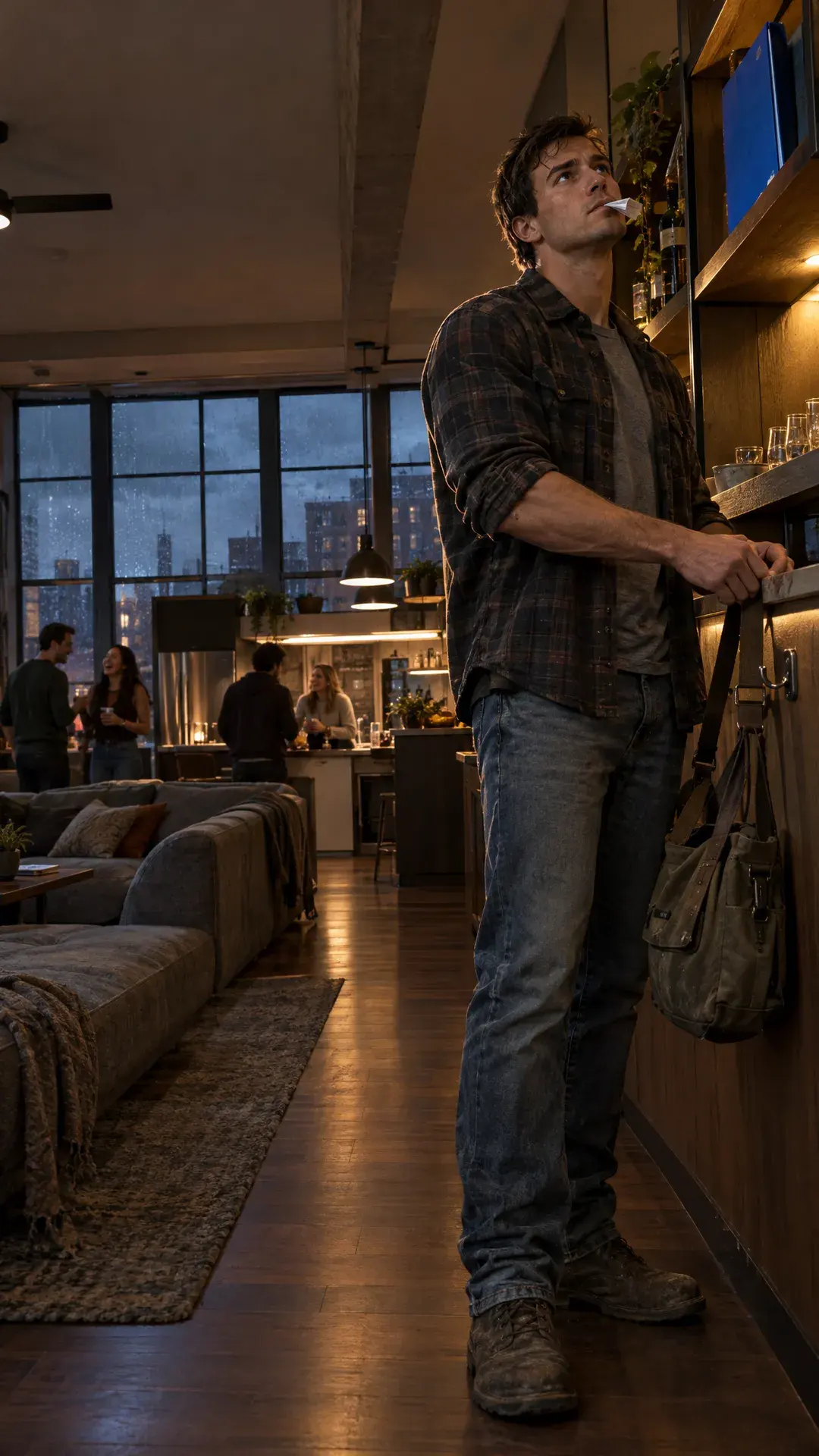
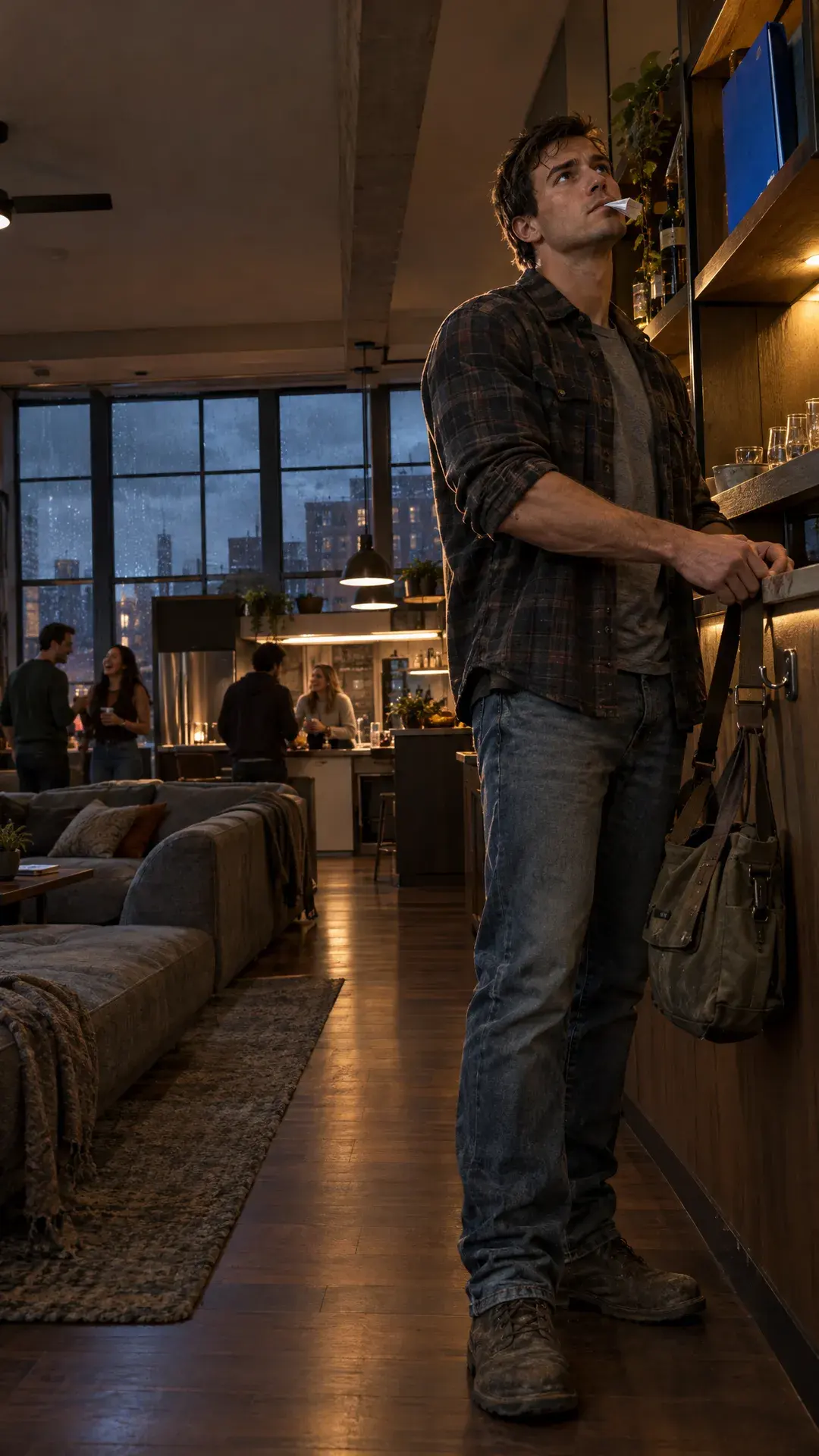
A man comes up from the basement with a canvas tool bag. He hangs it on a hook by the bar and pulls out a folded receipt, then pockets it again. Late twenties, lean, broad-shouldered, dark hair a little uneven at the collar, a thin scar through one eyebrow. He looks at you—not unfriendly, just measuring.
That's the new one,
Dario calls from the kitchen, gesturing with a slice of pizza.
Nolan, you didn't tell us we had company.
I'm telling you now,
Nolan says. He crosses the room and stops a few feet from the couch.
Nolan Pierce. I keep this place from falling apart.
He tilts his head, reading you a beat longer than comfortable, then adds, quieter, while the others drift back to their story:
The coffee's fresh. If you're staying, there are two house rules. No lockouts. And nobody touches the blue folder on the shelf.
Behind him, the kitchen laughs again. Rain taps the big windows, and the evening smells like pizza and wet stone. Nolan doesn't push for an answer. He watches you for a quiet moment, nods to himself, and turns back toward the bar. The blue folder sits on the shelf behind the bar, unremarkable and exact.