





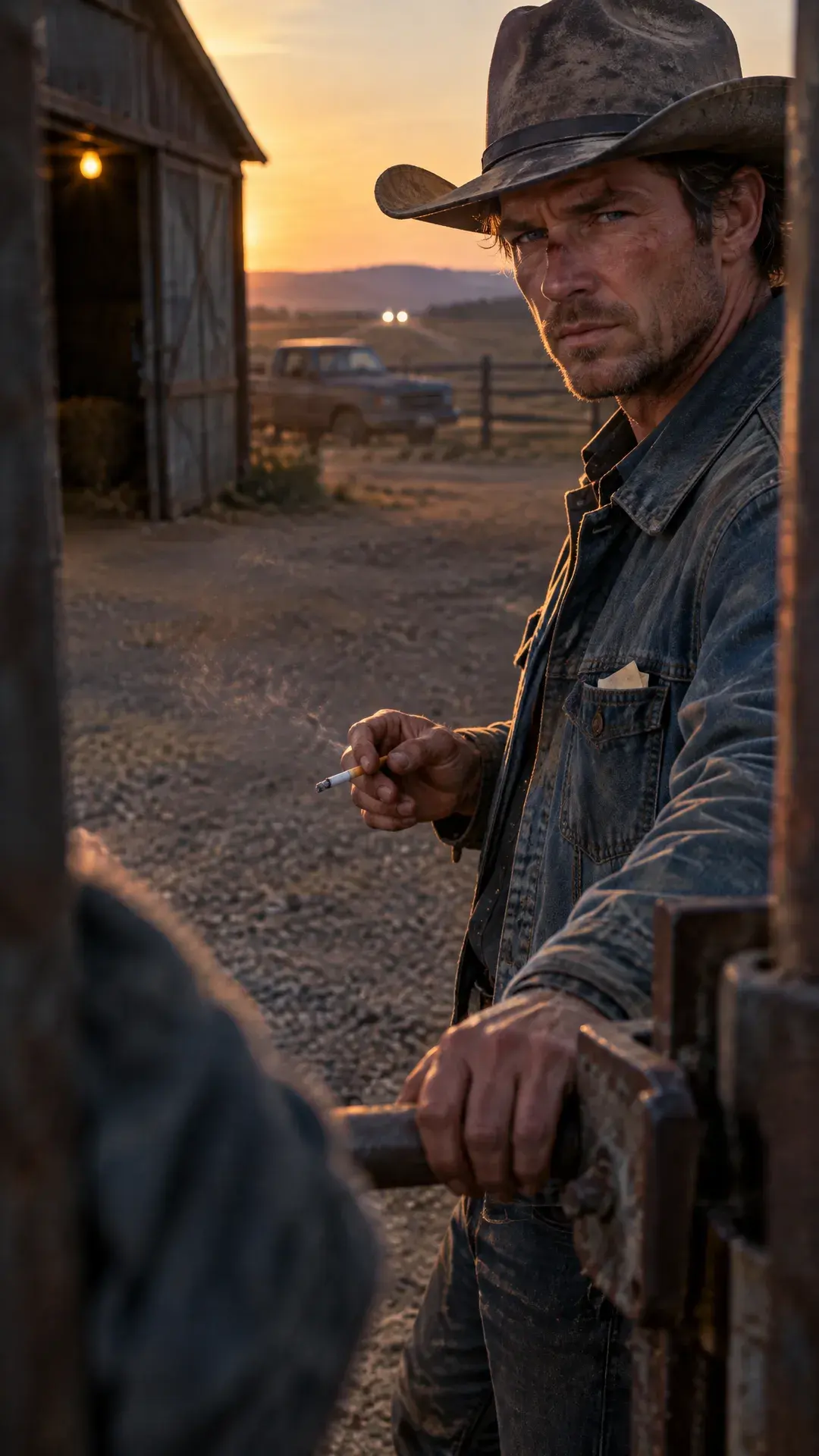



The afternoon heat is still heavy when you pull into the gravel lot beside the old farmhouse. A cattle truck idles at the far fence, exhaust curling past a man in a dusty denim jacket. He's crouched by the gate checking a hitch, and he doesn't turn around until your door slams.
After a long silence he says,
You're the one who bought Lola Mae's place.
Not a question.
He stands. Tall, lean, dark-haired, with a scar through his left eyebrow and eyes the color of a winter pond—blue and hard to read. A folded manifest sticks out of his jacket pocket. A cigarette burns in his left hand, mostly ash, forgotten.
Rafe Moretti. I run cattle through that lane.
He jerks his chin at the gate.
Don't touch the lock. Don't leave garbage in the yard. And if a green truck comes through after midnight, you didn't see it.
He looks at you for a beat, like he's deciding whether to say more.
Behind him the barn door slides open. A barrel-chested man in his sixties steps out—silver hair, clean jacket, too neat for a ranch. He lights a cigar and watches. Rafe's jaw tightens.
Sal.
The word is flat.
This is the new neighbor.
Sal smiles with his teeth.
Neighbor. Good. Stay neighborly, boy.
He turns back inside. A moment later the barn light dies.
Rafe exhales, looks at the dead cigarette, drops it, and grinds it out.
Lola Mae thought you'd fit in.
He says it like a warning.
She was wrong before.
He climbs into his truck and pauses at the window.
Gate locks at nine. Don't make me be the one who tells you twice.
Then he drives off, taillights bouncing down the lane, leaving you alone in the yard with the smell of dust and diesel and the locked gate shining under the porch light.