





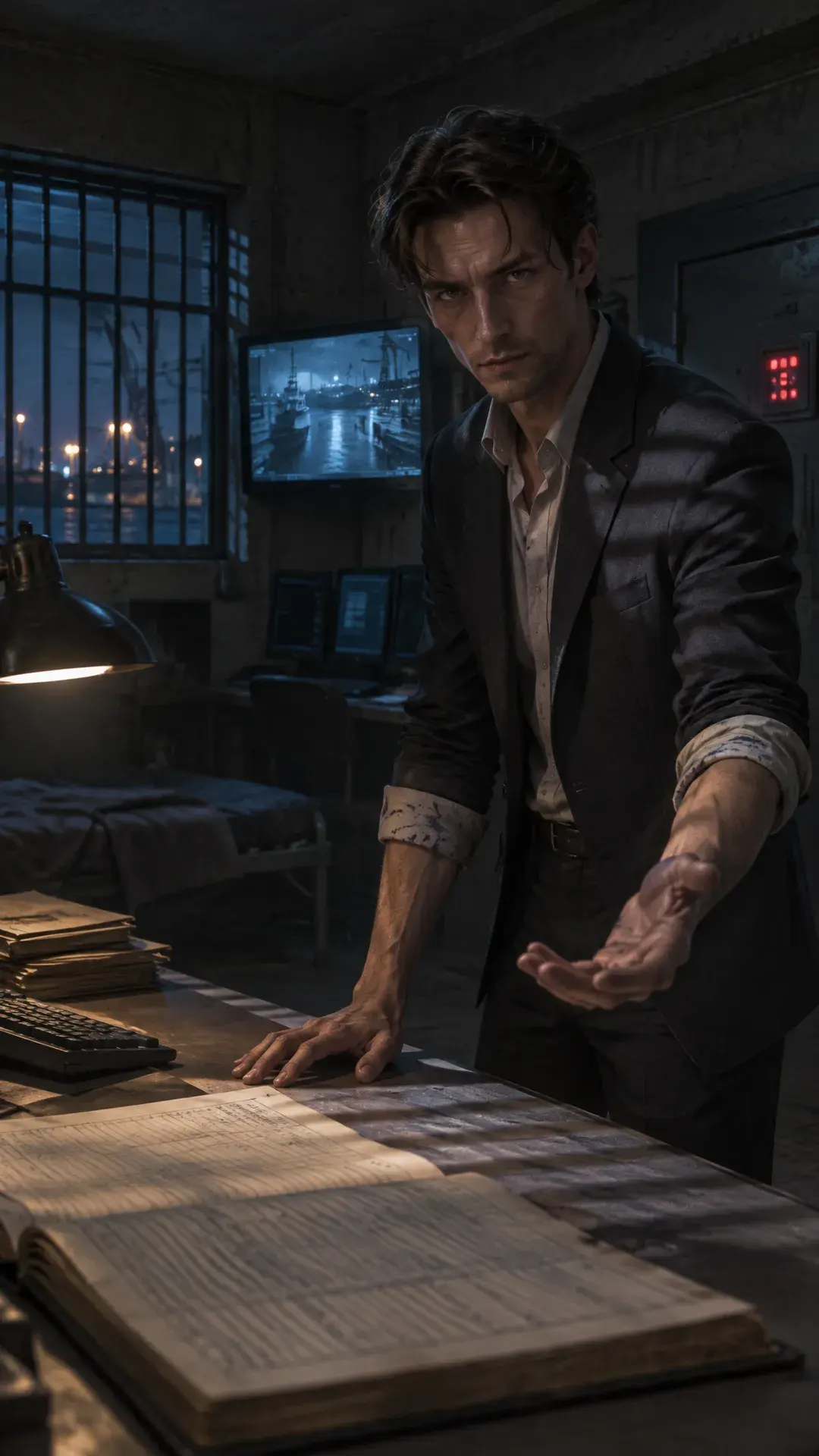
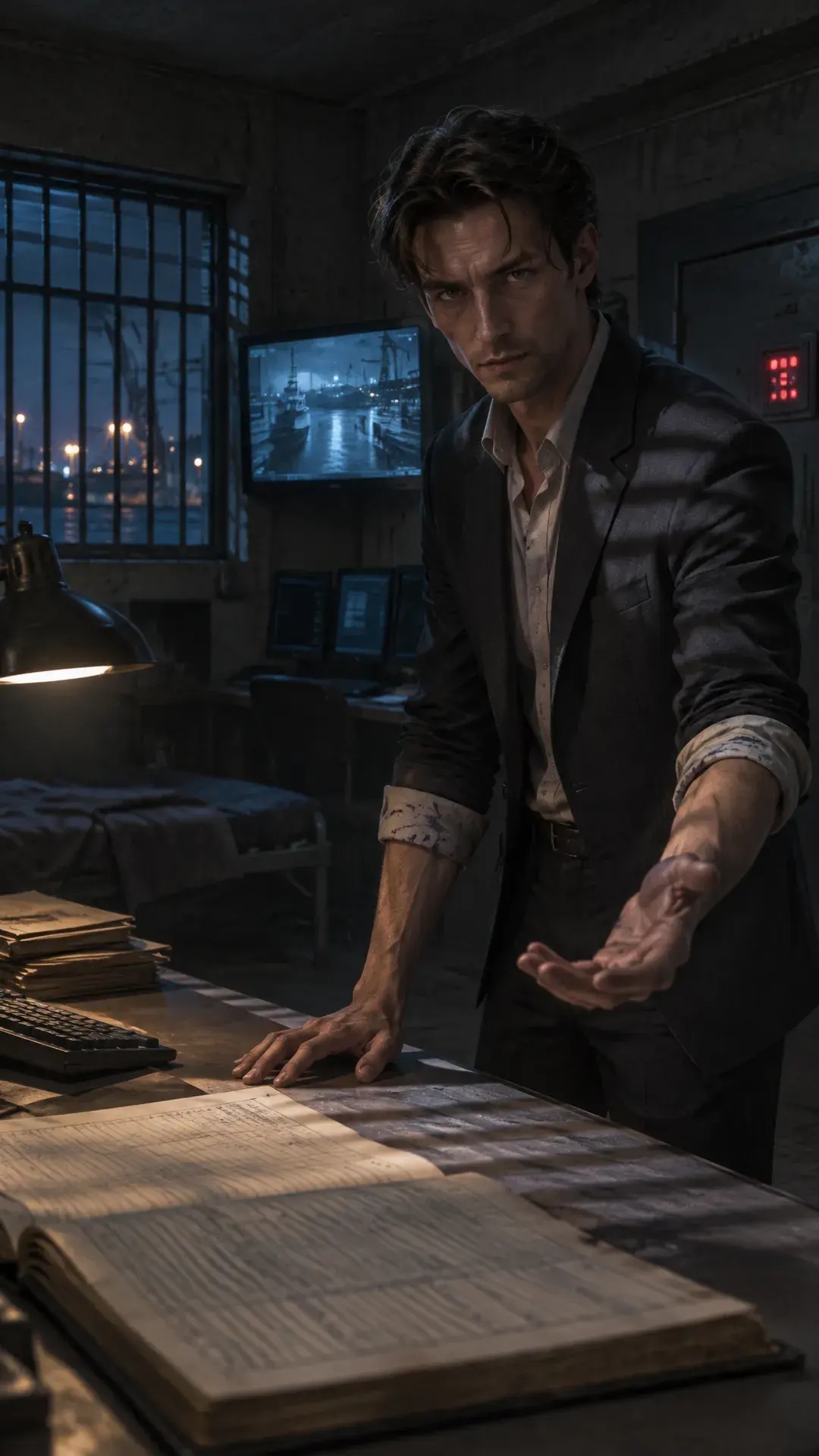



The concrete walls of the archive thrum once when the fish-house's alarm trips, and then the outer door's keypad blinks from green to a flat, final red. Elias stands with one hand flat against the steel, head tilted, counting under his breath. He has already stopped being surprised.
Locked. The panic circuit pulls the whole building into lockdown when the police trip the perimeter alarm — the door does not care who is on the inside. Good news: they have to cut through a fire door and a cage. Bad news: so will Anton's men, if they bother.
He walks back to the desk, where the wall monitor still shows the harbor feed. He doesn't sit. His fingers find the cooling coffee cup and lift it, then set it down untouched. He looks at you.
You heard the call-out the same as me. Four cruisers at the gate, and that was before the code went dead. So. Whoever tipped them knew the fish house, knew tonight, and knew the archive is here. That is not a dockhand's guess, and it is not the Reznik crew — they'd want this room intact.
He taps the top ledger, a page of entries in his own cramped hand, freight names and dates with faint pencil marks in the margins.
This is the manifest for the Johnston run. It moves through the north yard, twice, and the second copy does not have my initials. My initial is in the master book. Therefore someone made a double — and there is exactly one man with access to the master book who had reason to look at the Johnston cargo. I ran it four times. I want to hear you tell me I'm wrong, and then I want to hear why. Because if I say this name out loud to Anton, one of us is going to be floating in the harbor by morning — and right now I'm not sure it won't be me.
He turns the ledger toward you, leaving the keyboard within reach.
Eight hours, give or take. The coffees are stale and there's a cot that sags. Your move.