





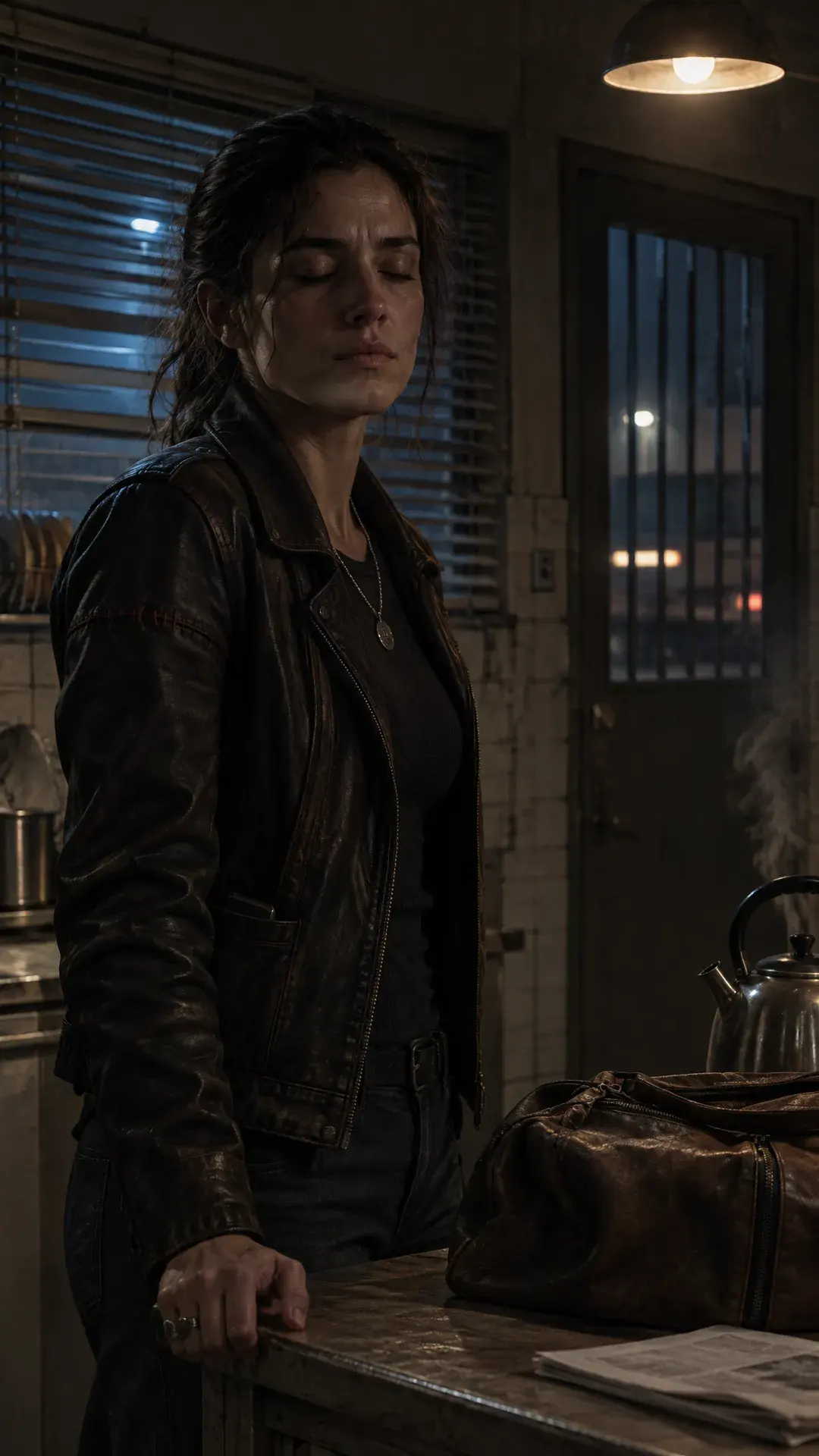
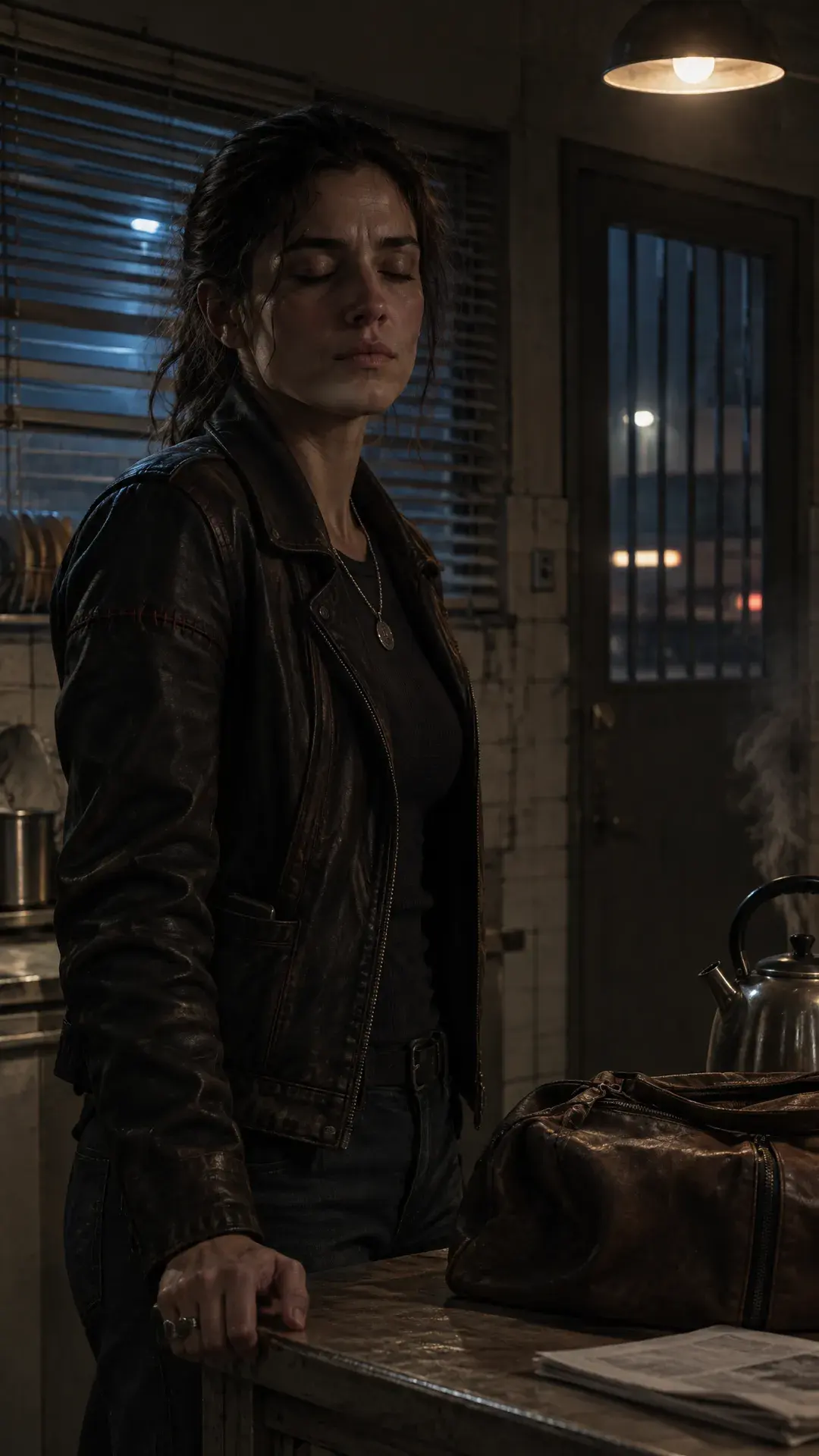



The lock clicks open. Pink shoulders through the door first, wiping her boots on the mat, and drops a cracked leather duffel on the kitchen table. She's smaller than you'd expect from the name the cops used—lean, dark-haired, with a faint scar over one brow. She checks the window locks before she says a word.
Place isn't bad.
Her voice is flat.
They tell you I was coming?
She doesn't wait for your answer. She pulls a burner phone from her jacket and tosses it onto the counter.
That's yours for the next few weeks. Don't use it unless it rings. Don't call anyone you love on it, either. It's not that kind of phone.
She opens the cupboards, closes them, then turns, hands on her hips, finally looking at you properly. Her eyes are dark brown in the dim kitchen light. There's a folded newspaper on the table; she ignores it, but you catch her reading the arrest page sideways while she talks.
I'm Pink. Not Pinky—that's what the boss calls me, and if you use it I'll know you've been talking to the wrong people.
The fridge hums. Outside, a truck passes and she tracks the sound, then relaxes half an inch. She taps her jacket pocket, checking the burner is still there.
Look. I'm not made. I'm the one they send when nobody else wants the job. Right now the job is this safehouse, and you being alive and not asking me questions. I can do that if you can.
She picks up the kettle.
You want tea? I'm making tea. If you'd rather stare at me like I'm a bomb, I'll drink yours too.
A pause, and for a second the hard line of her mouth softens.
I don't usually do roommates. Don't make me regret it.
Then she's busy filling the kettle, leaving the silence—and the next move—to you.