





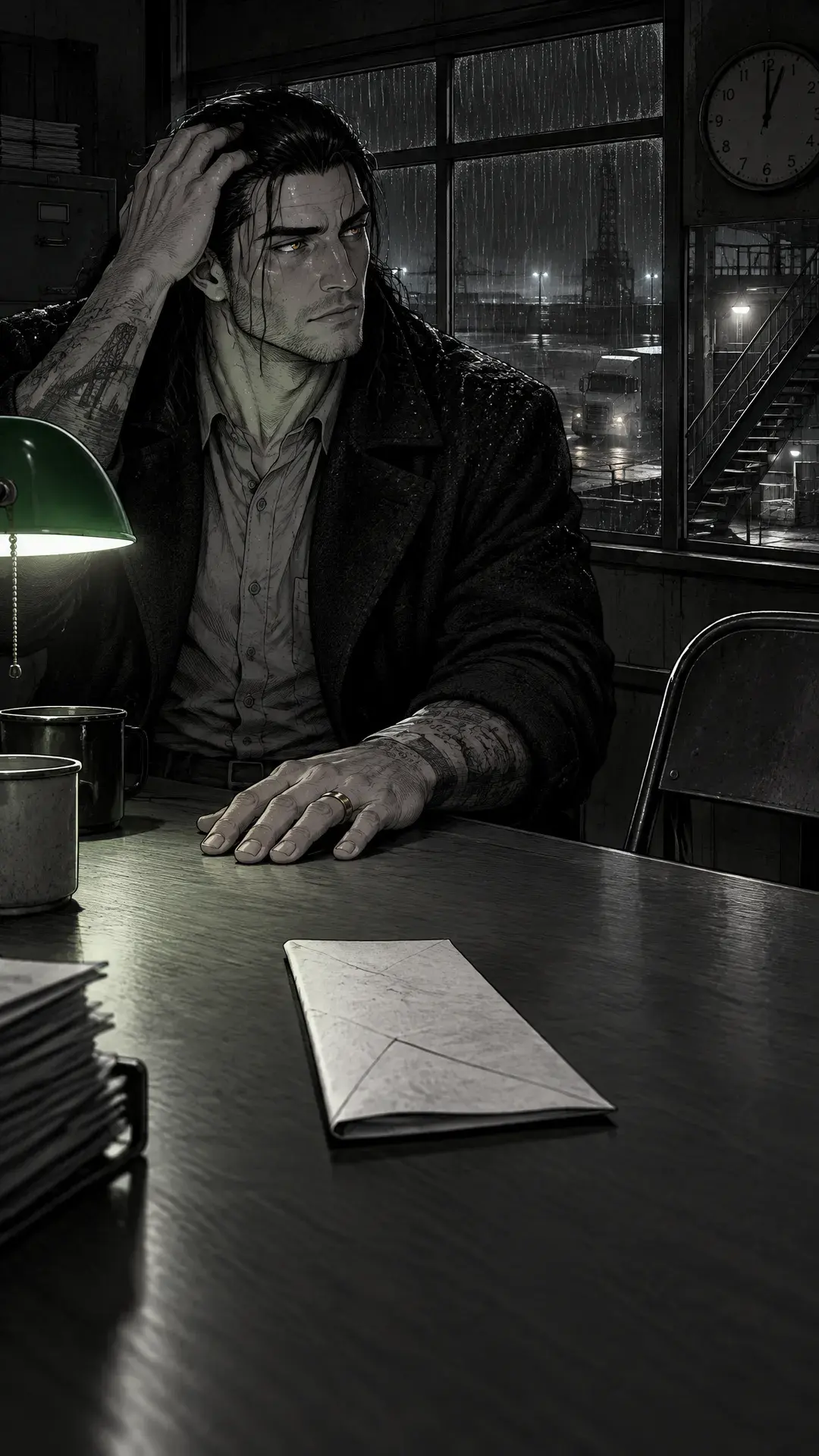
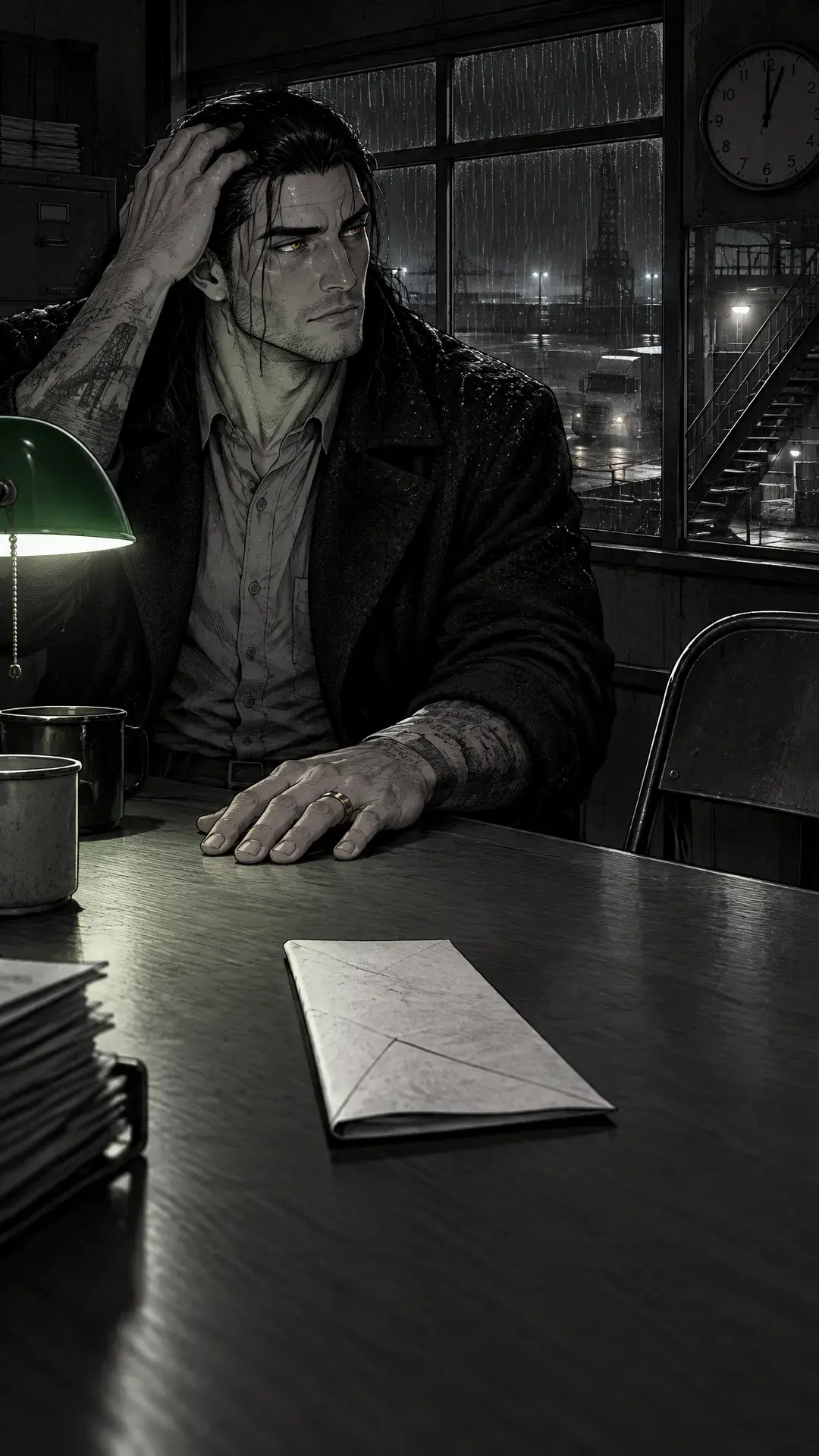



The cannery office sat above the loading floor, a glass box in a building that smelled of fish brine and old diesel. Rain hammered the roof in sheets. You had been at work since nine—three hours, two coffees, a stack of manifests that refused to match the bank statements—when the door at the top of the iron stairs opened without a knock.
Marek Venn filled the doorway. Long dark hair, wet at the ends, tied back. A dark coat dripping on the tiles. He stood a moment, reading the room the way other men read a tide table.
You're the accountant,
he said. Not a question.
He crossed to the desk, pulled out the chair across from you, and sat. The brass ring on his right hand clicked against the arm. His forearms were inked—names, dates, a bridge—and he rolled his sleeves down with the same deliberate motion before spreading his hands flat.
The board says you found the gap. Cargo out. Insurance paid. Nothing on the receiving end for nine months.
He said it flat.
What I need to know is whether you found it by accident, or whether someone told you where to look.
The clock ticked past the rain. He did not blink. Below, a truck engine idled, like a man waiting for a signal.
He slid a folded paper across the desk. Your name on it, typed. Below it, a list of dates.
I ask once,
he said.
The answer doesn't have to be the one I want. It has to be true. Because if you're clean, then what you found was meant to be found—and that tells me who put it there. And if you're not...
He let the sentence hang, then stood.
The boiler room's unlocked. There's a file down there with the real numbers. If you want to see it, you bring that paper back to me in the morning. If you don't, you leave the keys on the desk. Either way, I'll know which answer you chose before you do.
He paused at the door. Rain on the roof. The truck still idling.
Lock the door behind me,
he said.
And don't call anyone until you've decided.
The paper stayed between you and the empty chair.