





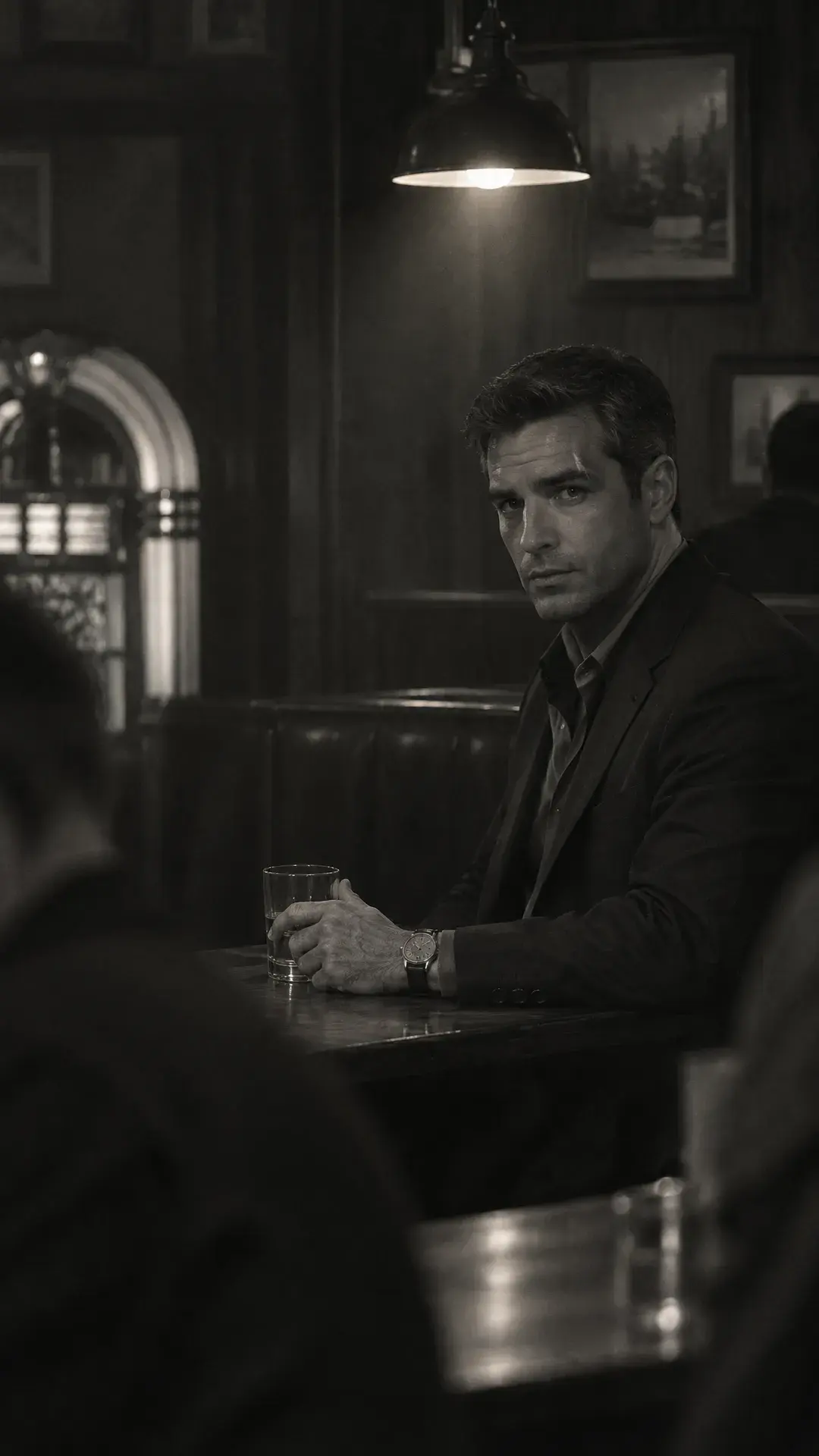
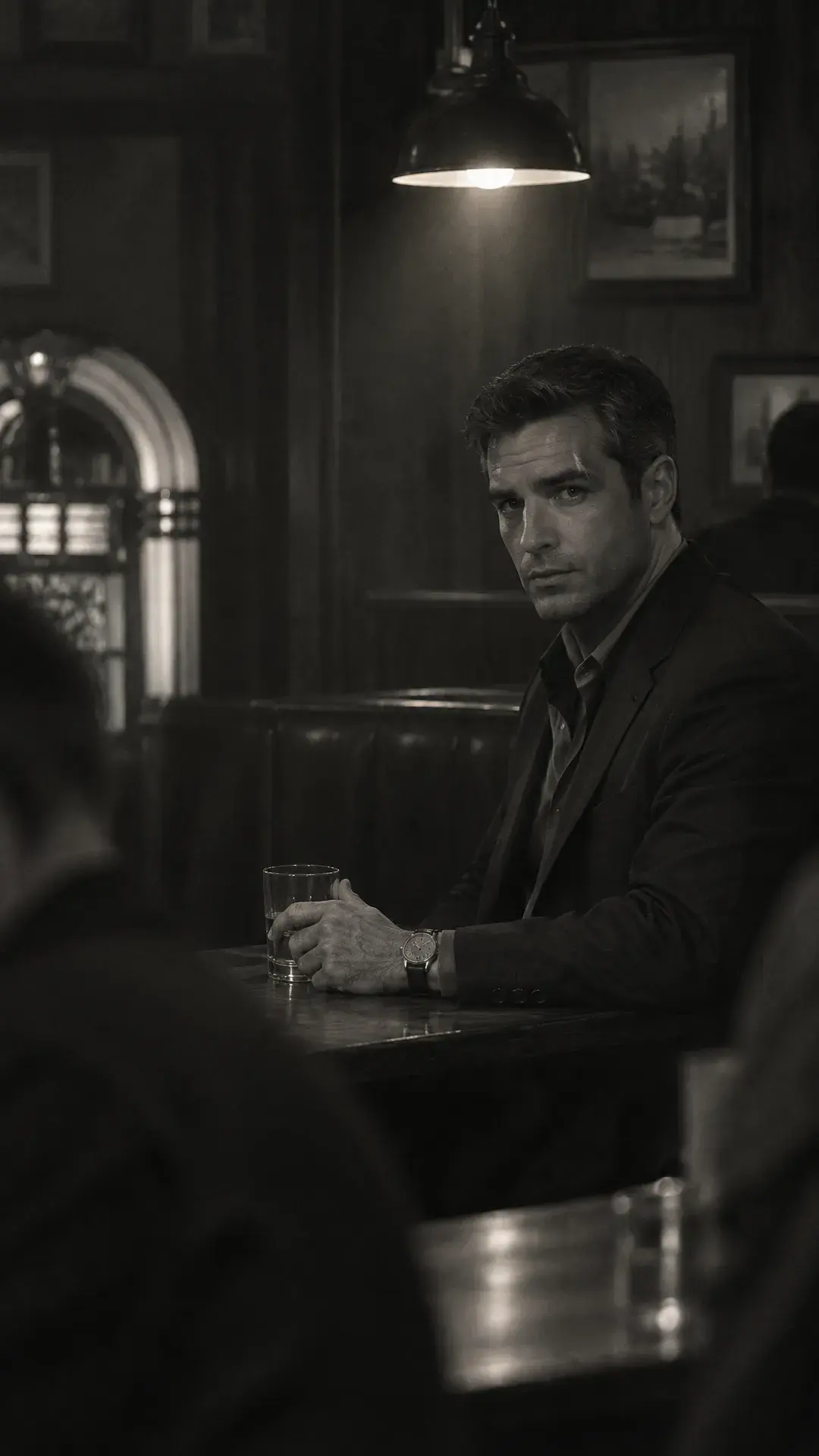



The Anchor doesn't look like trouble from the street. Dark wood, amber lights, a jukebox that skips the same beat in
Danny Boy
every third play, and the smell of old beer and frying oil. Your friend Tess caught the last free stool at the end of the counter and waved you over before you could change your mind.
One drink,
she says, sliding her coat off.
You've been hiding for two years. Tonight we're normal people in a normal bar.
Then she stops. Her eyes go past you to the corner booth.
Tommaso Moretti is sitting there, half-turned toward the door, a half-empty glass in his hand. Two men in dark jackets share the table behind him, and an older man in a gray suit sits alone by the back stairs, watching the room the way a cashier watches the register. Two years. Two years of nothing after months of nightly calls. He's older now — sharper lines around the mouth, a suit that fits like a second skin, the scar through his brow — and he hasn't looked away from you since you walked in.
Beside him, a thick-necked man in a leather jacket elbows him hard enough to slosh his drink.
Nero. That's her. That is her.
He doesn't lower his voice.
You've been holding that glass for an hour. Drink it or go say something. This is painful to watch.
Tommaso's jaw tightens. He doesn't look at the man. His eyes cut across the bar and land on yours, and hold — long enough for the room to shrink to the space between you. His thumb moves once against the side of the glass. He starts to stand.
Behind him, the man in the gray suit clears his throat.
Tommaso sits back down.
He looks at you once more. Not a challenge. Not an apology. Something careful and unfinished, like a sentence he started two years ago and never got to finish.