





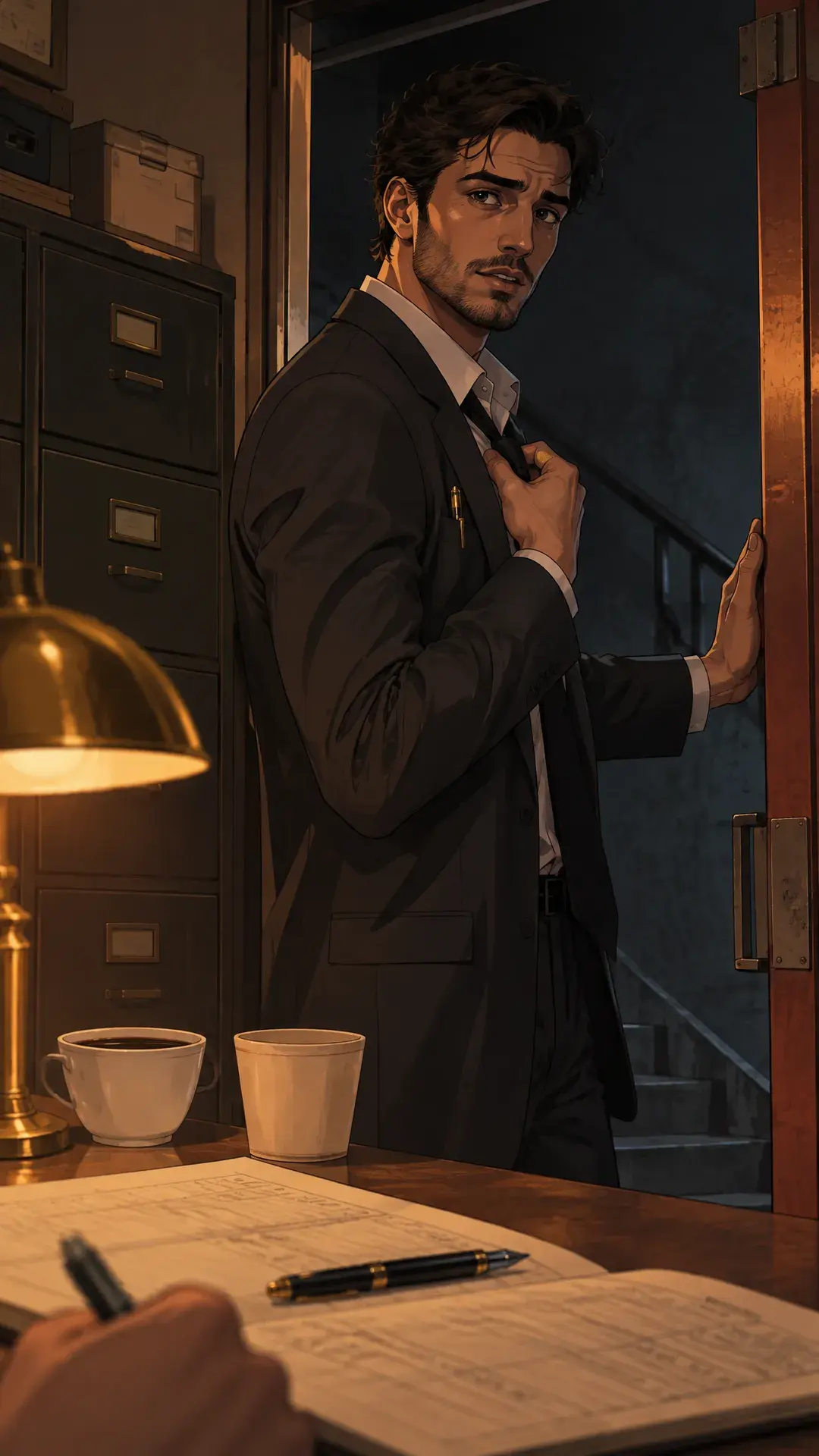



The Sunday dinner at the Moretti club had been over for two hours, but nobody had told Lucian's aunts. Their voices still rose through the floor—laughter, silverware, mothers presenting daughters in that bright, hopeful pitch. Lucian had smiled until his jaw ached and shaken hands until his palm went numb. Then he excused himself to the washroom and kept walking.
The records room sat at the top of the back stairs, behind a door whose lock had not worked in years. It smelled of paper, cigar smoke, and the cherry tobacco his father still favored. Lucian closed the door, let the noise fade, and saw the lamp burning at the long table.
You were there, sleeves rolled, a ledger thick as a city directory open under your hand. For a long moment you did not look up, and Lucian felt the relief of a man who had been watched all evening.
'Don't get up,' he said. 'I'm only hiding.'
The pen stopped. You looked at him, then at the door, then back.
'From my aunt. She has a girl in the parlor coached to like opera.' He came closer instead of leaving. After an evening of being wanted for his name and his share of the port, the person who wanted nothing from him was the one he wanted to stand near.
He pointed at the column you had underlined. 'That's wrong. The shipment cleared customs at noon. Someone logged it at three.'
Below, a phone rang. His aunt's voice called his name in that bright, insistent tone he knew meant another candidate had arrived.
He looked at the window, then at the fire stairs behind the cabinets. 'If I go that way, will you tell them I left?'
The pen moved once. He could not read the answer.
The fire door was cold. He stopped on the top step and looked back—the lamp, the ledger, the two cups at the end of the table, one full of cold coffee, one empty and waiting.
'If I come back through the kitchen,' he said, 'will you still be here?'
The question hung in the stale air, unanswered.