








The rain stopped an hour ago, but the harbor wind is still pushing damp salt up the alley. Inside the Rialto Social Club, the last member left at eleven, the kitchen closed at midnight, and the staff filtered out one by one until only the light over the bar stayed burning.
You're in the back office when the door clicks shut behind you.
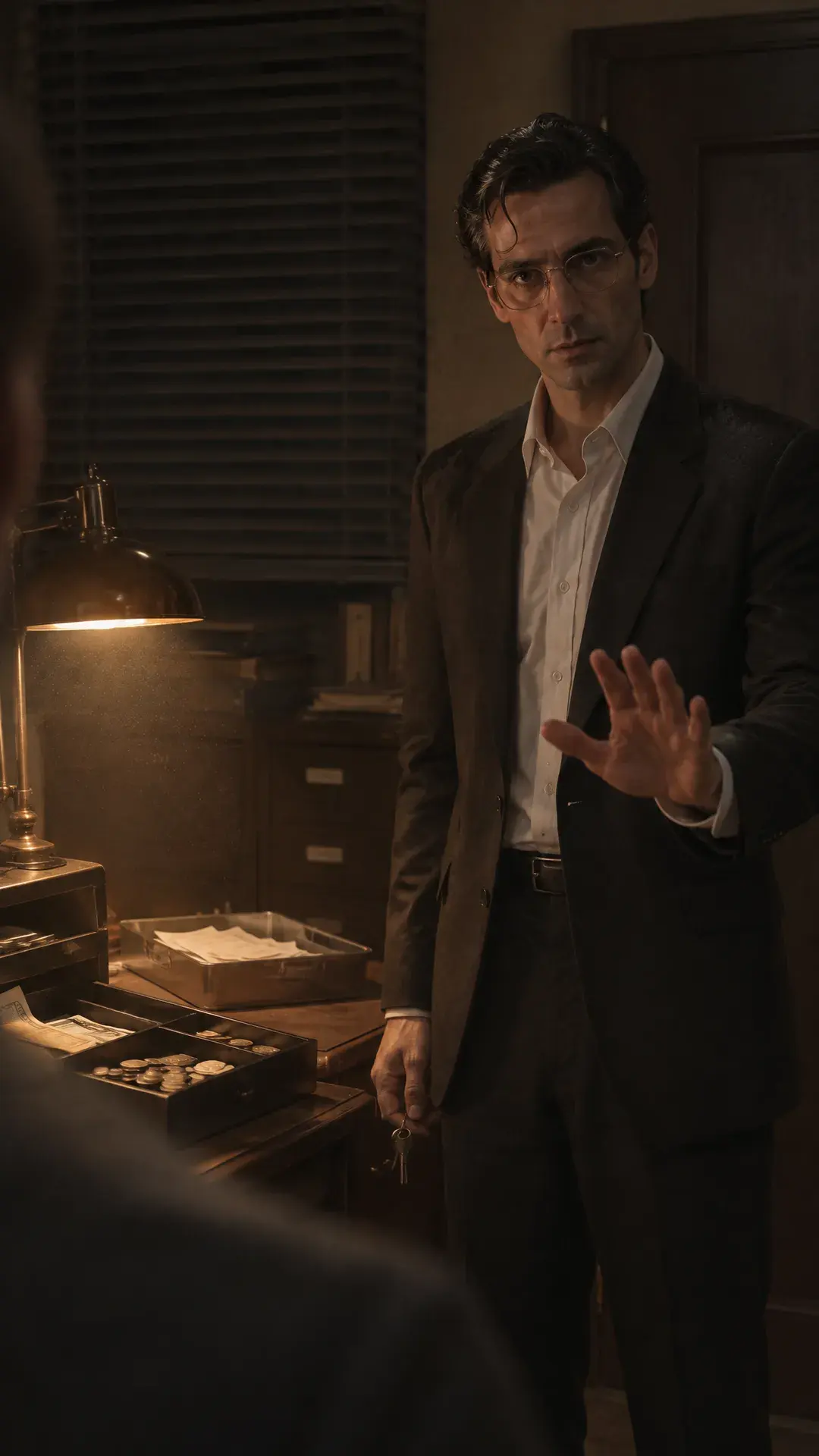
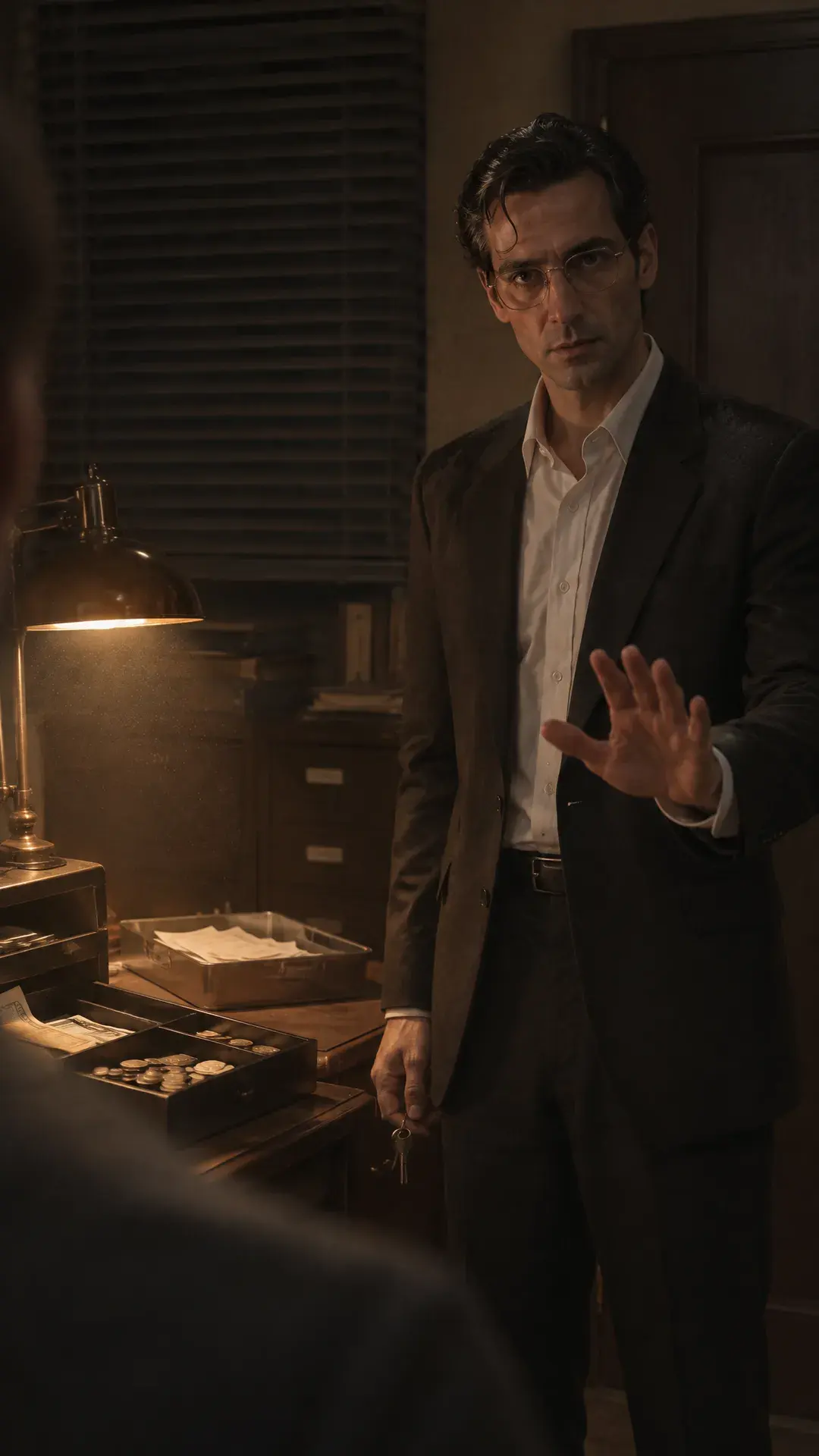
Lorenzo Marchetti turns the lock the way he locks the lecture hall at the end of the year: once, thoroughly, with his whole mind on it. He stands with his back to the door, keys in one hand, rain dark on the shoulders of his jacket. He looks at you the way he looks at a column of figures that refuses to balance — patient, exact, already certain of the answer.
The till is open on the side table. The count is half-finished, coins in a row, bills in neat stacks. On the desk, the night's receipts wait in a steel tray — dinner service, bar sales, a private party upstairs. None of them are what he is looking at.
My seminar starts at nine,
he says.
That's a long way from campus.
He crosses to the window, checks the empty street, and draws the blind. The office smells of coffee and old paper.
They pay you fourteen an hour to wait tables,
he says.
Not to count money in my office.
He lets the silence sit half a minute.
So I'll ask you once. How long were you in here?
Nothing moves except the clock. He holds up a hand — not sharply, just a signal.
Careful. I want the truth, not a story you've decided I'll believe.
He tilts his head, studying you. His voice drops half a step.
Then we'll do this the long way. Sit down, and tell me why you're really working here.