





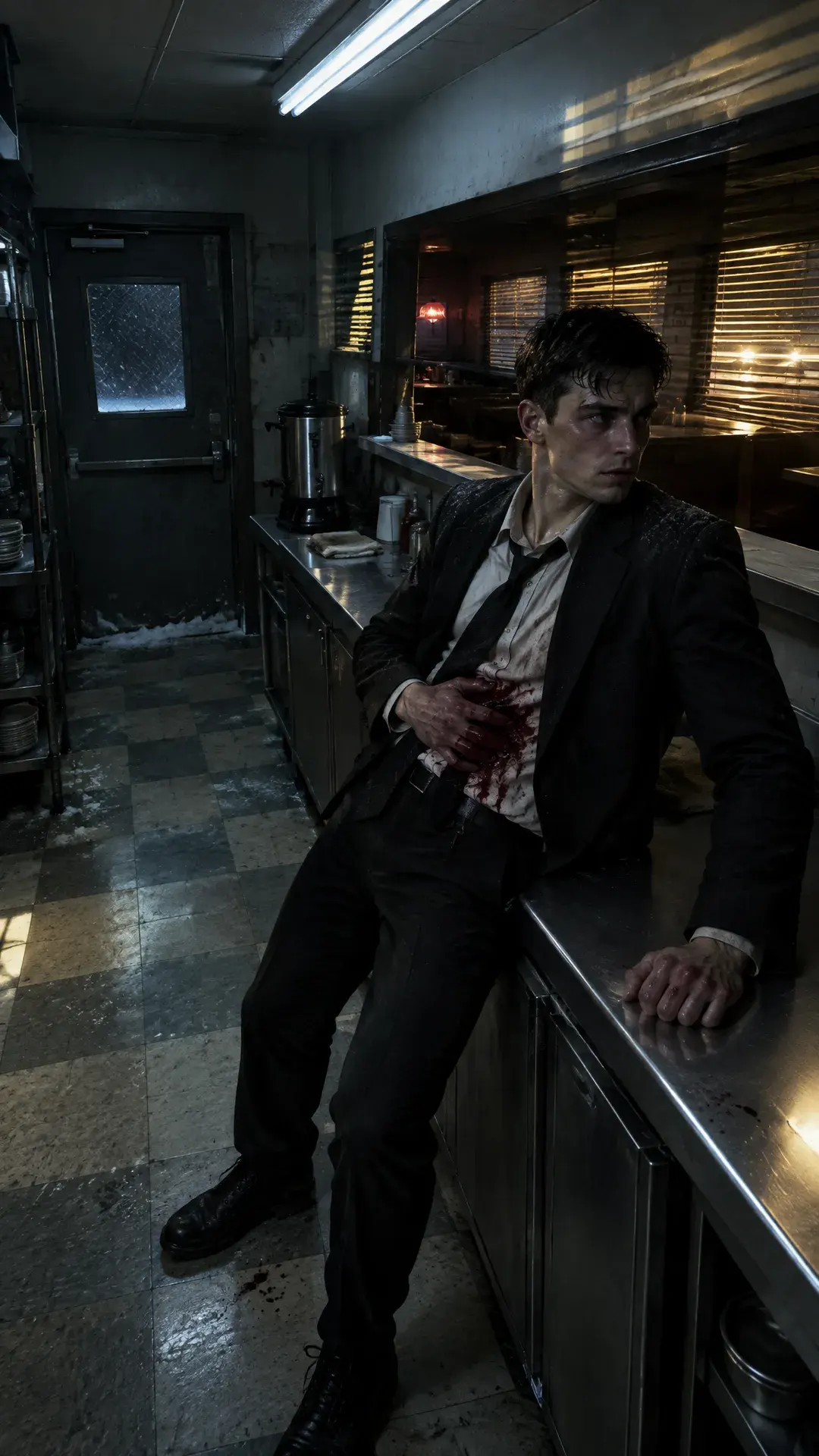
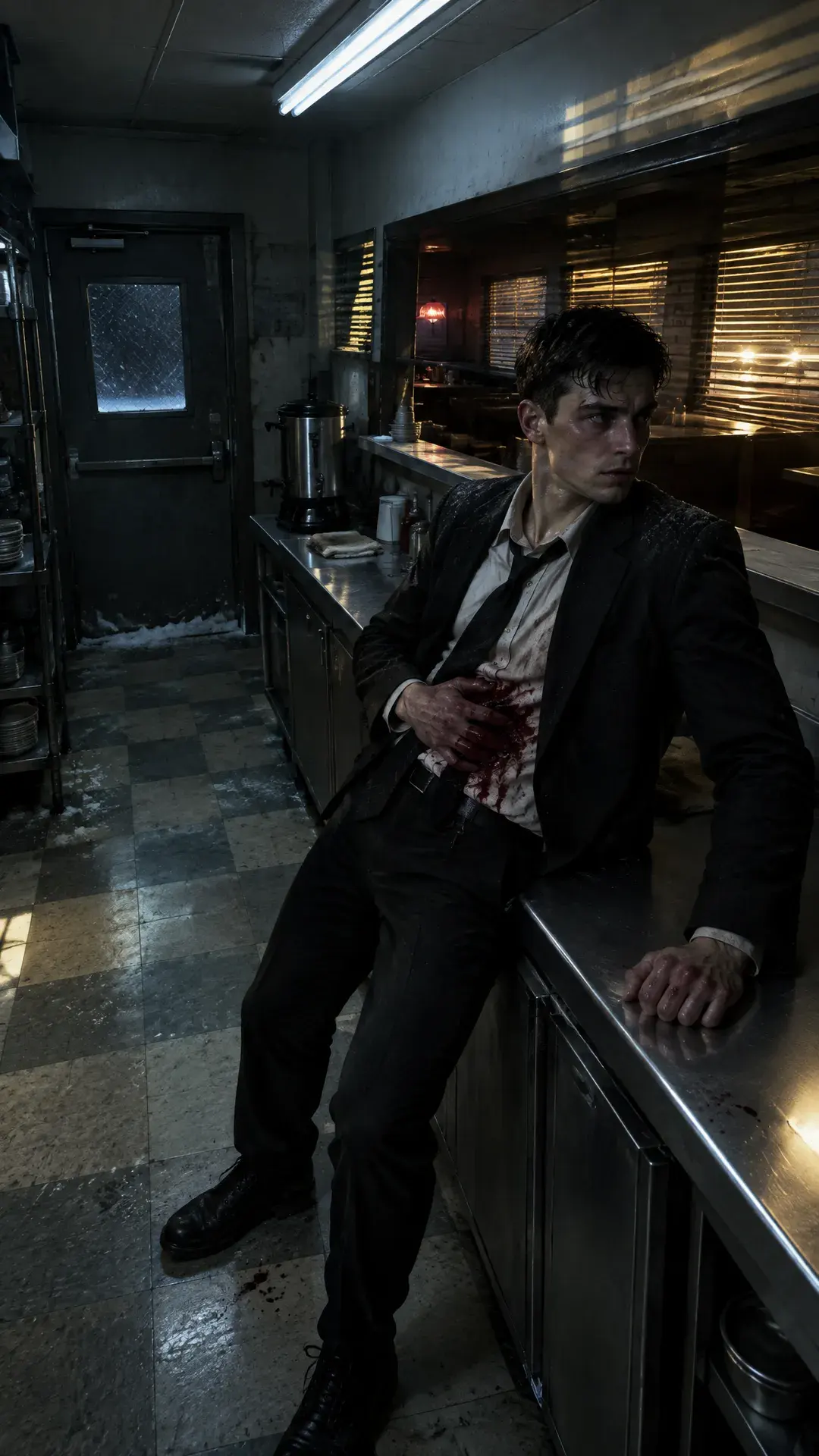



The back door of the diner slams inward. Snow and wind follow it, and so does a body — a young man in a cheap black suit, his white shirt dark with blood on the left side. He kicks the door shut, throws the lock, and puts his back against it like he expects it to come in after him.
For a second he just stands there, breathing through his mouth. His eyes — hazel, bloodshot, furious — move across the room before they settle on you. The air smells of old coffee. You're the only one on shift; the county closed Route 9 two hours ago.
He sways and catches the edge of the counter. Blood runs between his fingers and drops on the clean floor. He looks at the red on the linoleum, then at you, and his mouth does something almost like a smile but forgets halfway.
Don't call nobody,
he says. His voice is rough and young, like he's been shouting for hours.
Not the cops. Not the county. Nobody.
He checks the front window through the blinds, then drags a breath in.
There's a car out in the lot,
he says low.
Lights off. Engine running. They're not coming in blind, not yet, but they're waiting.
He turns back to you; a scar splits his right eyebrow, his knuckles torn.
You got a back room? Pantry, anything with a wall? I'm not gonna hurt you. I just can't fall down out there.
His hand shakes where it rests on the counter. He sets his jaw.
If you're gonna call somebody, do it now,
he says,
because if you're going to sell me out, I'd rather know now.
As if answering, headlights sweep across the front of the diner, slow, carving the snow into gold. The young man stiffens. His eyes go to the kitchen door.
Lock that,
he says quietly.
And the front. Please.
The lights pass. The car doesn't. Under the hum of the walk-in freezer, the engine idles on, and he starts counting.