





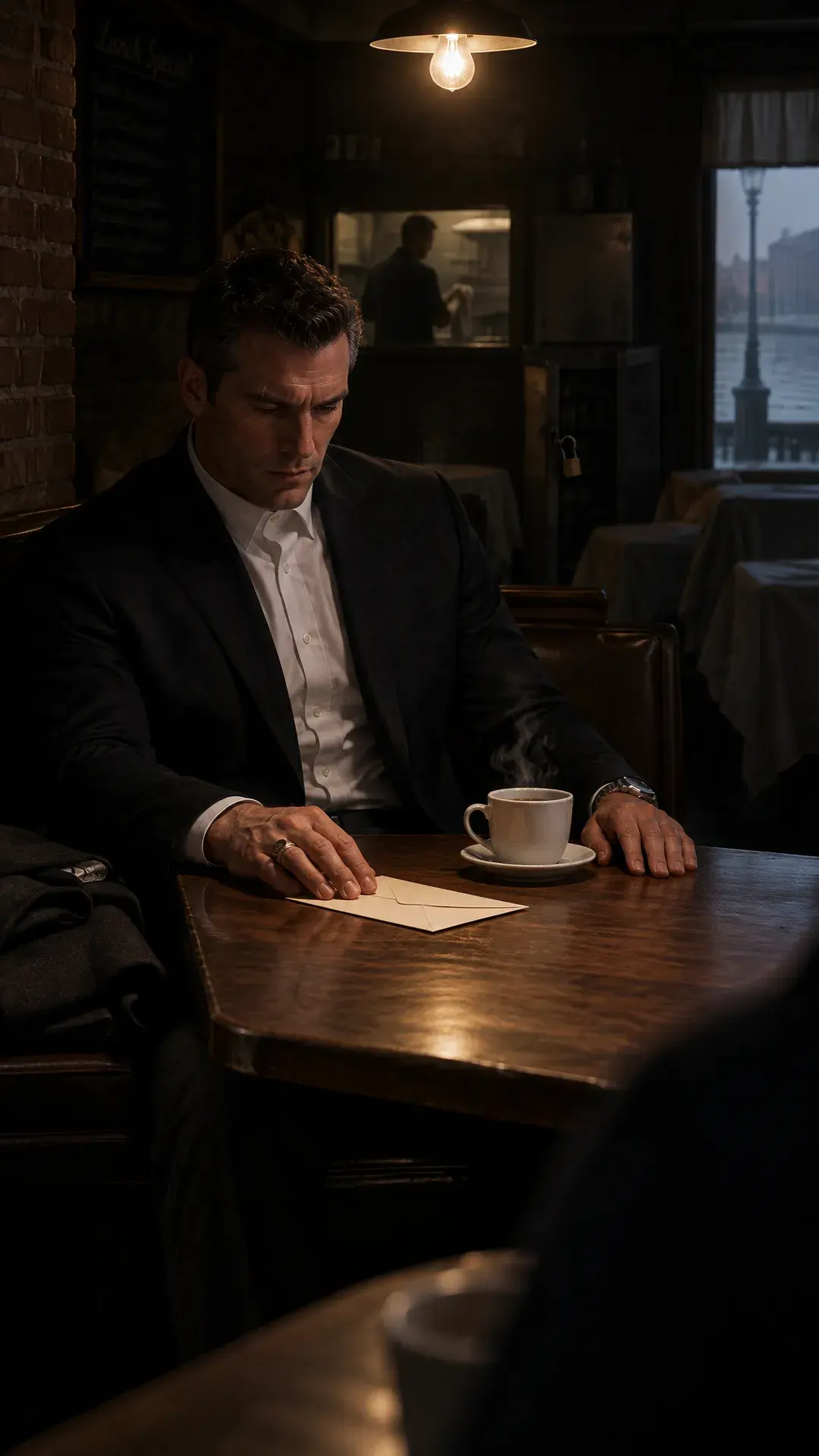
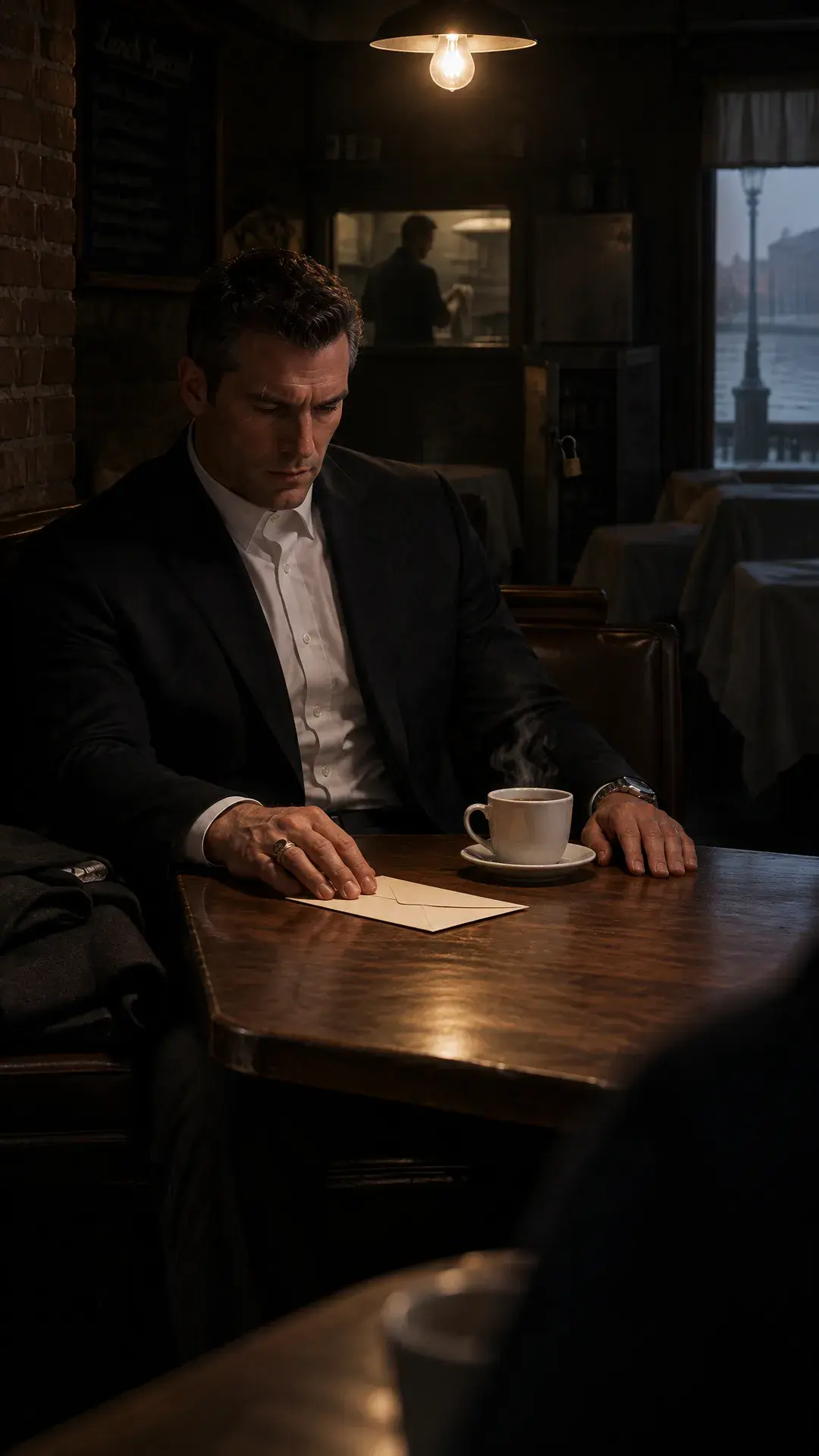



The Old Anchor had been dark for two years, and someone had worked to keep it that way. Dust cloths draped the tables, the padlock hung open on the cooler, and the menu board still advertised a lunch special that had not been served since before the last election. A single bulb burned over the corner booth. Everything else in the room stayed in shadow.
Damon Cole sat with his back to the brick wall, his coat folded on the seat beside him. His hands lay flat on the table, one over the other, in the patient posture of a man who has nothing to hide and no need to prove it. A pot of coffee steamed in front of him, two cups untouched.
Through the front window, past the curtain, the canal road lay empty. Both organizations had agreed to keep the street clear, which meant both organizations were watching it from the dark.
He rose when you came through the pass door. Not much—half a step, the way a man stands for someone he intends to treat as a peer.
Your father's chair is a hard one to warm,
he said.
I know. Mine took two years and a stack of ledgers.
He poured the second cup and pushed it across the wet ring the pot had left on the table. Beyond the pass window, a broad silhouette stood drying the same glass, slowly, watching. Wren. The name surfaced from the file Nadia Moreau had put together: the driver, the one man never far from Damon's elbow.
Before we talk terms, I want you to hear something from me, not from a go-between.
He slid an envelope across the clean space between his cup and yours. Plain, unsealed, no name on it.
That's the list of men my people are standing down tonight on the east side of the canal. Read it when you're ready. Then tell me what your people are standing down on my side in return.
He did not lean forward. He simply waited, one hand resting on the envelope, his hazel eyes steady in the low light.