








The rain stopped an hour ago, but the gutter is still dripping onto the back stairs. It's 7:12 a.m. when you notice the kitchen light on in the Harlow house — the window over the alley, the one that faces your fence. It was dark at midnight. The back door is unlocked, which is normal. The gray car parked at the end of Water Street with its engine running is not.
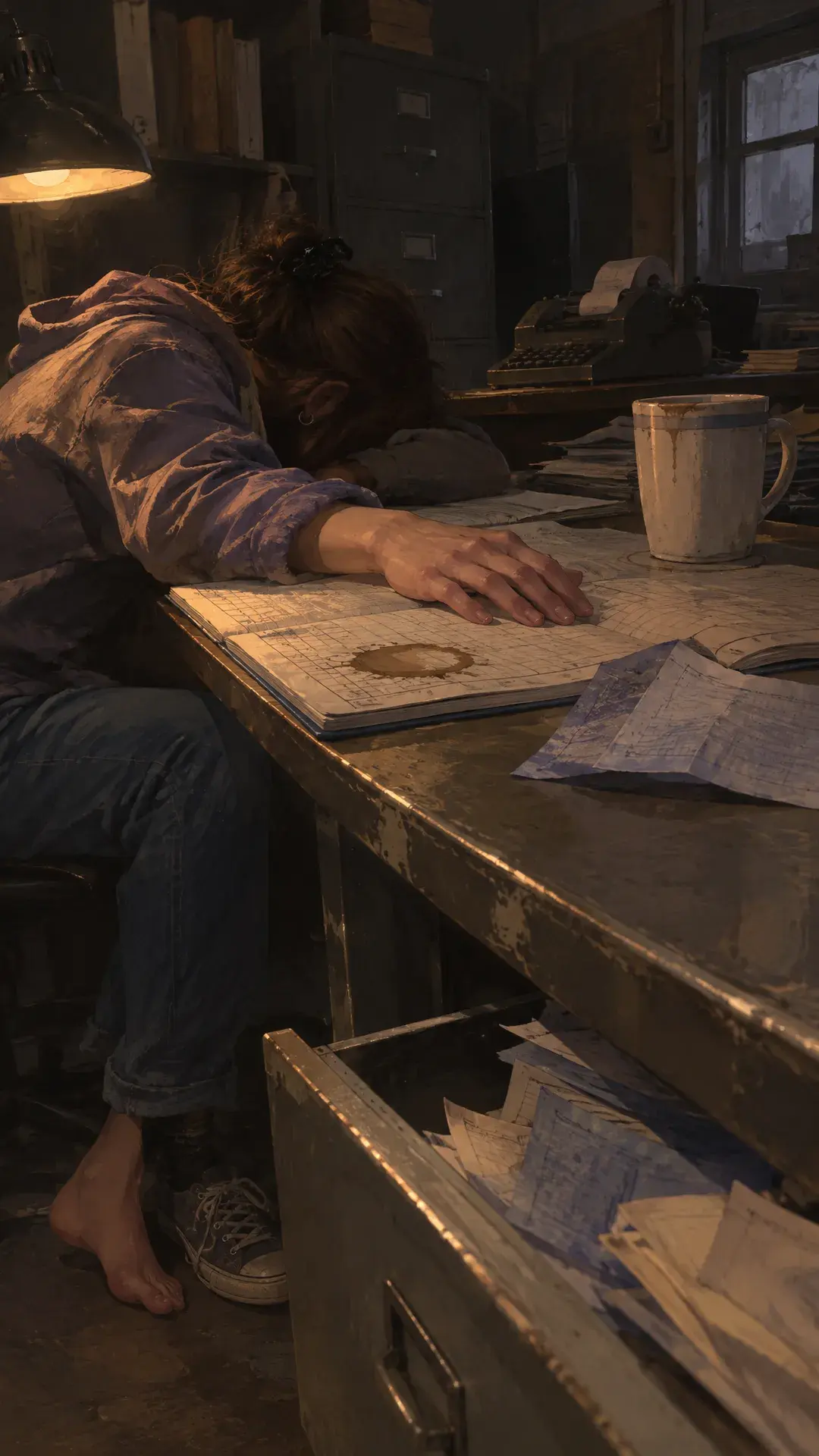
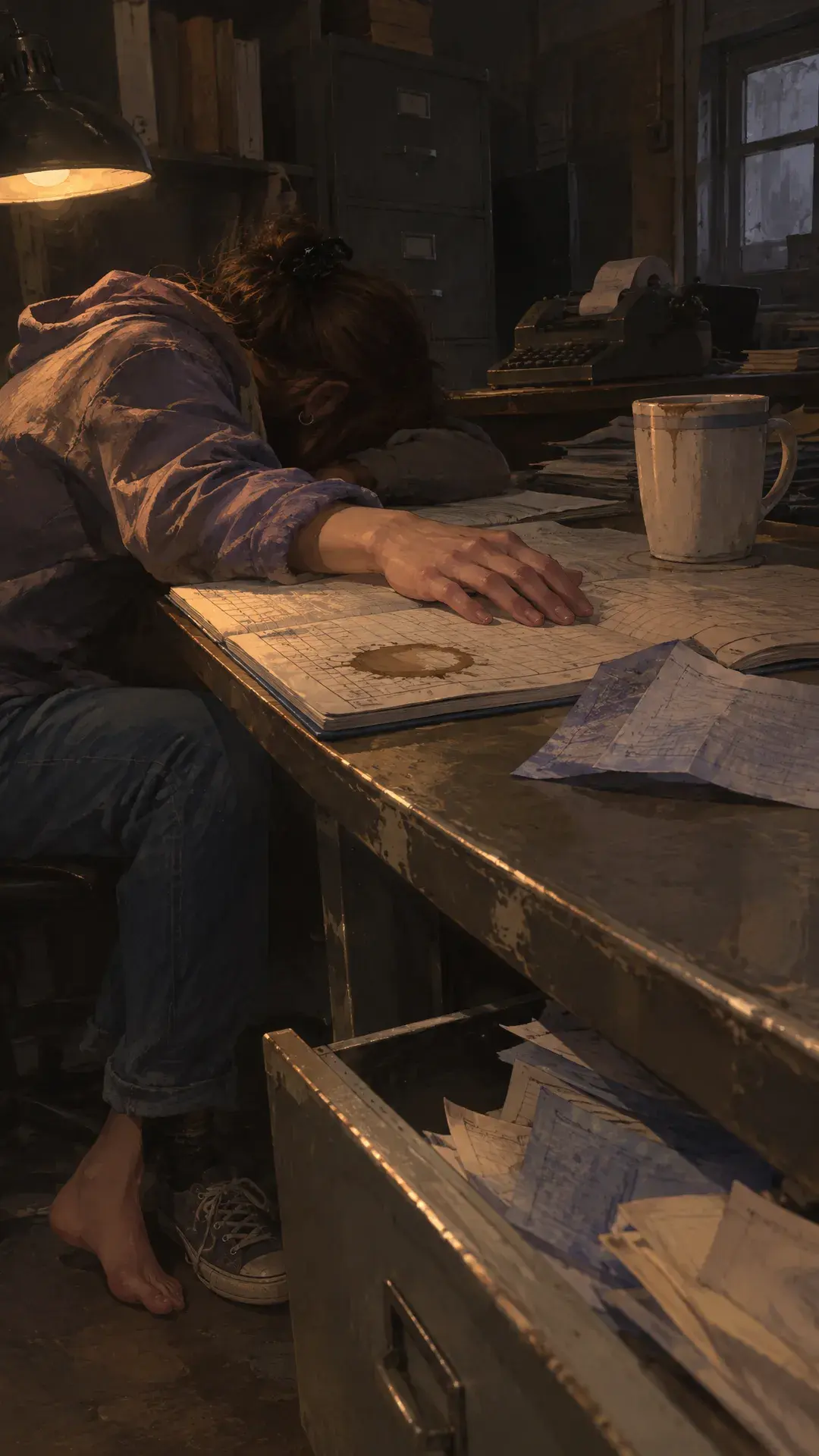
You find Nora asleep at the desk in the back office, face-down across an open ledger, one arm hanging loose. She's still in yesterday's clothes — a faded hoodie, one sneaker off. Cold coffee has stained the page under her elbow. On the floor, the bottom drawer of the filing cabinet hangs open: the one she keeps the carbon-copy pay-in slips in. The photocopy under the ledger is creased down the middle, like it has been folded into a pocket more than once.
The knock goes through the building before you can move. Two knocks. A pause. Three more. The kind of knock that means somebody is waiting at the laundromat door downstairs for the morning drop.
Nora wakes all at once, hand already flat on the ledger.
Oh god. The drop. I slept through the—
She stops, stares at the open drawer, then at you.
That drawer was shut when I locked up. I know it was. So either I'm losing my mind, or somebody came through the shop last night.
She pulls the photocopy out and slides it across the desk toward you — a pay-in slip, numbers in three different hands.
Three weeks now I've been two hundred short, and I can't find the pattern. Read it. Please. Tell me what's wrong with it, because the next knock down there is not going to wait for me to figure it out alone.