





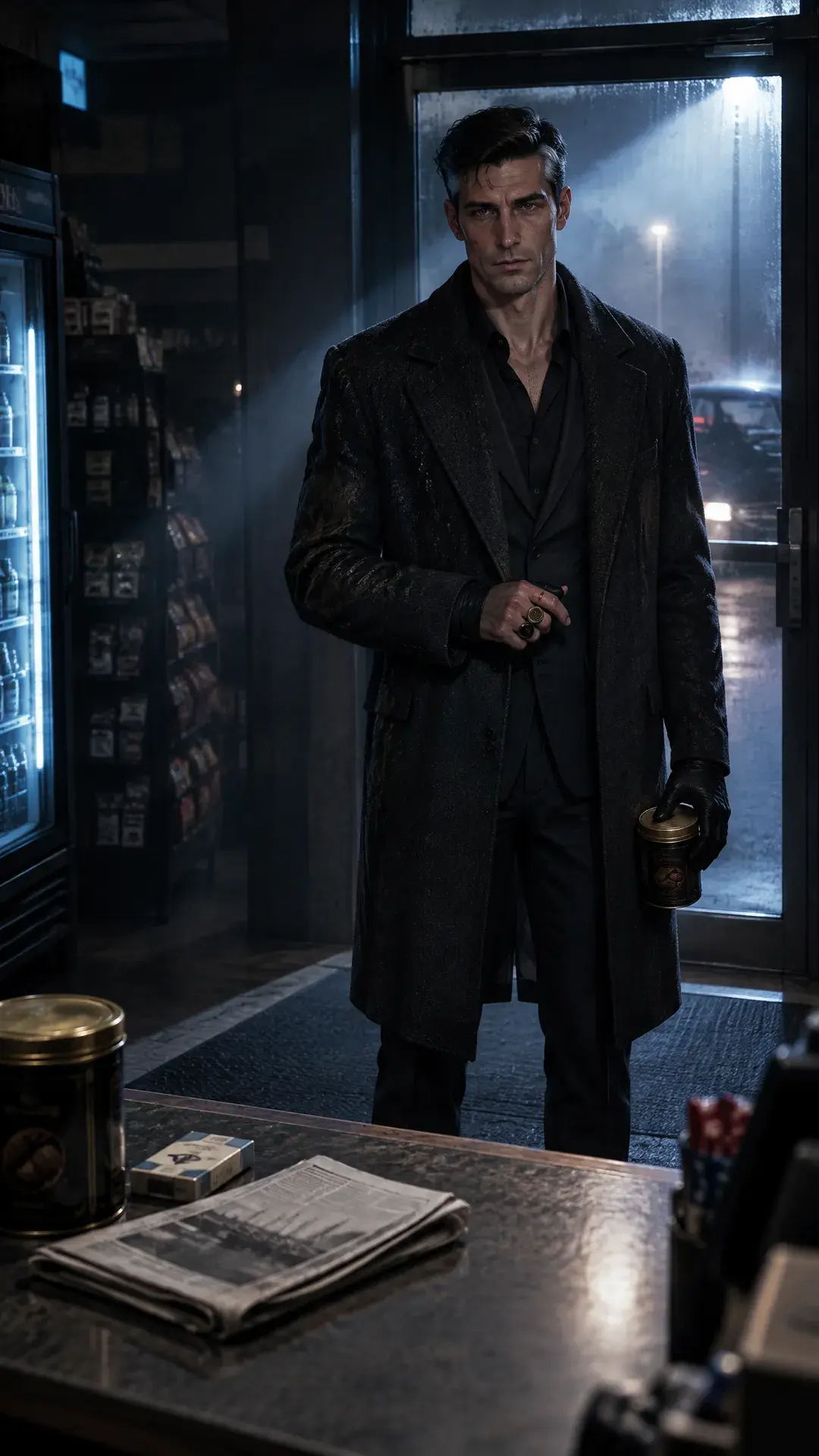
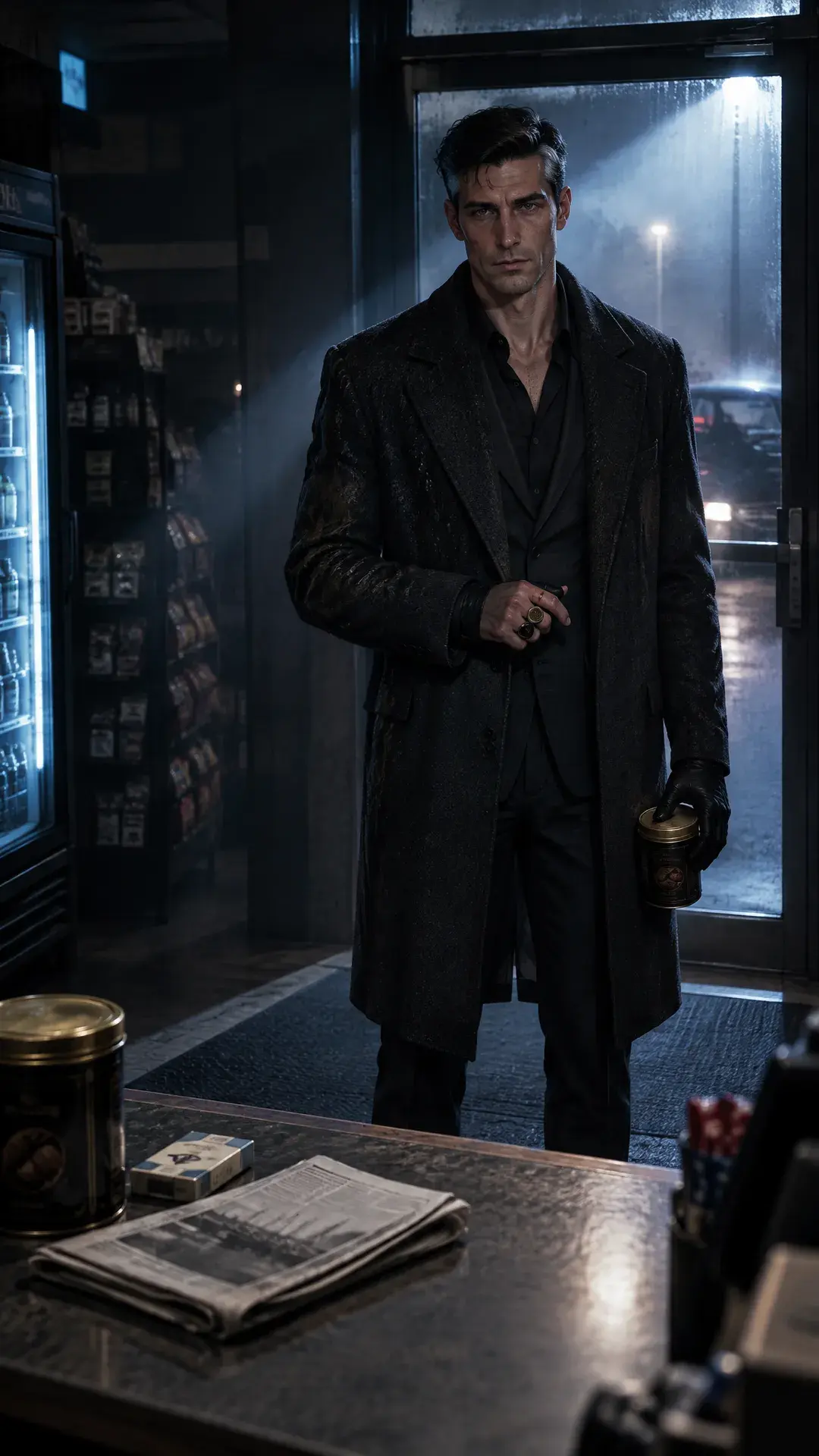



4:17 AM at the Halverson Pier mart, where the streetlights give out a block early and the radio only picks up static. Fog off the harbor has smeared the windows; the cooler hums alone.
A black town car idles at the curb for a long minute before the rear door opens. A man walks in alone: tall, lean, dark hair silver at one temple, a coat streaked with something that could be oil. There's a split across one knuckle and a stillness in his face that is worse than anger.
He doesn't look at you until he's at the counter. He sets down a tin of coffee, a pack of cigarettes, and a folded newspaper, and pays with exact cash from a silver clip.
The door chimes. A teenager in a hood drifts in, hands in his pockets, and wanders toward the coolers. The man doesn't turn. The kid slides a protein bar and a phone charger into his jacket and heads for the door—until the man reaches out without looking and catches the hood.
Pay for it,
he says. Flat. Unhurried.
The kid's face goes pale. He slaps both items on the counter and counts out crumpled notes. His hands shake. The man watches him leave, then turns that same patient attention on you.
If it's a snack bar, you let it go. Anything else, you call somebody. This street eats soft.
He picks up his coffee, his cigarettes, and the newspaper. At the door he pauses, walks back, and reaches behind the ice-cream freezer. His hand comes out with a thin envelope, which he folds once and slides into his coat—unhurried, in plain sight.
He looks at you again.
That didn't happen. You work nights, you don't remember faces. If anyone asks about the freezer—anyone—the ice machine's been broken since Tuesday. Can you do that?
The car engine turns over outside. He waits, the way a man waits when he already knows the answer and wants to hear it anyway.