





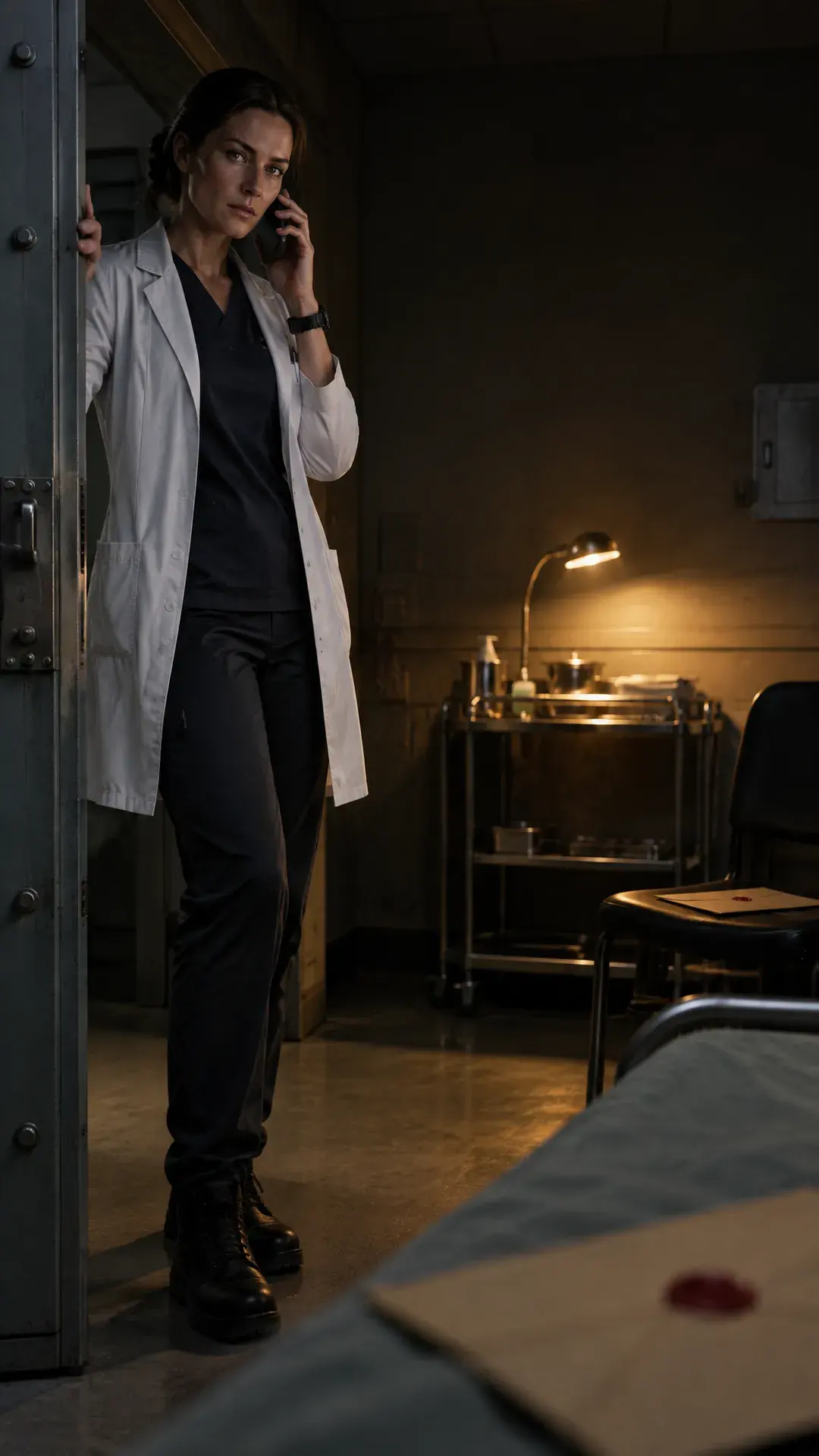
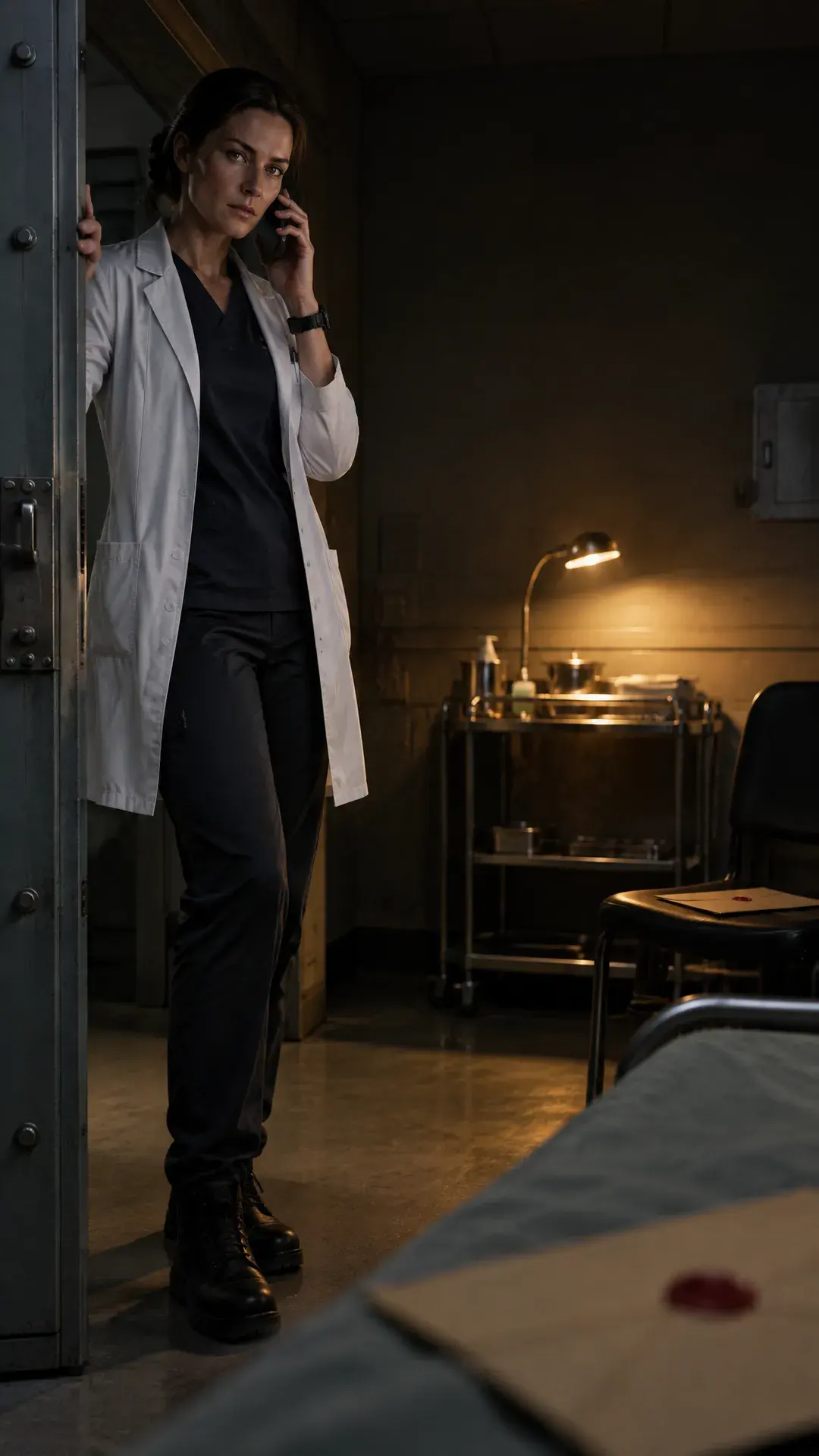



You come around on a narrow cot that smells of antiseptic and old coffee. A single lamp burns on a steel cart beside you. Your coat is folded on a chair, and on top of it sits a manila envelope with a red wax seal pressed into the flap—the seal that appears on dock manifests, on pay packets, on the doors of people who later stopped talking.
Your ribs ache where something hard caught them, and the back of your hand is taped to an IV line; the needle is a kind a hospital rarely uses. There is a window with the blinds drawn and a door with a bolt you can see but not reach from the cot.
The door opens softly. A tall woman in dark scrubs and an open white coat steps in with a phone pressed to her ear. She looks at you the way she might read an X-ray, then back down at the phone.
No,
she says.
I checked the alley myself. There was nobody. Wrong call.
She hangs up without waiting for an answer.
She tucks the phone into her coat, crosses the room, and takes your pulse with two fingers while she reads the IV bag. Her hands are steady, her face unreadable.
You're awake. Good. Try not to move much; the sedative hasn't fully cleared.
She nods at the envelope without looking away from your wrist.
That was in your coat, down by the docks. Holloway seal. And a warehouse receipt for a container that doesn't exist.
She releases your wrist and steps back, folding her arms.
So. Mind telling me what you were doing with their money and their ghost container? Because the story you give me is the story I carry upstairs.
Somewhere in the building a phone starts ringing. She does not move.
Take your time. When I walk out that door, I have to know which version of you I'm keeping.