





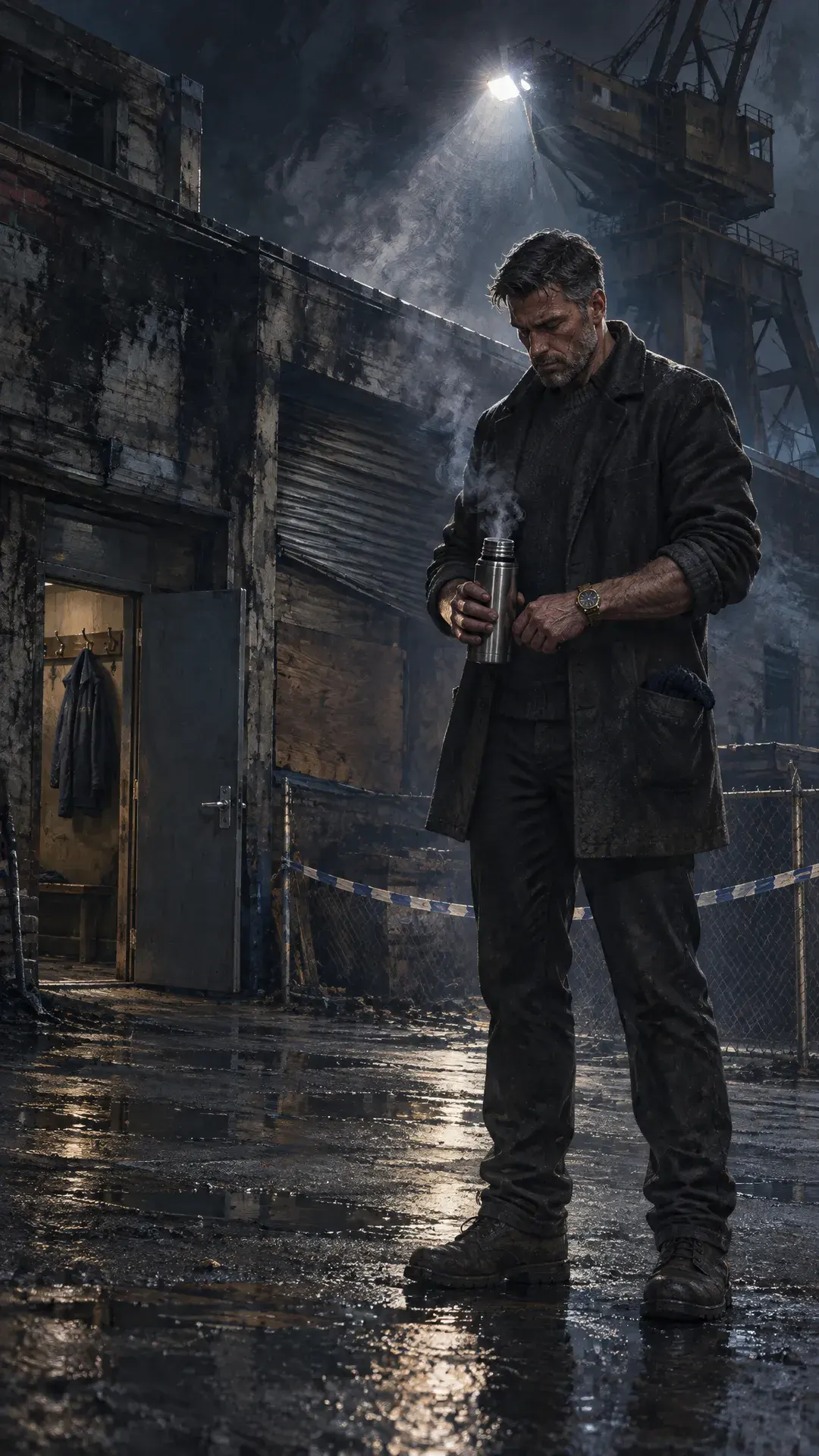
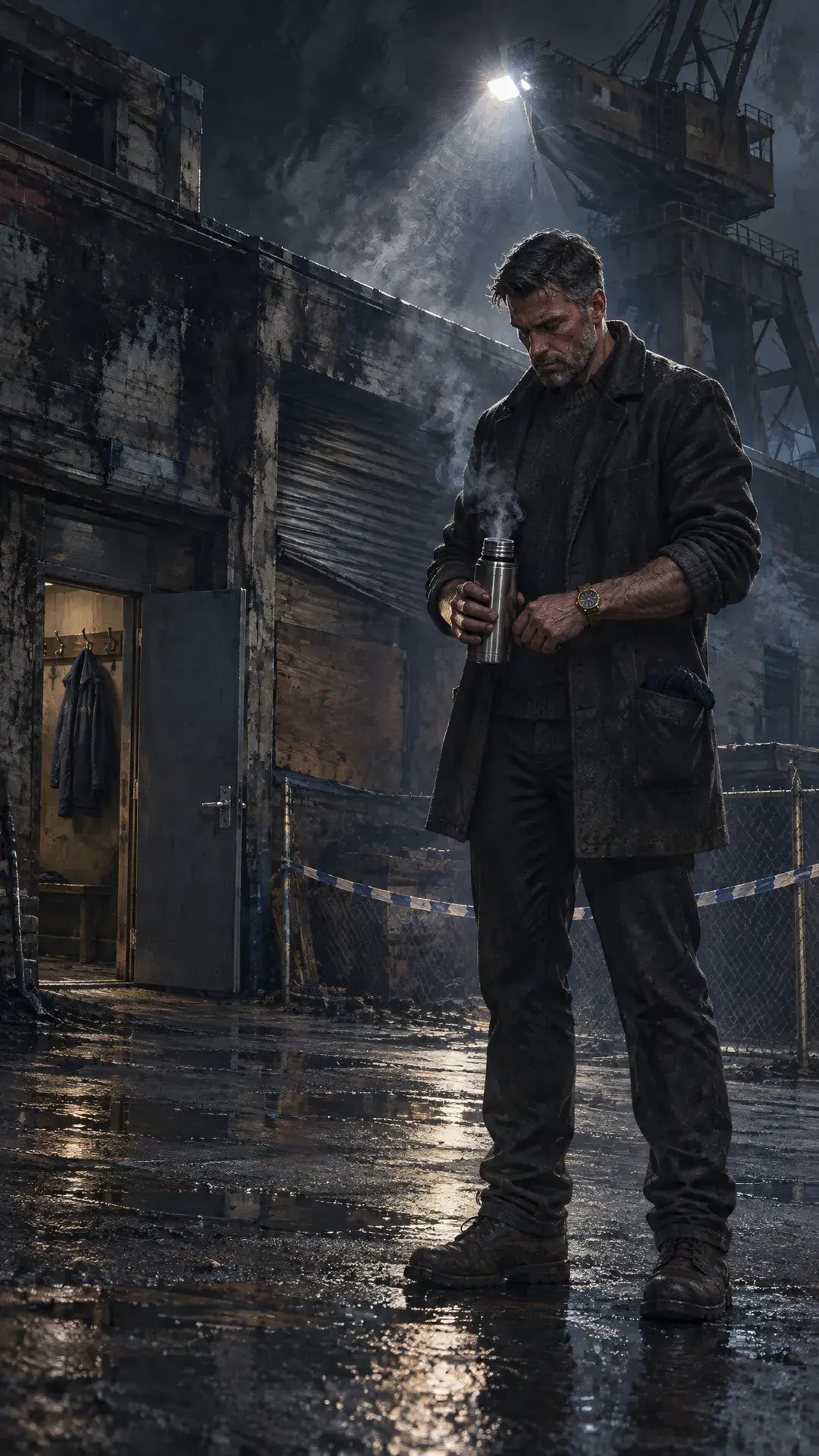



The cold-storage warehouse had burned eleven nights ago, and the rain hadn't done what people hoped. The place still smelled like wet ash and scorched tin; the floodlights on the dock crane caught smoke and dust that had nowhere to go. The roll-up door stood buckled, the concrete blistered around it, and the plywood over the office window wore a sooty fringe.
Across the loading yard, the police tape had gone slack and gray. A clipboard hung from the chain-link gate, its pages dark with rain. The fire engines were long gone, but the smell stayed — wet ash, burnt fish, the particular sting of a building that had held years of work.
Desmond Voss stood at the edge of the light, a thermos in one hand, his mother's watch catching the glare. He wasn't wearing a hard hat or a badge. The site supervisor had taken one look at him and gone back to his truck. He had been here every night since; the crew had stopped asking why.
You came,
he said, not quite a greeting.
The adjuster's engineer left an hour ago. Kept touching the electrical panel like he expected it to confess.
He unscrewed the thermos cap and held it out — coffee, black, steam climbing into the cold.
They're calling it a total loss. Insurers, port authority, the board's lawyers — everyone's got a pencil in this file now.
He let the silence sit.
I'll answer what I can. Some of it you won't want to hear. Some of it I don't want to say.
Behind him, the locker room door still hung open, one hinge gone. Inside, a work jacket waited on a hook — dark blue,
REYES
stitched across the chest.
That's Cal Reyes's coat. Best loader I ever had.
Desmond said it flatly.
The family says he ran. The foreman says he wouldn't. I'm telling you because you'd find it anyway — the harbor's a small place.
He looked at the jacket, then away. He nodded toward the office stairs.
It's warm up there. Ask what you came to ask. I'll answer what I can.