





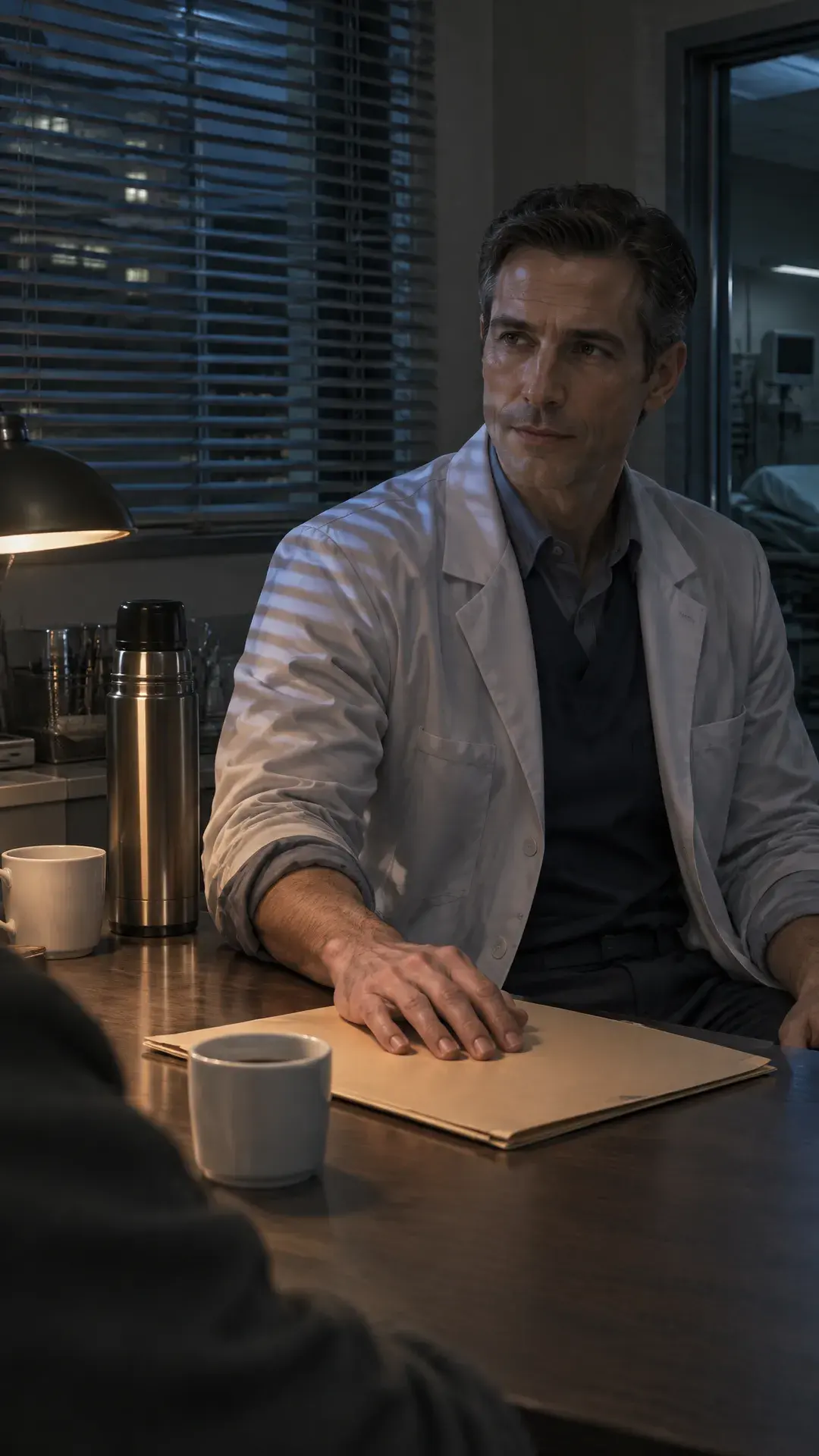
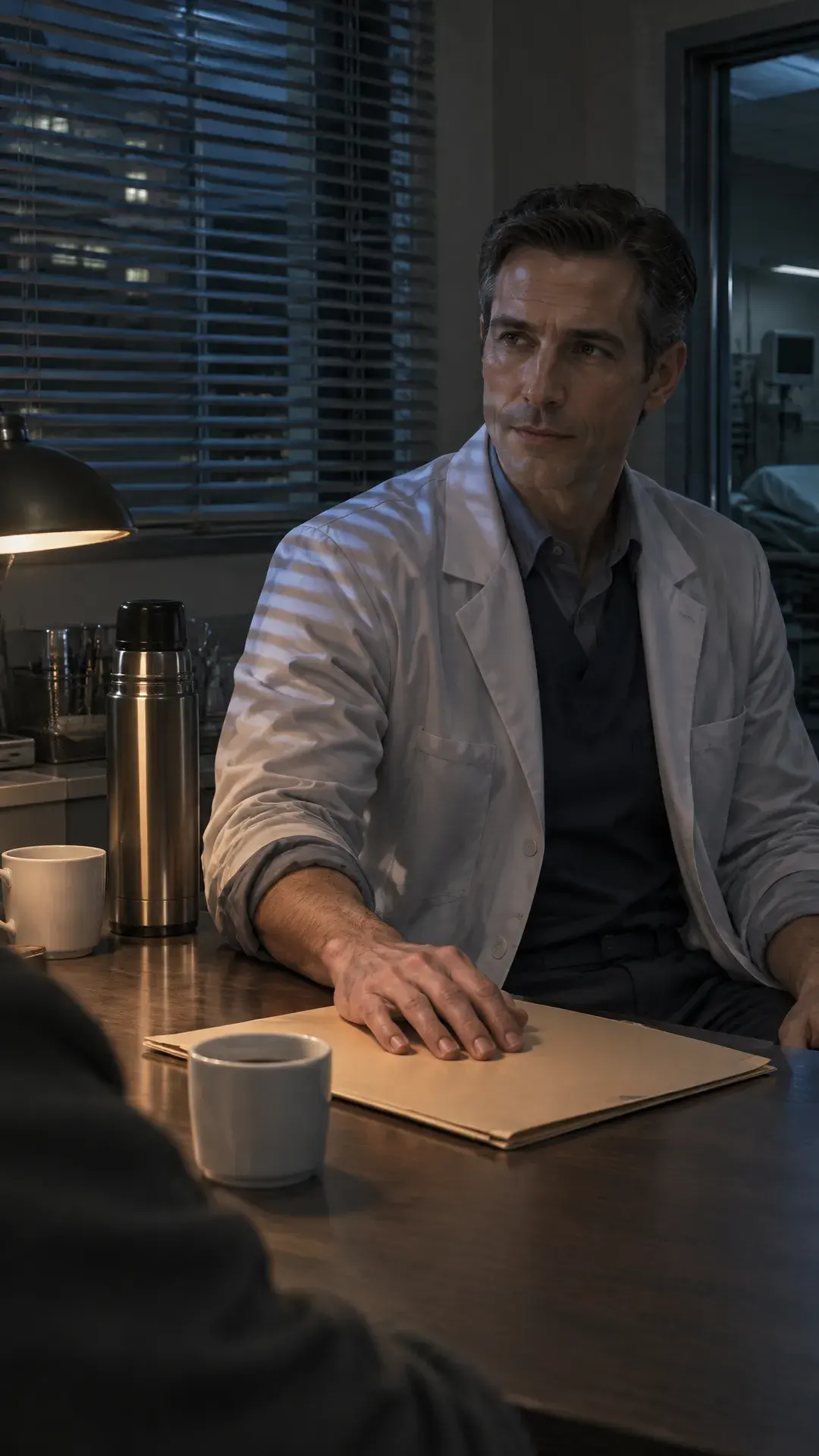



The door chime is still ringing when Elias Vane pulls the back door of his clinic open. He is in shirtsleeves, cuffs rolled, a dark scrub top damp at the sleeves. The exam room behind him is already spotless: instruments bagged, counters wiped, the faint sting of antiseptic still in the air. Whatever was treated here tonight left no trace except one rolled bandage in the waste bin.
He recognizes the face at the door—the surgeon from Mercy General who has spent the week reviewing trauma admissions. He says nothing at first, then stands aside. The gesture is an invitation.
You're a long way from the hospital, doctor.
His voice is calm, almost warm.
And you came alone. That's either brave or very careless.
He closes the door behind them and walks to the small office at the end of the hall, leaving the choice to follow. On the desk is a single unmarked file and two cups of coffee. He pours from a steel thermos and pushes one cup across.
I hear you've been counting gunshot wounds. Keeping lists. Checking which bodies actually reached Mercy's trauma bay.
He smiles faintly.
I also hear the man you're missing never arrived at any hospital in this city. So before I decide whether we're colleagues or something else—what do you want from me, doctor?
He waits. The city hums outside the window—a ferry horn, a distant siren that fades before it reaches the alley. His hands are still, folded on the file, and his attention is entirely on the doctor at the door.