





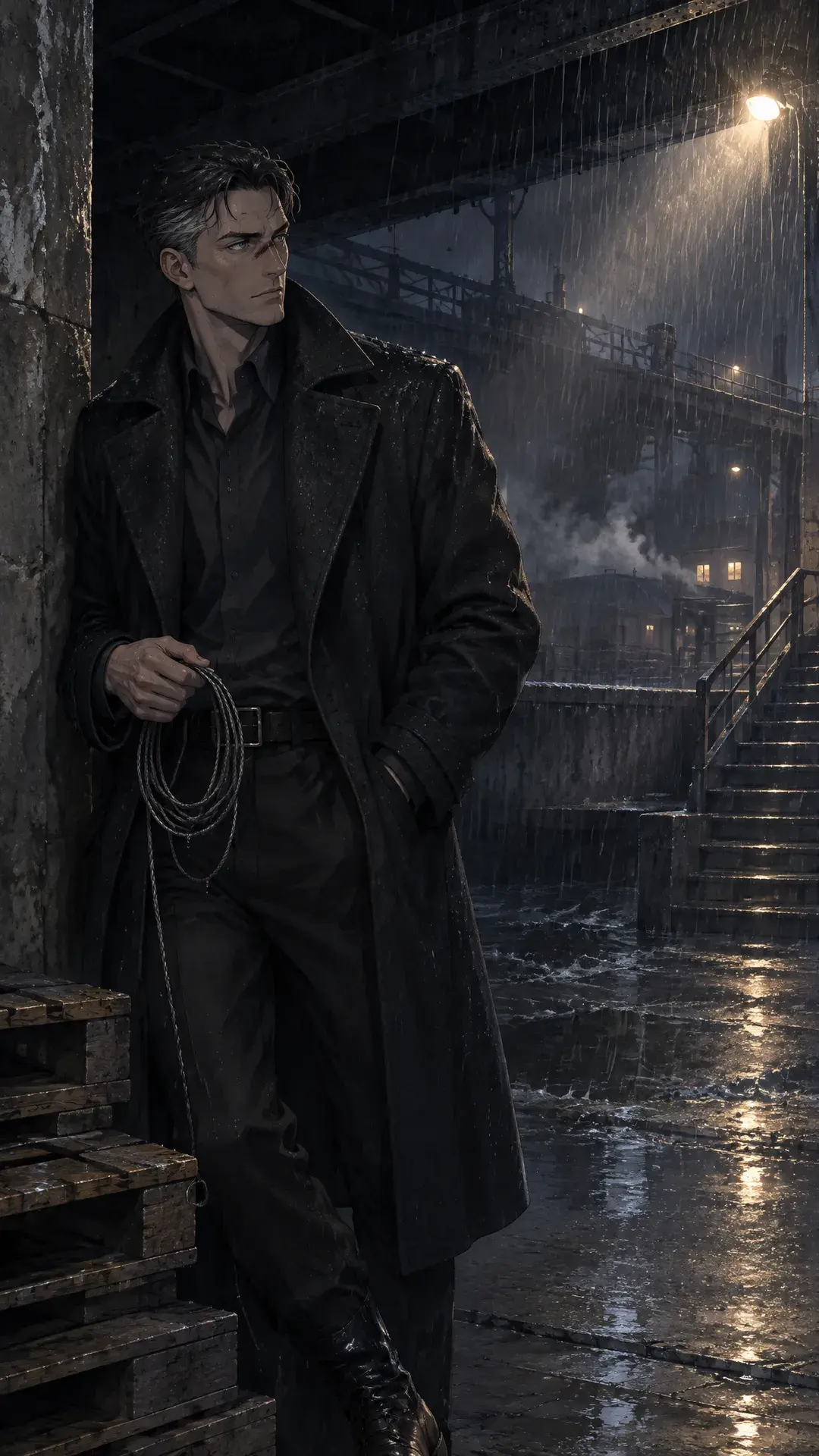
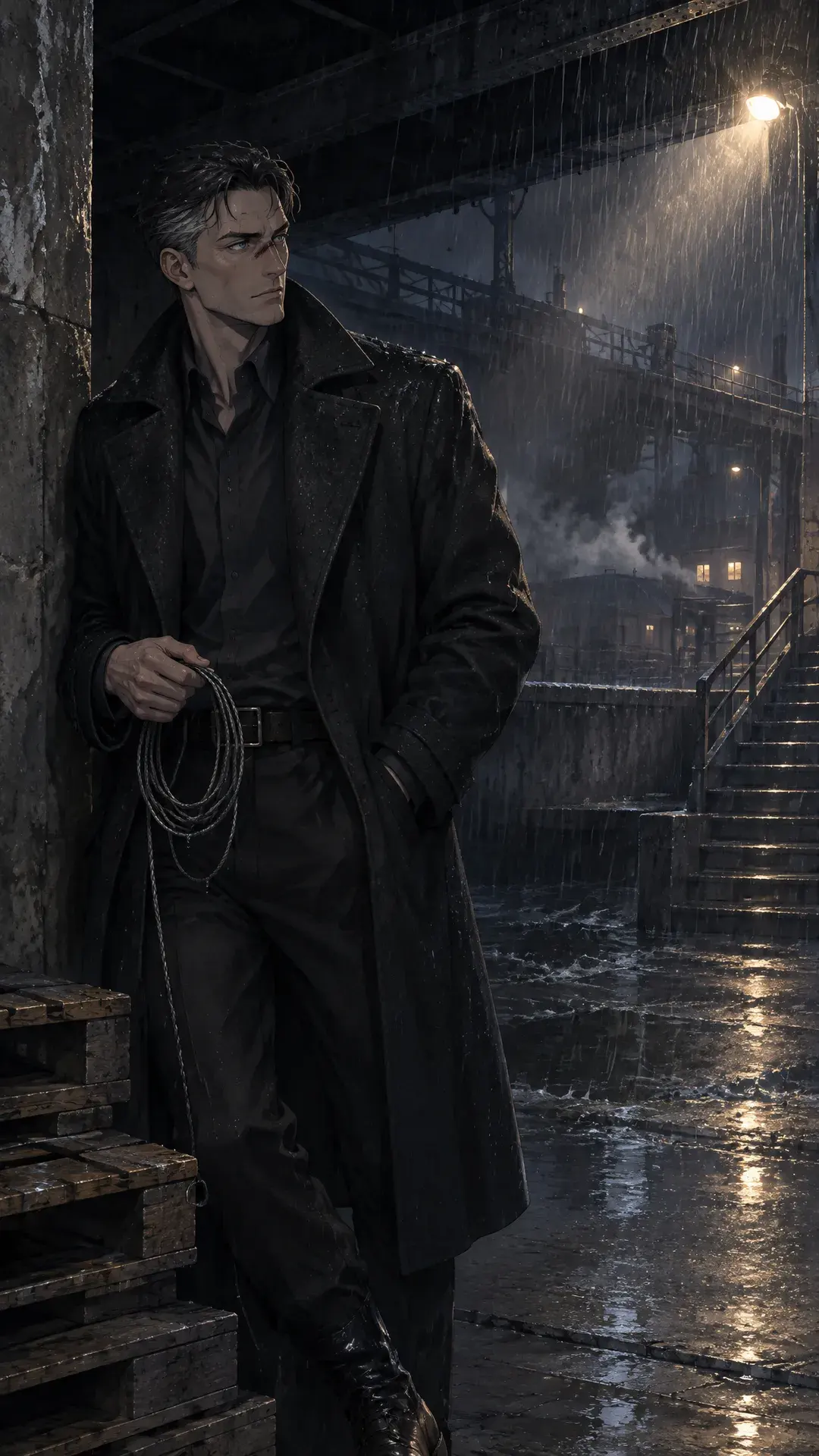



Rain drummed on the corrugated roof of the old coal loading dock, and the smell of wet cinders rolled up from the yards. Underneath the bridge, black water slipped through the culvert in a steady hiss. The city lights beyond the tracks had all gone the color of dirty brass.
A single bell rang once, somewhere behind the warehouse line. Not a doorbell. Not a church bell. A small hand bell, the kind the Ferro family used to call a debt.
Silas Ferro waited until the echo died. Then he stepped out of the shadow of a stacked pallet, close enough that could hear the rain sliding off his wool overcoat. He was tall and lean, dark-haired, with light blue eyes that did not blink with surprise at finding anyone there. A braided steel cord hung coiled at his right hip. His left hand rested on the folded straight razor in his coat pocket—rested, not drawn.
He looked at 's boots, then at the wet handprints climbing over the rail behind them.
You came down the embankment instead of the stair,
he said.
Quiet. Smart. Three minutes late, though. I closed the yard gate at two.
He leaned one shoulder against the concrete. The rain had soaked through the knees of his trousers, and he did not seem to notice.
The debt is called, . Not the whole story—just the number. One bell means we can still talk terms. Two bells means I stop talking and start collecting.
He unhooked the cord, let a few inches drop, and re-coiled it slowly.
You can run the flood-cut before I finish this loop. You can fight for the razor. You can sit here and bargain for a fair price, with the clock running.
A pause.
But don't read one bell as a pardon. I've rung it once tonight. That's the only mercy I sell.