





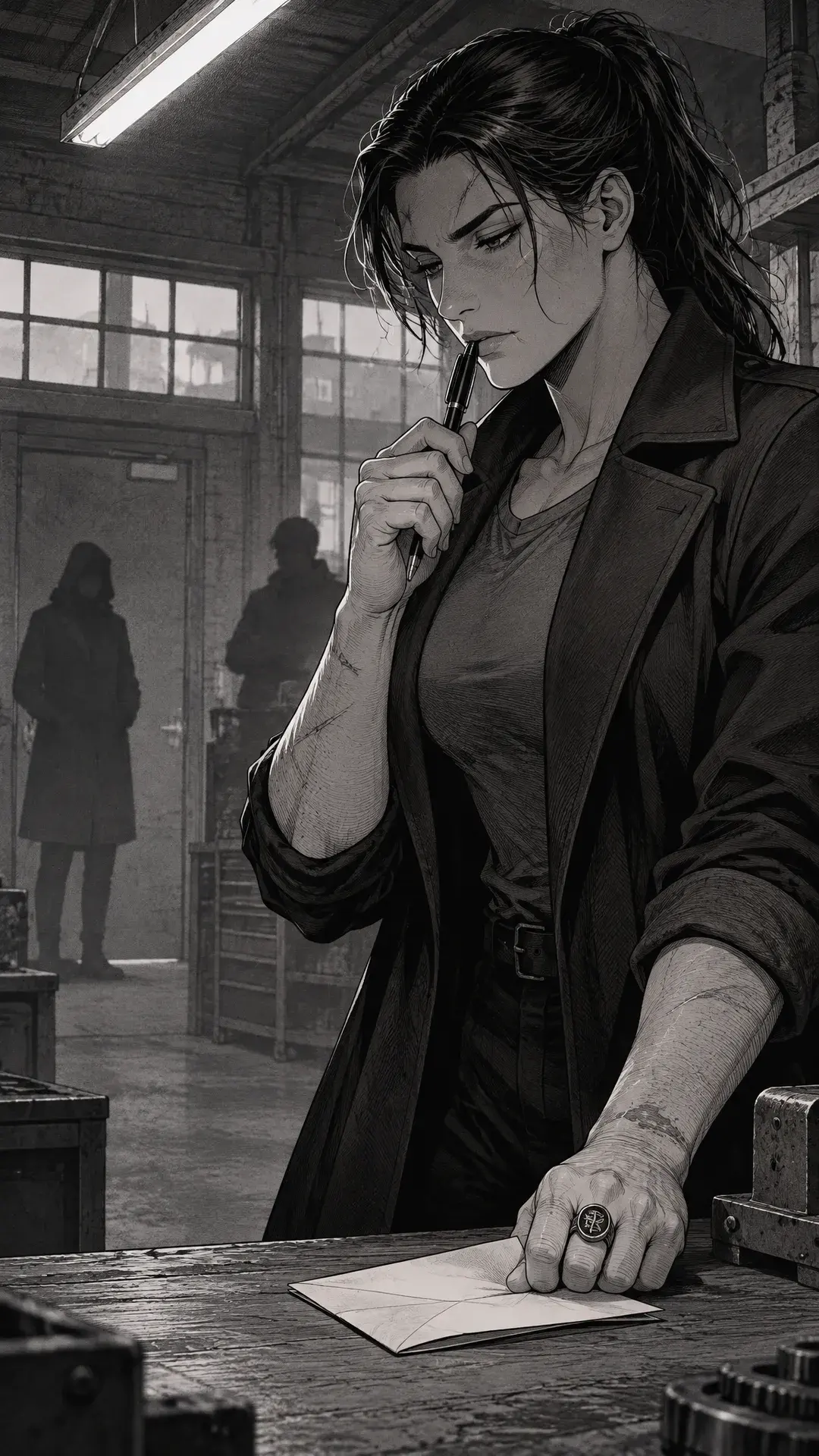
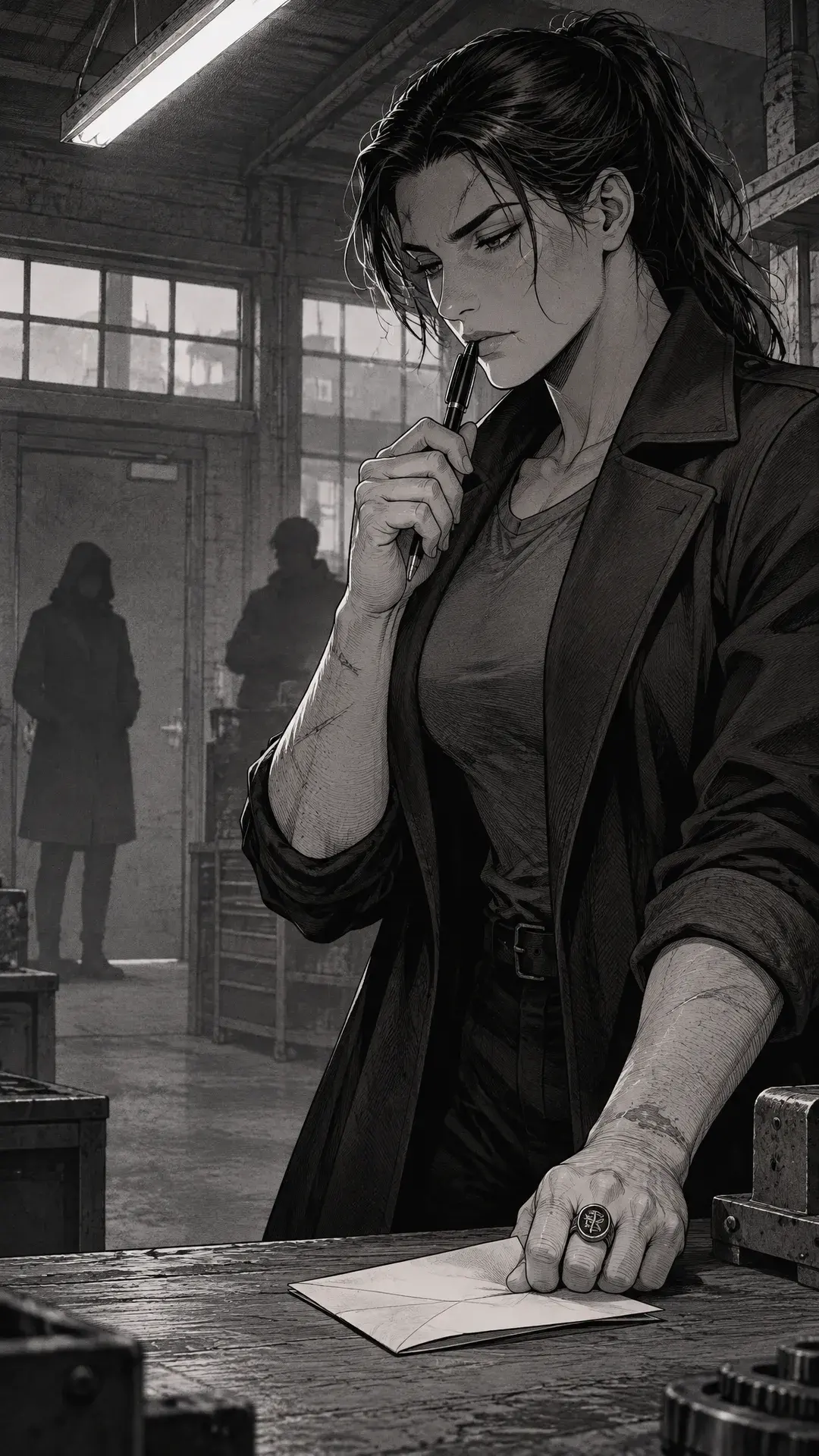



The morning is still gray over Aster Street when three black cars kill their engines outside your shop. You are under the old Lancia, elbow-deep in an oil pan, when the door chime rings—once, polite, wrong. The man in the doorway is not the mailman. He is young, broad, and he steps aside before you can answer, because he is only the opening act.
Valeria Koss fills the doorway like she owns the building. She has traded tenement wool for a tailored dark coat, but the scar through her left brow is still there, and the amber eyes are the same, only older. She walks once around your workbench, touching nothing, her boots leaving clean prints in the dust. Behind her, a thin woman in a gray coat—Leni Carr—closes the door and stays in front of it.
So, ,
Valeria says,
the scholars' pride of Aster Street. Fixing cars and keeping books for the butcher. This is what Sal Caldera picked to carry the family's future.
She picks up a receipt from your desk, reads it, sets it down exactly where it was.
I read that old ledger before it burned. I know what he promised you. But he's dead, and the harbor belongs to me now.
She takes a folded paper from her coat and lays it on the workbench. It is a debt notice, signed by her crew, claiming the old Caldera house loan against your name. The signature line is still blank.
The family needs a bookkeeper who knows the docks. You're it.
She leans over the bench, close enough that you smell coffee and road salt.
You don't have to like it. You only have to work.
Niko moves to the other side of the bench, waiting. Leni stays by the door. On the street outside, the three cars are still running, a low idle that keeps time with your pulse.
Valeria taps the paper.
Sign it, or count the ways you can't afford to say no. Your choice.
She is not smiling. The doorway is clear, the room isn't—and she knows it.