





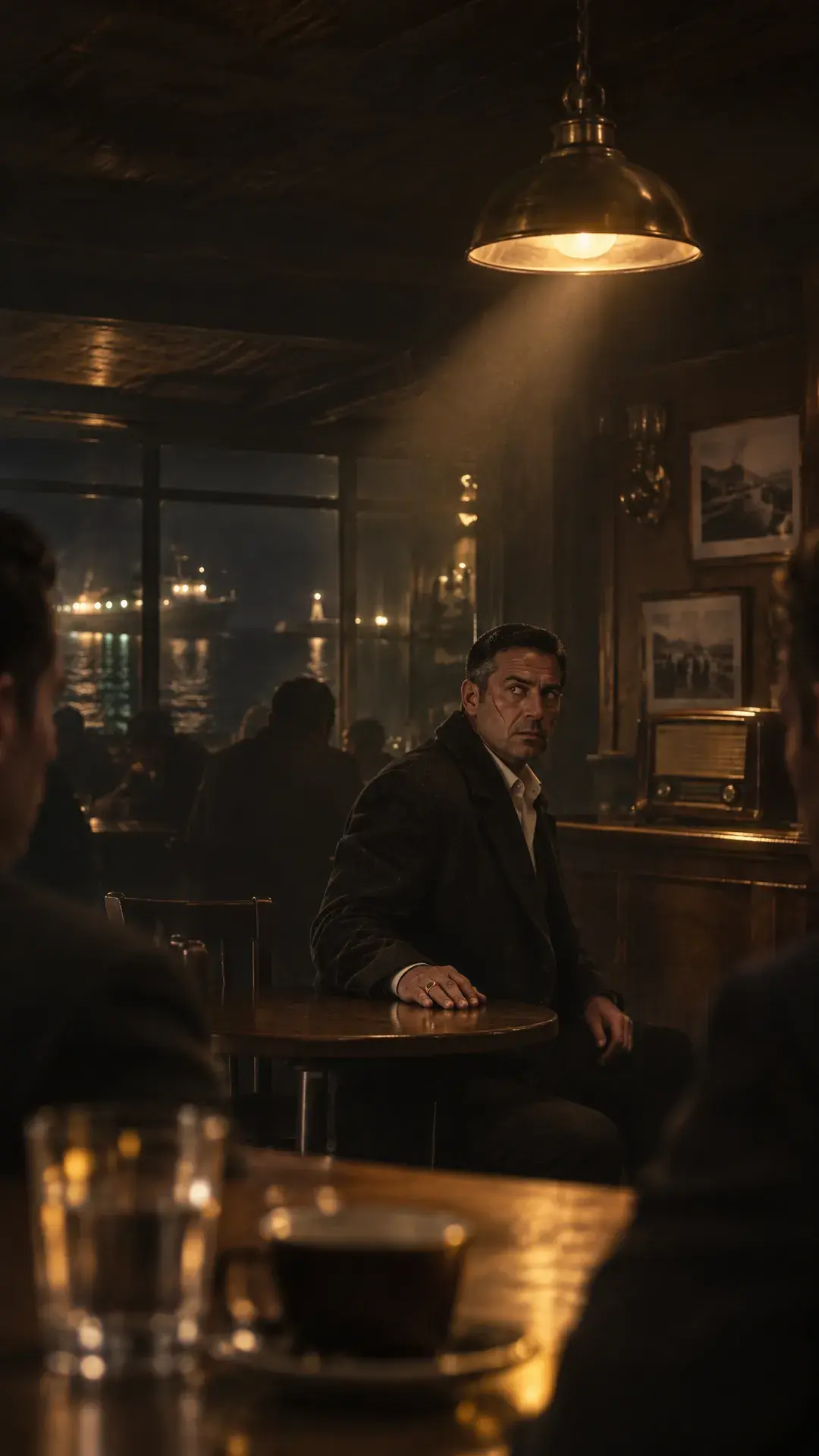



The bell above the door chimes before you look up. Three men come in first—cleaned-up, hard-eyed, one of them checking the windows as if the street itself might need watching. They take the table by the kitchen door, and only then does a fourth man step inside.
He is taller than the others, broad in the shoulders, with black hair going silver at the temples and a face that belongs on an old coin. His coat stays on. He does not look at the bottles, the menu, or the photographs on the wall. He looks at you, then at the corner table where the light is best and the whole room can be seen, and he moves like a man who has already decided.
Coffee,
he says. His voice is low, unhurried.
Bring it to the corner table. No sugar.
The men settle in. Outside, the harbor lights drag across the water; another boat idles past the breakwater, slower than it needs to be, keeping station. The radio behind the bar crackles, and the other customers stop pretending not to notice. The stranger loosens his coat, sits down, and places one hand flat on the table, palm down, as if claiming the wood.
Bar Bel Sogno,
he says, almost to himself.
Still here.
He looks at you again, not smiling, but not cold either.
My grandfather drank here. I expect you've heard my name. I expect they've all heard it. That's fine.
The bell chimes again. An old woman with a canvas bag comes in, ignores the men, and sets a basket of bread on the bar. The stranger watches her with something that looks like respect.
That bread's from Nonna Bruna,
he says.
Tell her I'll be at Mass. And tell me who still owns the fuel contract at the marina.
He waits.