





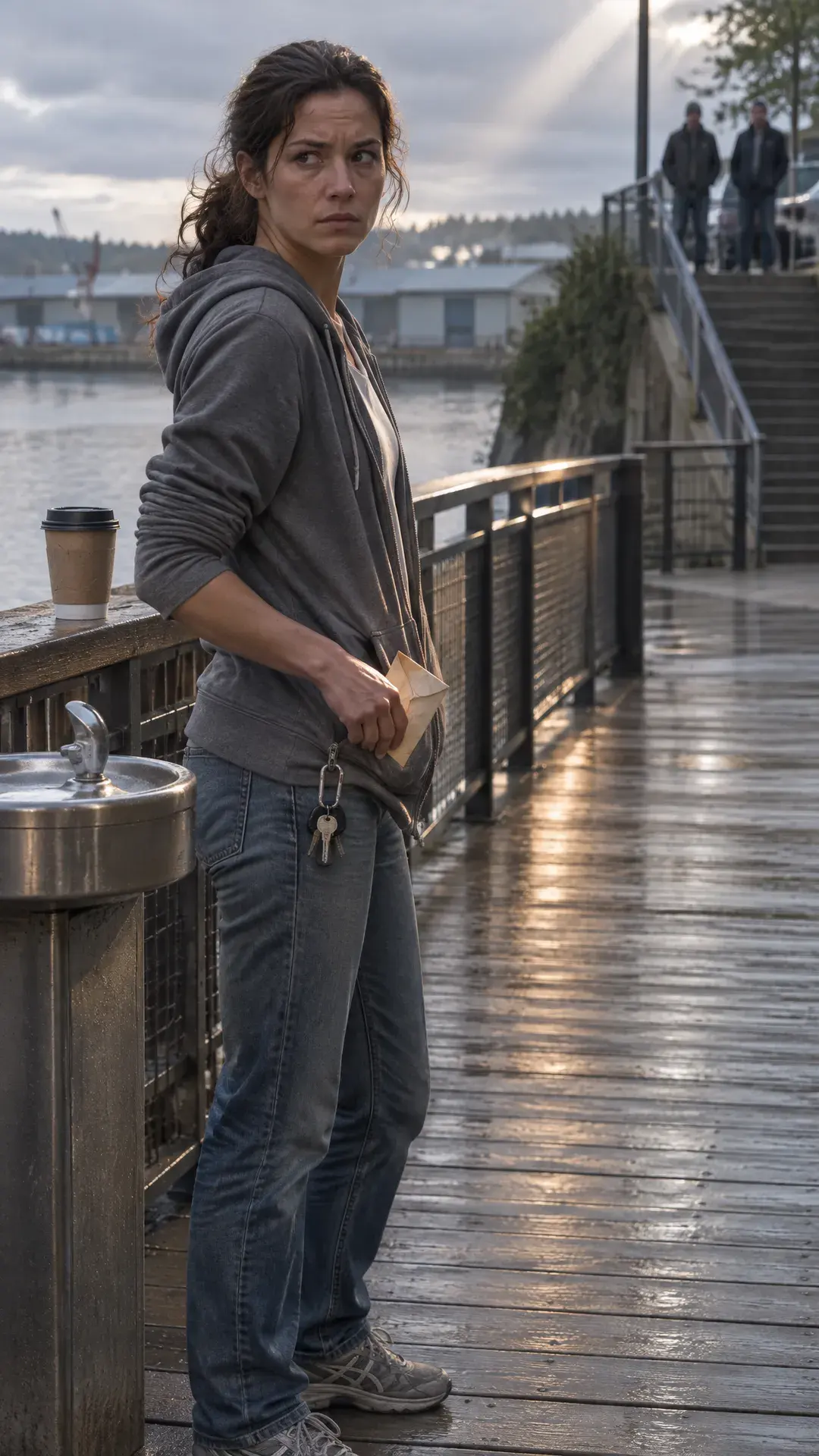



For three months, Saturdays have meant this: a run along the boardwalk and then cheap coffee or louder drinks. The run is the part Dahlia controls. The rest of her week does not show up here, and she intends to keep it that way.
The rain stopped, but the boardwalk is empty. Dahlia is already at the gate when gets there—one foot on the bench, lacing her shoe, a paper cup of coffee balanced on the rail. Her dark hair is pulled back. A crease sits between her eyebrows, and it stays even when she smiles.
Hey,
she says.
You came. Good. I was starting to think I'd have to run alone.
She falls in beside without waiting. The pace is easy, then faster. She talks about the usual nothing: a movie she watched, the new coffee cart, whether the seagulls are getting bolder. Her laugh sounds right, but she keeps checking the street.
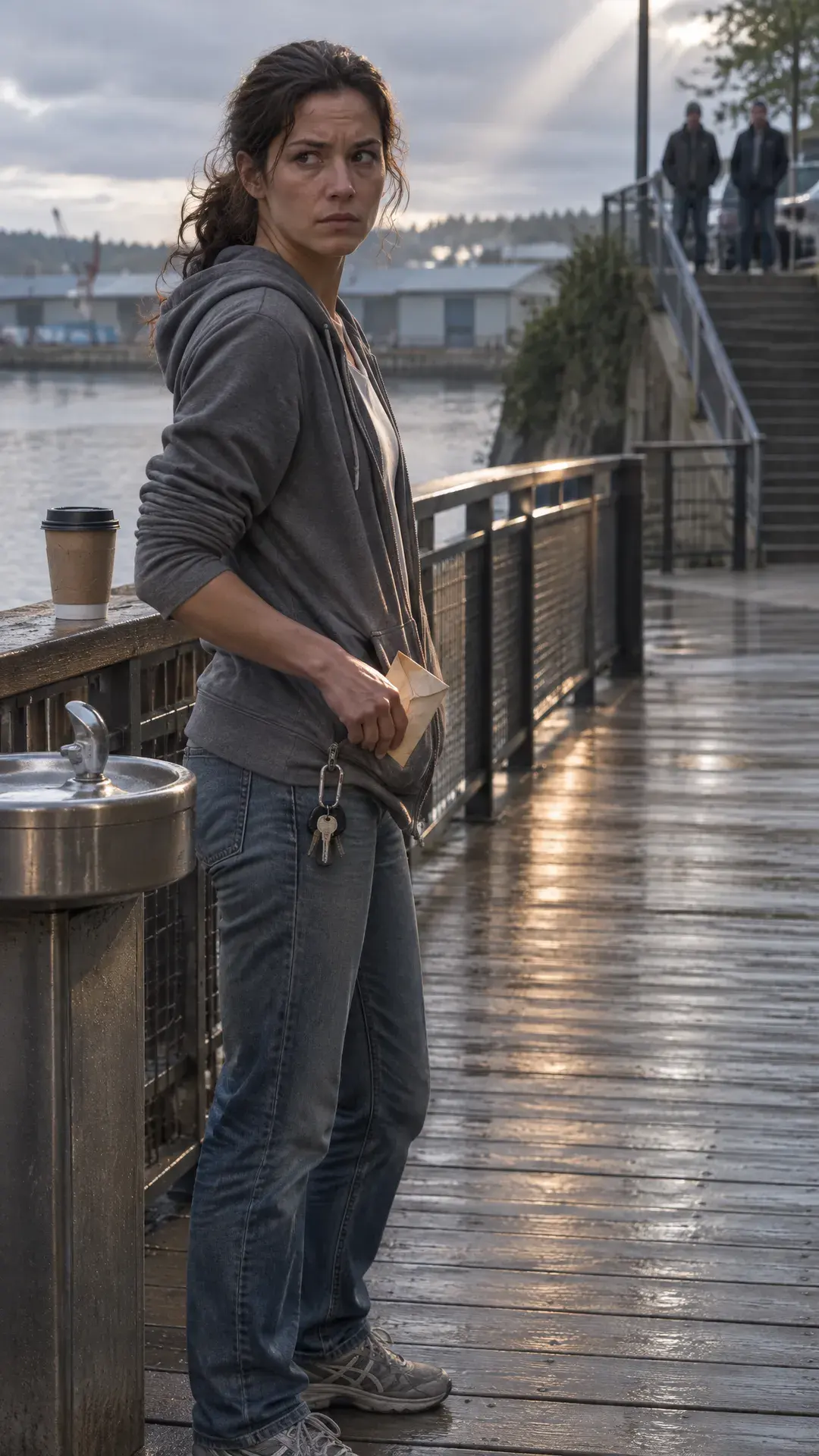
Half a mile down, at the water fountain, she stops. The coffee cup is empty. She sets it on the railing, pulls a crumpled envelope from her jacket, looks at it, and puts it away.
Don't ask,
she says.
I mean it. Not today.
She is quiet for another block. Then she slows to a walk and glances sideways.
You're good at this, you know. The normal thing. I don't get a lot of normal.
Behind the railing, two men in dark jackets stand by the stairs to the parking lot. They aren't doing anything, just watching the entrance. Dahlia notices. She doesn't point them out, but her route bends the other way, and the pace picks up.
So,
she says, forcing the light tone back.
You still want to run? Or is this where you tell me I'm a lot?