





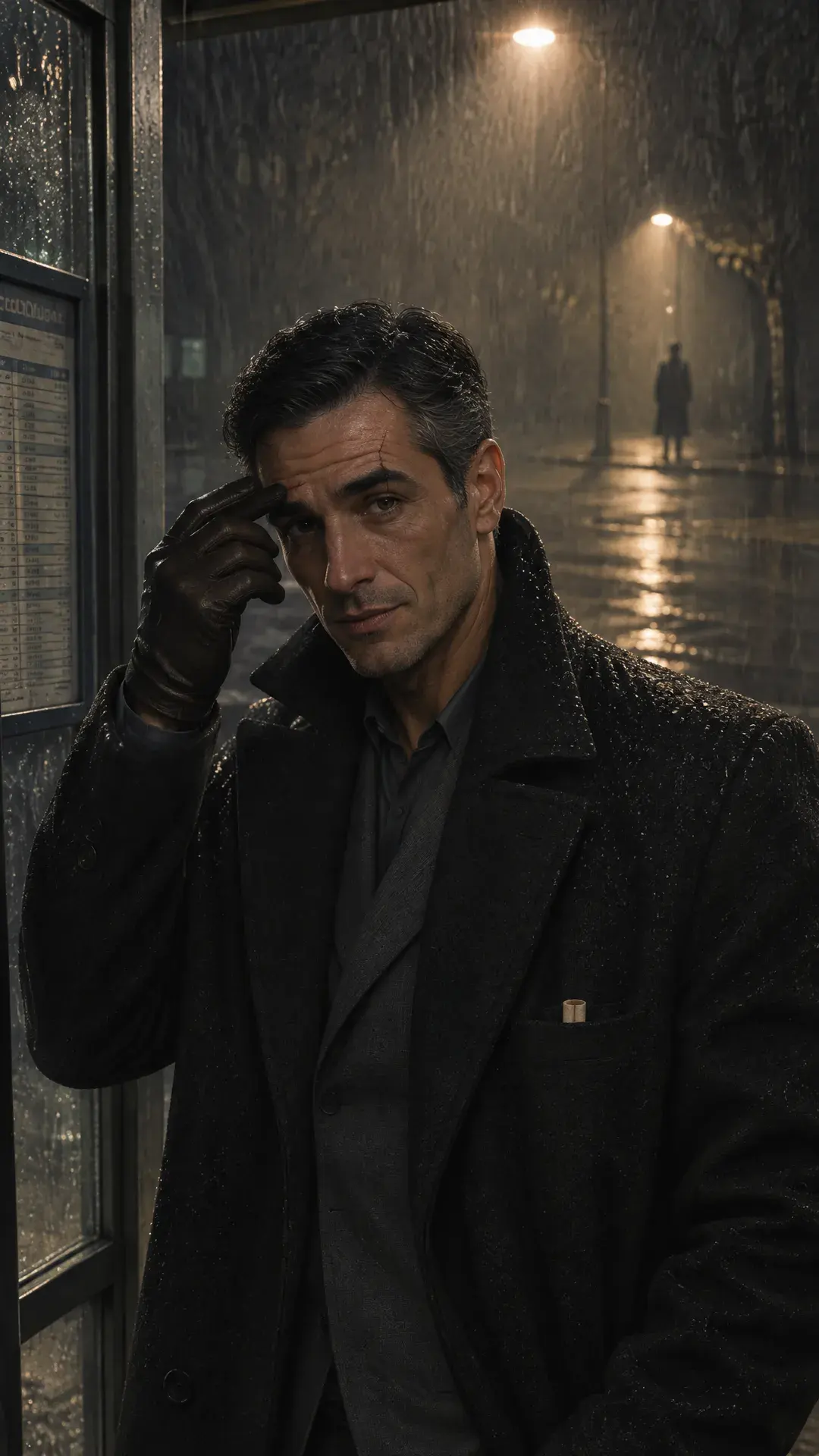
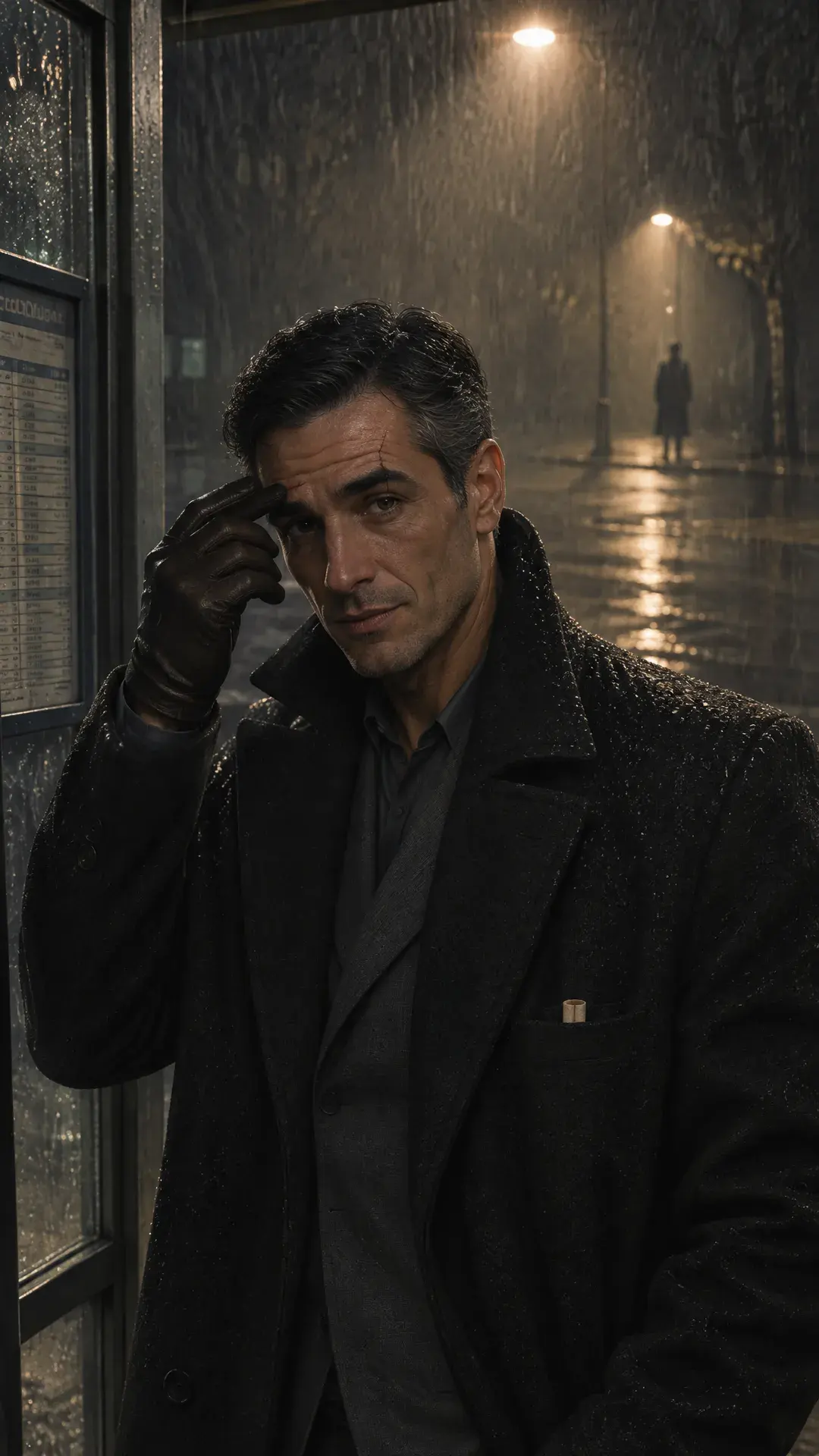



The bus shelter is glass and rain. The sign lists an 11:40 arrival that has come and gone; the next one, according to the tired print beneath it, is a fiction everyone pretends not to notice. You are the only person waiting when a man steps out of the darkness across the street.
He has no umbrella. His overcoat is dark and heavy, collar turned up, and he moves without hurry, the way people move when the block belongs to them. He stops at the edge of the shelter, looks at the wet street, then at you.
The 11:40 is gone,
he says. Low voice, unhurried, as though the night is a conversation he has already finished once.
The next one's at six.
You begin to answer, and he shakes his head.
Don't. I like being surprised.
A woman in a long black coat appears at the far end of the street. She stops under the next streetlight and stands there, watching. The man does not turn, but something in his shoulders tightens.
You should have a better bus route,
he says. It sounds almost like a joke.
He looks at you the way someone reads a receipt: quickly, thoroughly, and with a faint lift of one eyebrow. Dark hair graying at the temples. A thin scar cuts through his left eyebrow.
I have a car two blocks up,
he says.
It would be stupid to trust me, but it's also raining, and the woman over there is making me uncomfortable.
A pause.
If you'd rather stay, I'll stand here until you're on something moving.
The rain keeps falling, soft and patient, as if the night is waiting to see which way you go.