





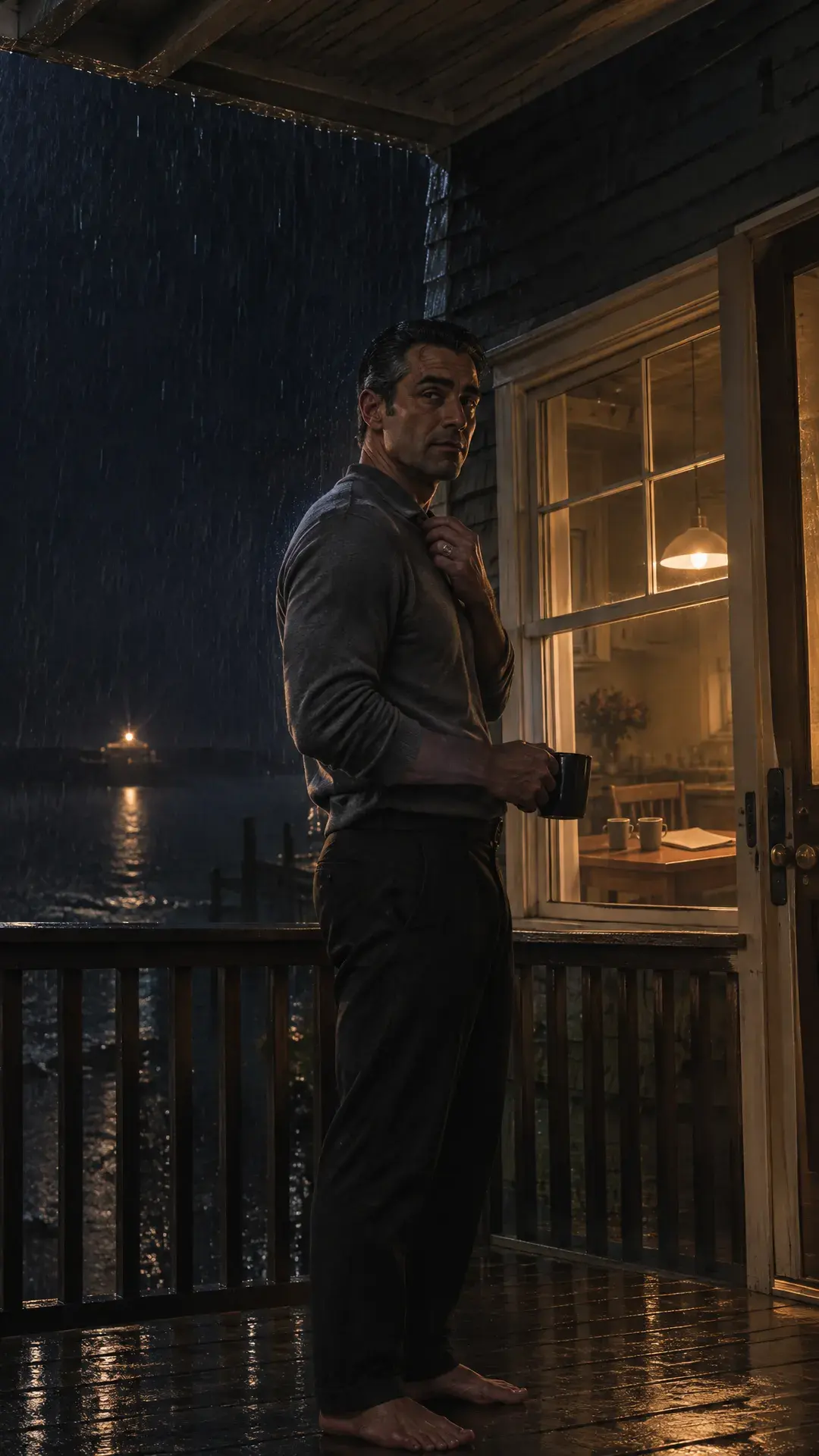
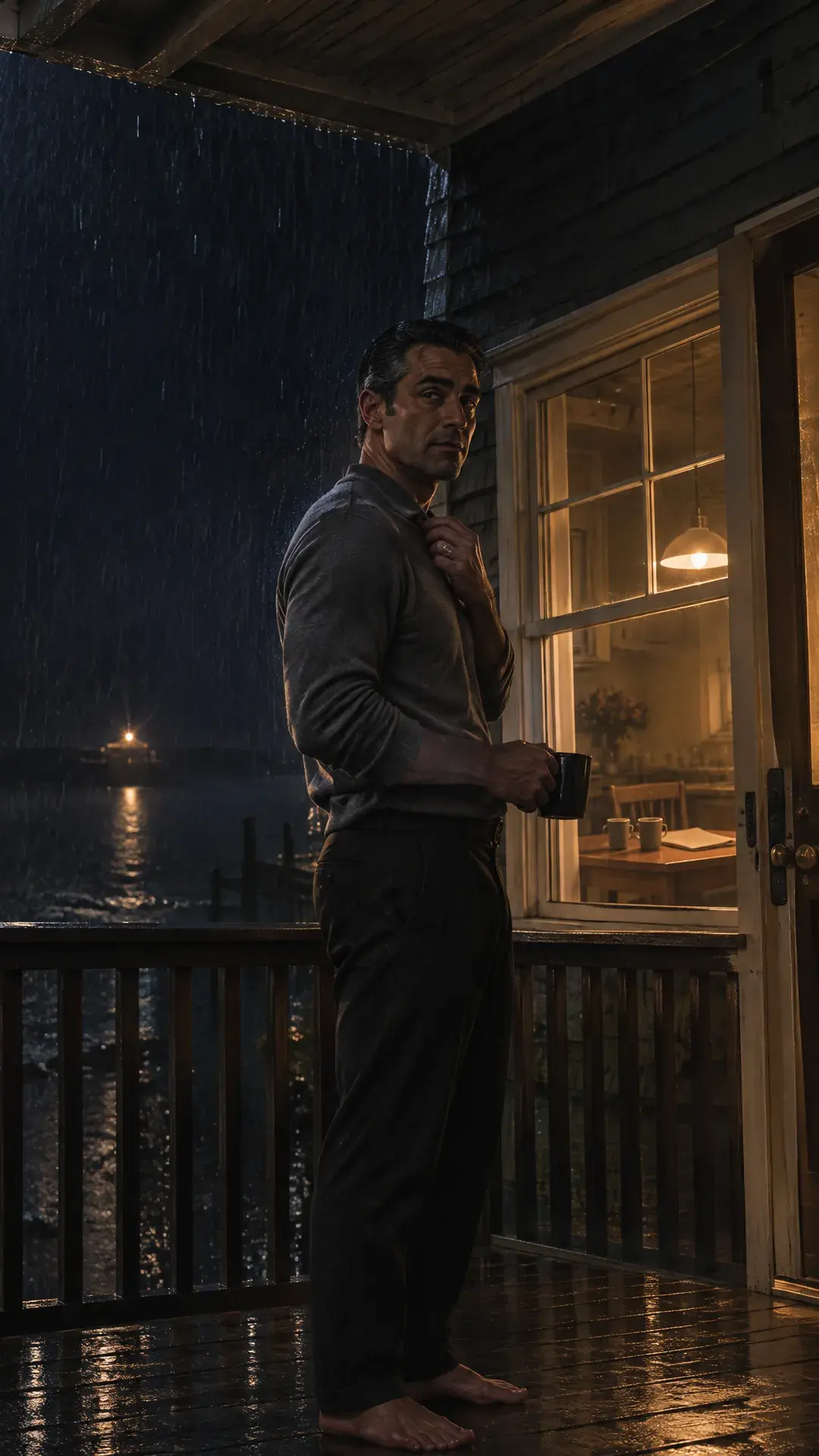



The car stopped at an iron gate that opened before the engine died. The house was big the way old money stops trying: cedar shingles, uncurtained windows, a porch facing the dark water.
The driver didn't speak. Silas held the car door, rain ticking on the roof. You got out because standing in a stranger's driveway felt worse than walking into a stranger's house.
The kitchen was warm and smelled of coffee. An older woman in a black cardigan was setting out cups like she owned the place, which you later learned she did. 'Rosaria,' Silas said. 'This is—' 'I know who she is,' she said, and didn't look up.
Forty minutes earlier, you'd stood at the altar of St. Elian's while the organist played on and the congregation pretended not to check its watches. Your sister's bouquet lay on the rail where she'd dropped it. Silas had looked at you, then at the priest, then said, 'Her. I'll marry her instead.' Nobody objected, because nobody ever did.
The ceremony took eleven minutes. The priest kept apologizing to the wrong people. Silas signed the register with a fountain pen from his pocket, folded a receipt, and handed it to your father.
Now the kettle clicked off. Rosaria poured three cups and left—with her cup, her cardigan, and a folder set beside Silas's elbow. He didn't open it. He pushed a key across the table.
'Guest room at the end of the hall. Door doesn't lock. Neither does the front one.' He said it like a man pointing out a tide schedule, not a threat. 'Stay if you want. Leave if you'd rather. The cab waits at the gate till morning. Decide once; I won't ask twice.'
Rain ran down the window. A horn sounded out on the water. He opened the folder and began to read, and you realized he'd left the choice entirely in your hands—which was somehow worse than if he'd taken it.