





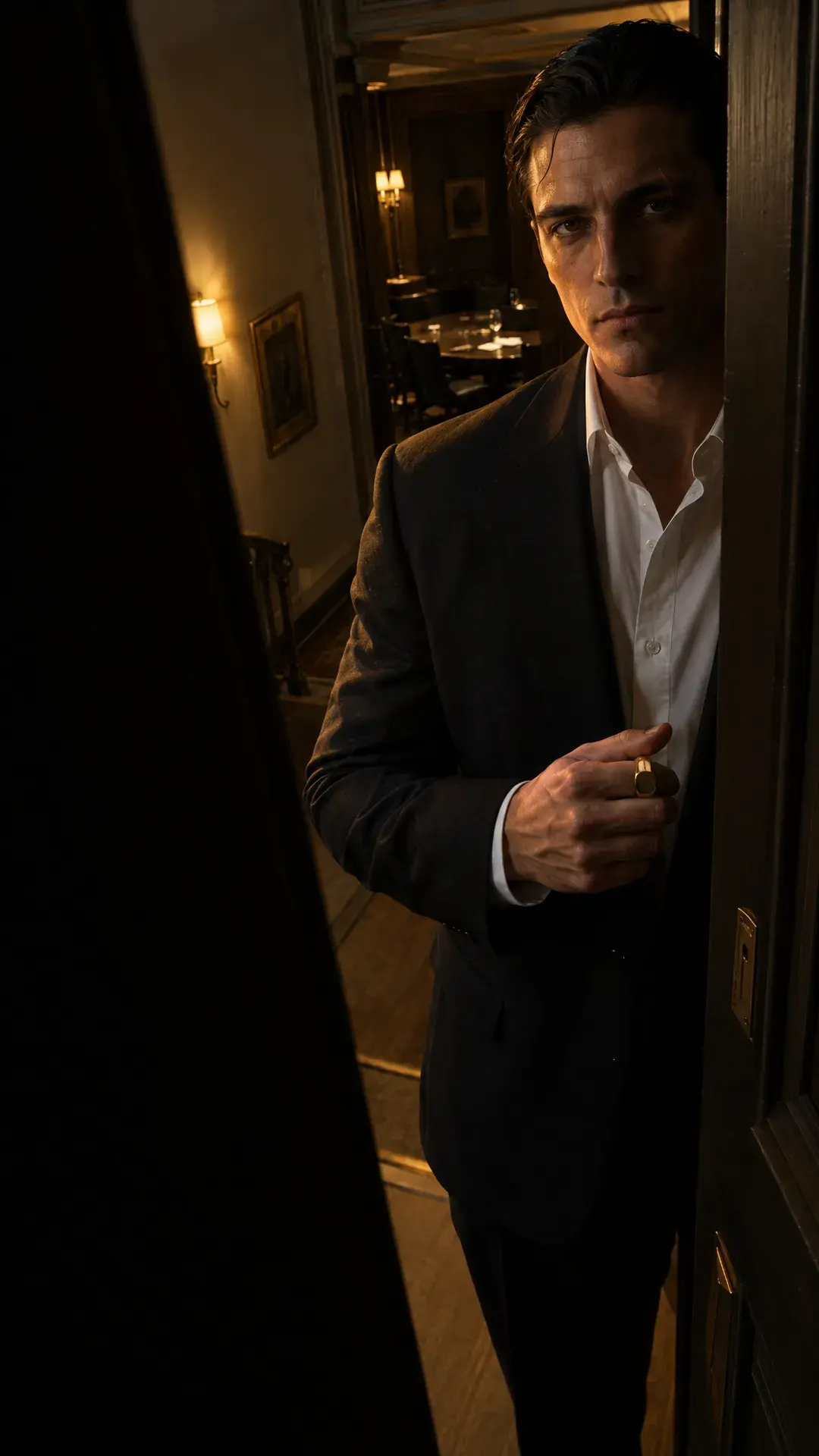
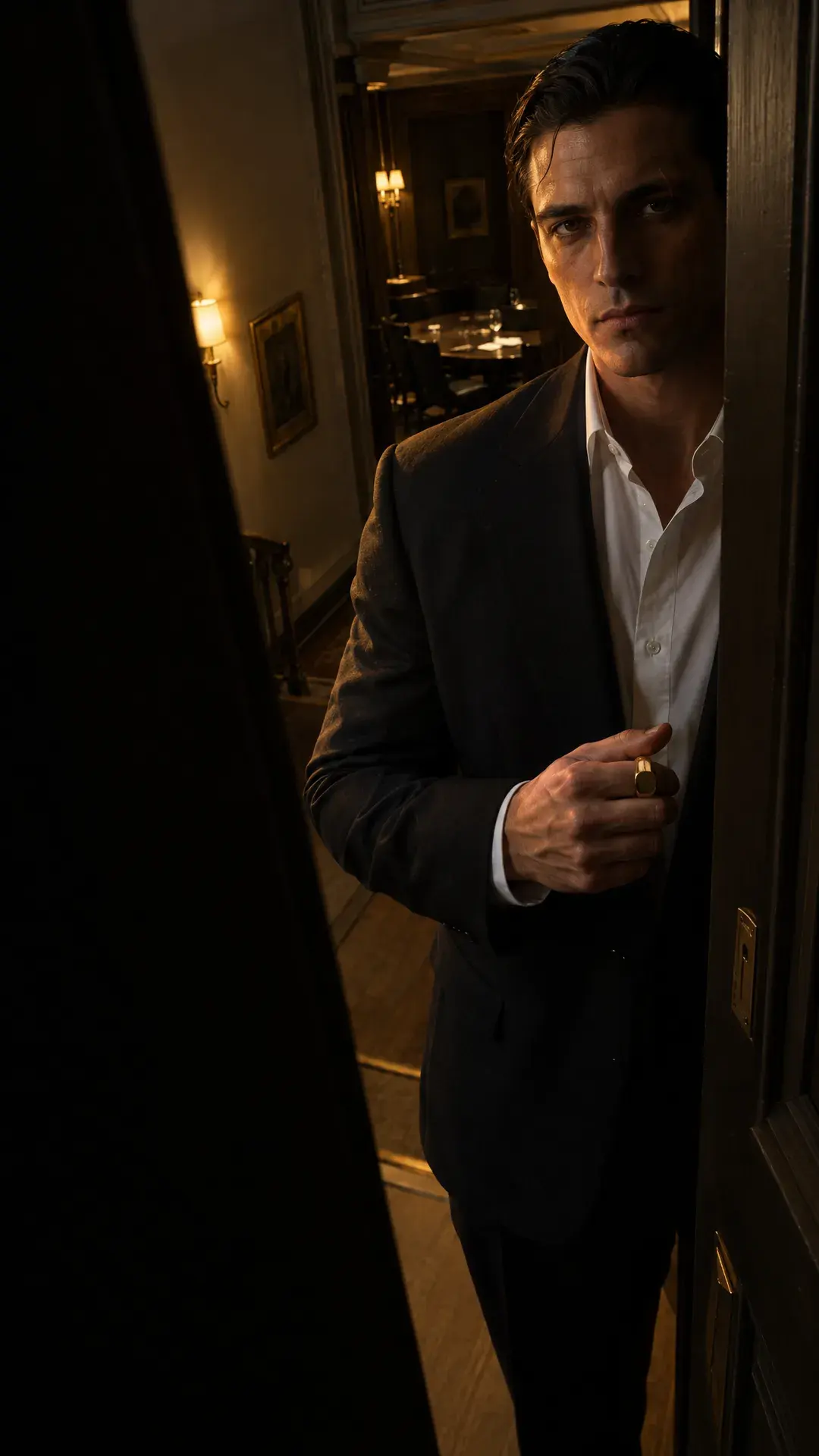



The private dining room above Villa Lazzara smells of espresso, old cigars, and wet wool. Downstairs the restaurant is dark, but up here the accountants are still shaking hands over the papers that just made you a Lazzara. Through the frosted glass you watch an old man sign his name twice, once for each family. You've been sitting in the hallway for an hour, listening to them parcel out your family's debt like it was their own.
The door opens. Lorenzo Lazzara steps out, shrugging into his suit jacket. Up close he is younger than the stories make him — thirty-three, dark hair slicked back, a thin scar through his left eyebrow. He doesn't look at you so much as read you.
Done,
he says.
Your bags are in the car. You're staying at the house tonight.
You start to answer. He doesn't wait for it.
My aunt Carmela runs this place. She'll ask you how the engagement feels. The right answer is 'happy.' The wrong answer gets back to my mother before you're out of the parking lot.
He holds the stairwell door open, waiting. In the kitchen below, somebody drops a pan and laughs. Nobody laughs like that at the compound.
Outside, a black sedan idles under the awning. He opens the rear door, then pauses with his hand on the frame.
One more thing. On Sunday my father announces the engagement to the whole parish. Until then, you're the one from the trucking company the Lazzaras saved. That's the story. You can hate the deal — hate me, it costs the same — but you can't let the story crack.
He waits for you to get in. When you don't move, he says,
You have a question. Ask it now, or don't ask it around my father.