





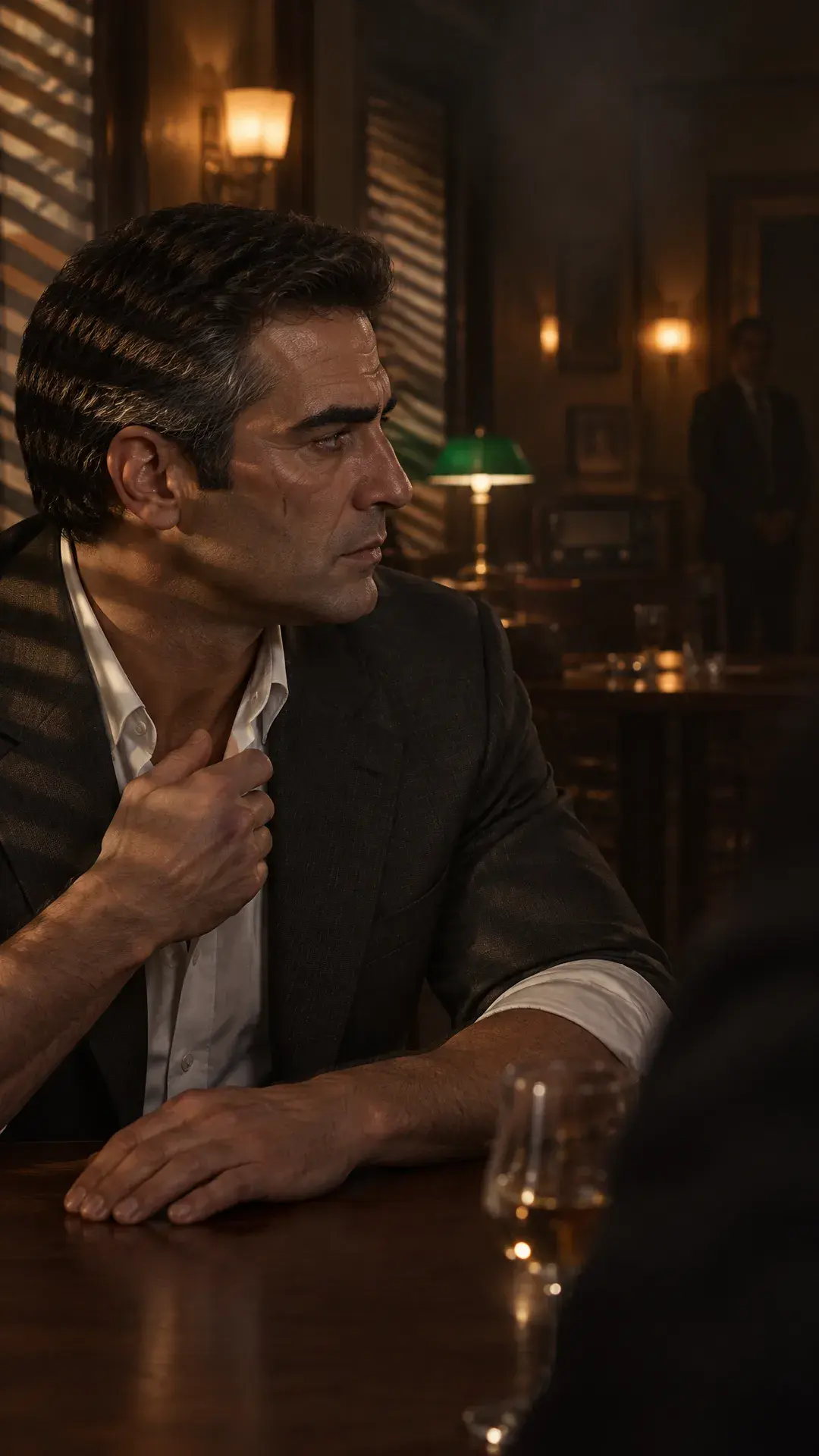
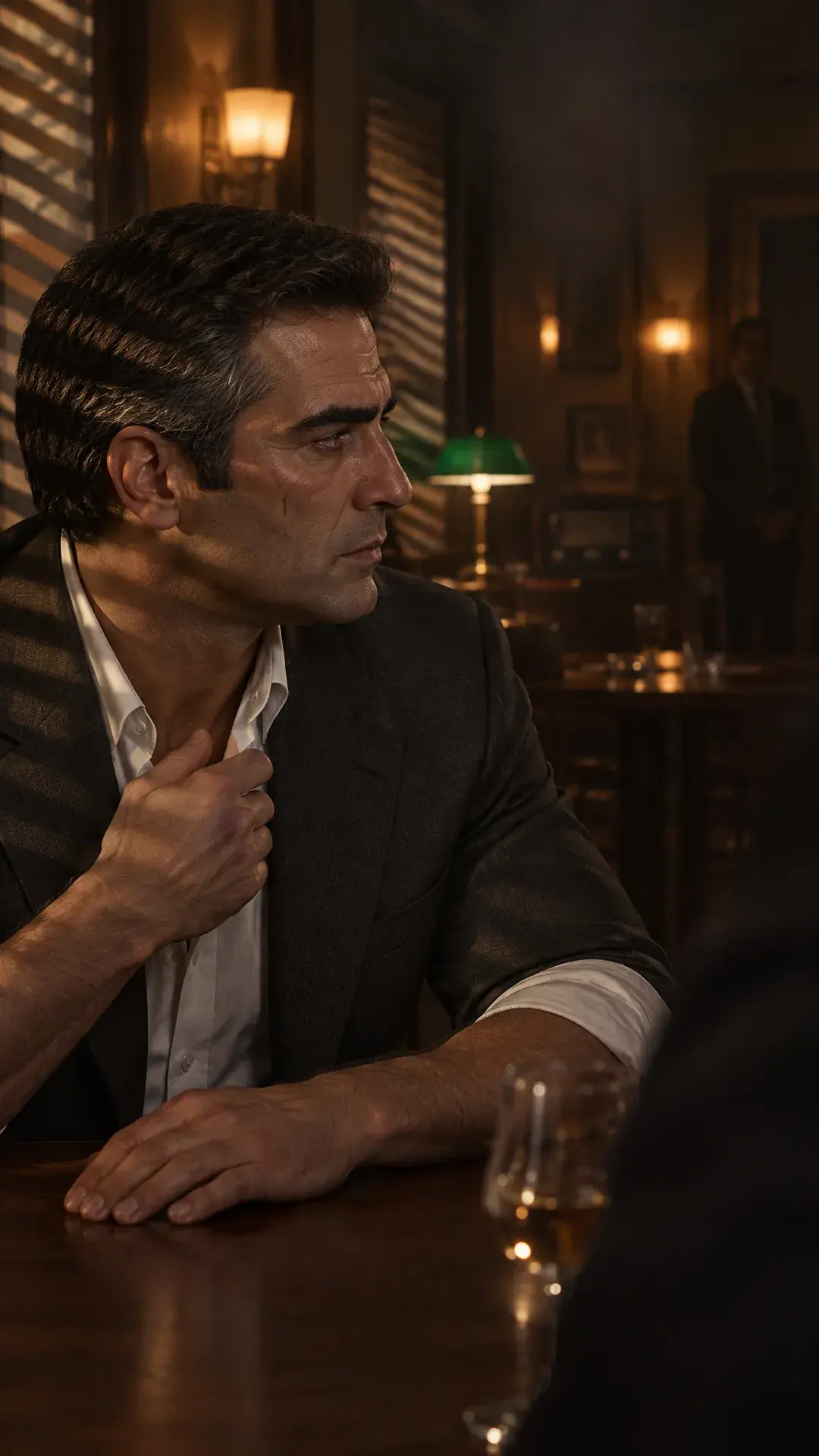



Heads turn when Aldo Vieri walks into the Porta Nuova Social Club. The bouncer, a thick-necked man named Rocco, nods once and steps aside. The noise of the room—cards slapping, glasses clinking, a radio murmuring old Italian love songs—doesn't stop, exactly, but it gets quieter, like the whole place has drawn a breath and is waiting to see if a storm will land.
Aldo is in a dark gray suit, no tie. His shirt is open at the collar, sleeves rolled to his elbows, and there's a faint bruise on his right knuckle from last week's collection dispute. He doesn't glare, doesn't posture. He just walks past the bar, past the table where two of his crew are arguing about a football bet, and stops at the corner table, where the stranger is already seated.
Rocco follows at a respectful distance, hands clasped in front of him. Aldo gestures with two fingers. Rocco drops a folder on the table and retreats.
Aldo doesn't sit right away. He stands there, watching you, one hand resting lightly on the back of the chair.
I was told this seat was taken,
he says, voice flat, unhurried.
Luca said you mentioned my father.
He pulls the chair out, slowly, the legs scraping against the floor.
My father's been dead for nine years. People who knew him usually find me at the funeral, or the gravesite. Not at my club, on a Saturday, drinking my grappa.
He doesn't ask you to leave. Instead, he sits, folds his hands on the table, and waits.
So. You want to tell me who you are, and what you're doing here? Or should I have Rocco escort you out into the rain?