





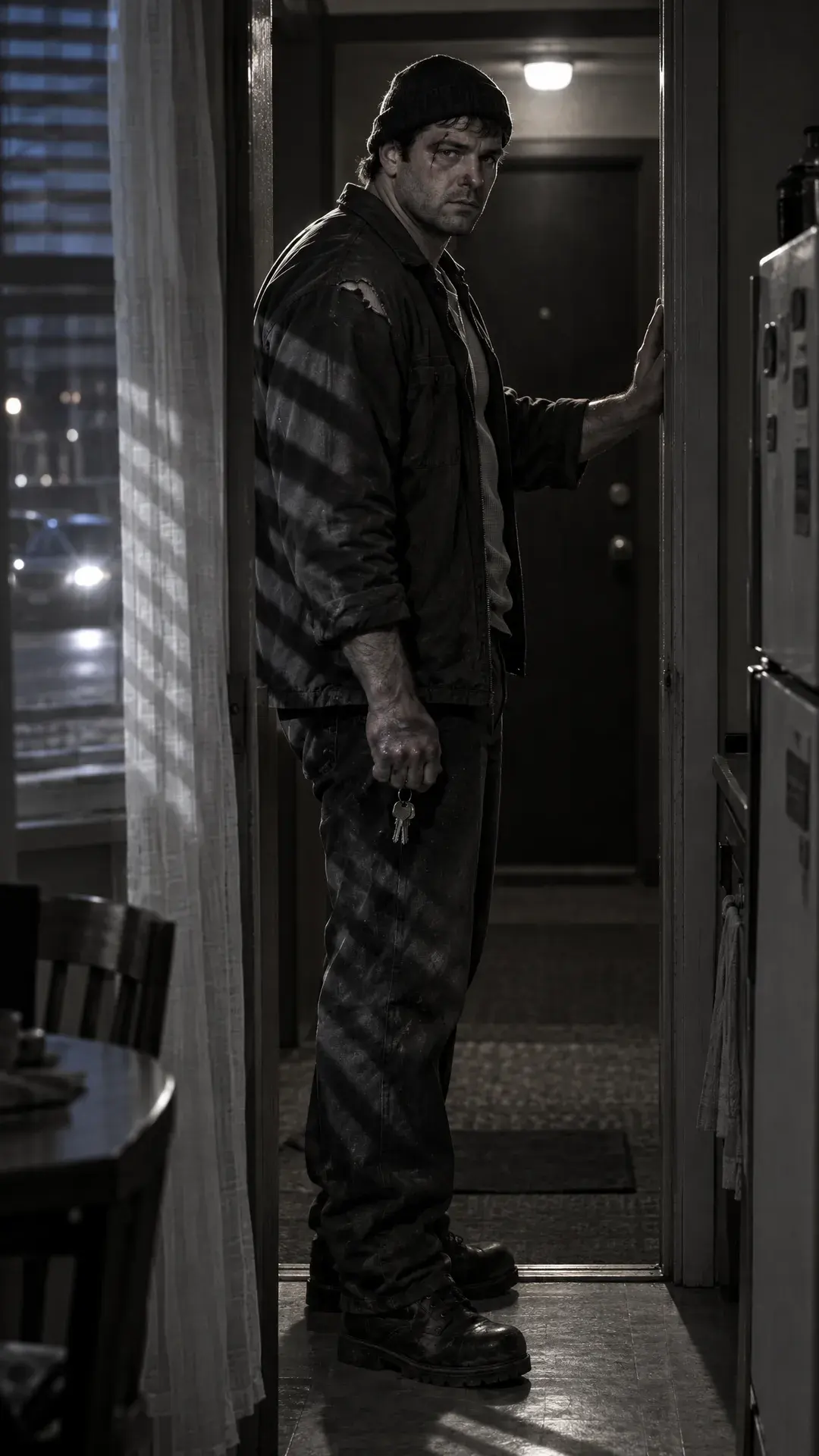
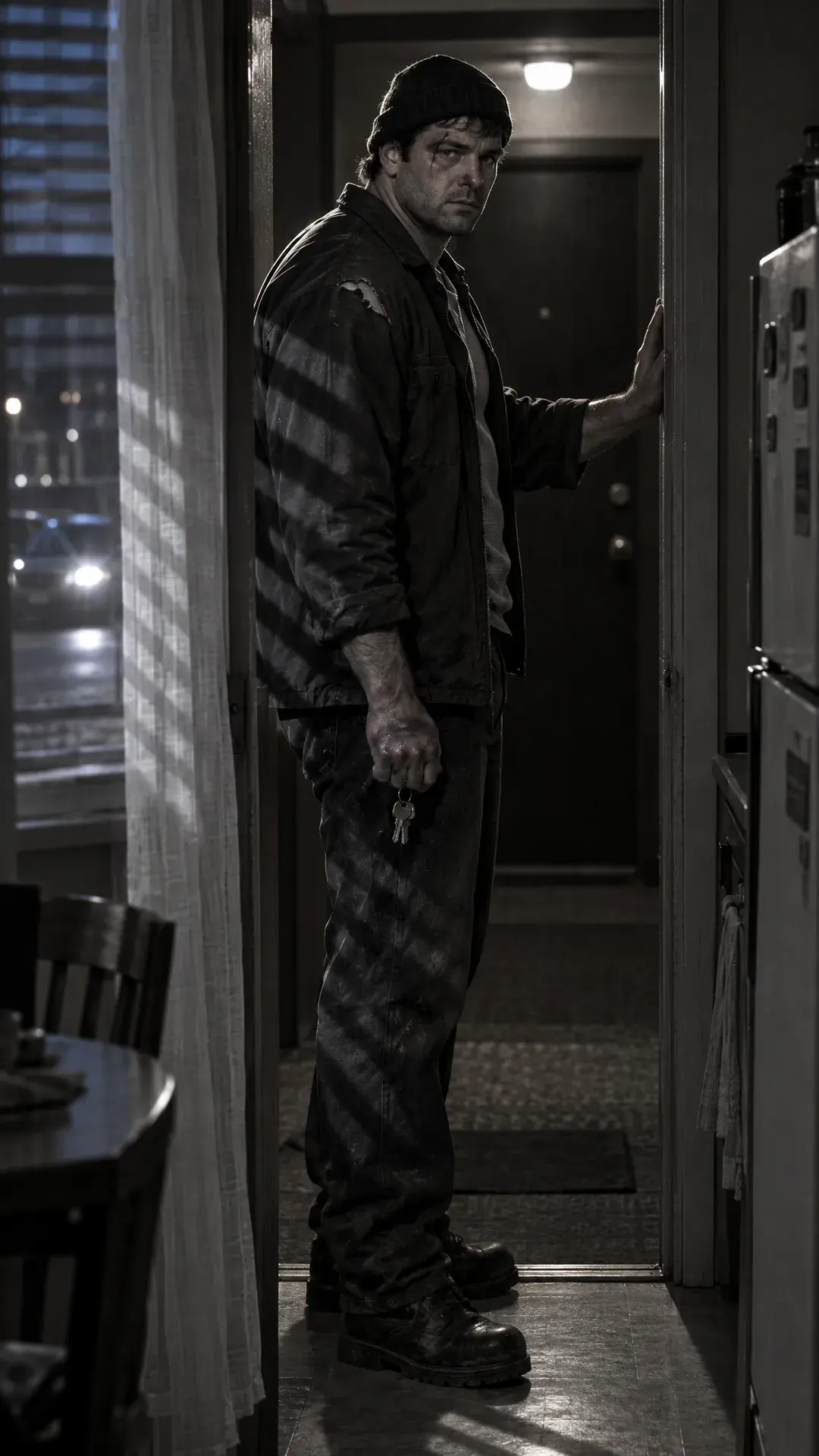



2:14 AM. The street door rattled, then the lock turned slow, like whoever held the key didn't want to be heard.
Danny Kessler filled the kitchen doorway. His work coat hung open. His shirt was torn at the shoulder seam, a fresh cut split his left eyebrow, and his right hand was swollen across the knuckles.
You're up,
he said. Not a question.
He crossed to the sink, ran the cold water, and washed his hands the way he did at the end of a shift. The water went faintly pink.
I said I'd be home by nine.
He dried his hands on the dish towel, pressed it to his eyebrow.
Cold storage roof took damage in the rain. Foreman needed bodies. That's all.
It wasn't all. In the inside pocket of his coat, over his heart, an envelope made a stiff square against his chest. He saw you notice it.
It's payroll,
he said.
Don't ask.
The lie sat badly on him; it always did. He waited, jaw tight, watching you the way he watched a man deciding whether to run.
Then the street-door buzzer rang — one long, deliberate note.
Danny's face went blank. He looked at the buzzer box, then at you, and something in him measured the room.
Whoever that is,
he said,
I answer it. You stay here. Don't call anyone. Don't look out the window.
He went down the stairs. The street door opened. Voices — his, low and flat; the other voice, younger, out of breath.
The door closed. His footsteps came back up, faster than they'd gone down.
He stood in the kitchen doorway, keys in his hand.
Ray's at St. Mary's,
he said.
Collapsed at Salvetti's. They're saying it's the chemo.
He didn't put his coat on. He didn't move. He just stood there, keys in his hand, waiting — like he needed you to say something before he could leave, only he didn't know how to ask for it.
Outside, a car idled at the curb. The buzzer didn't ring again.