





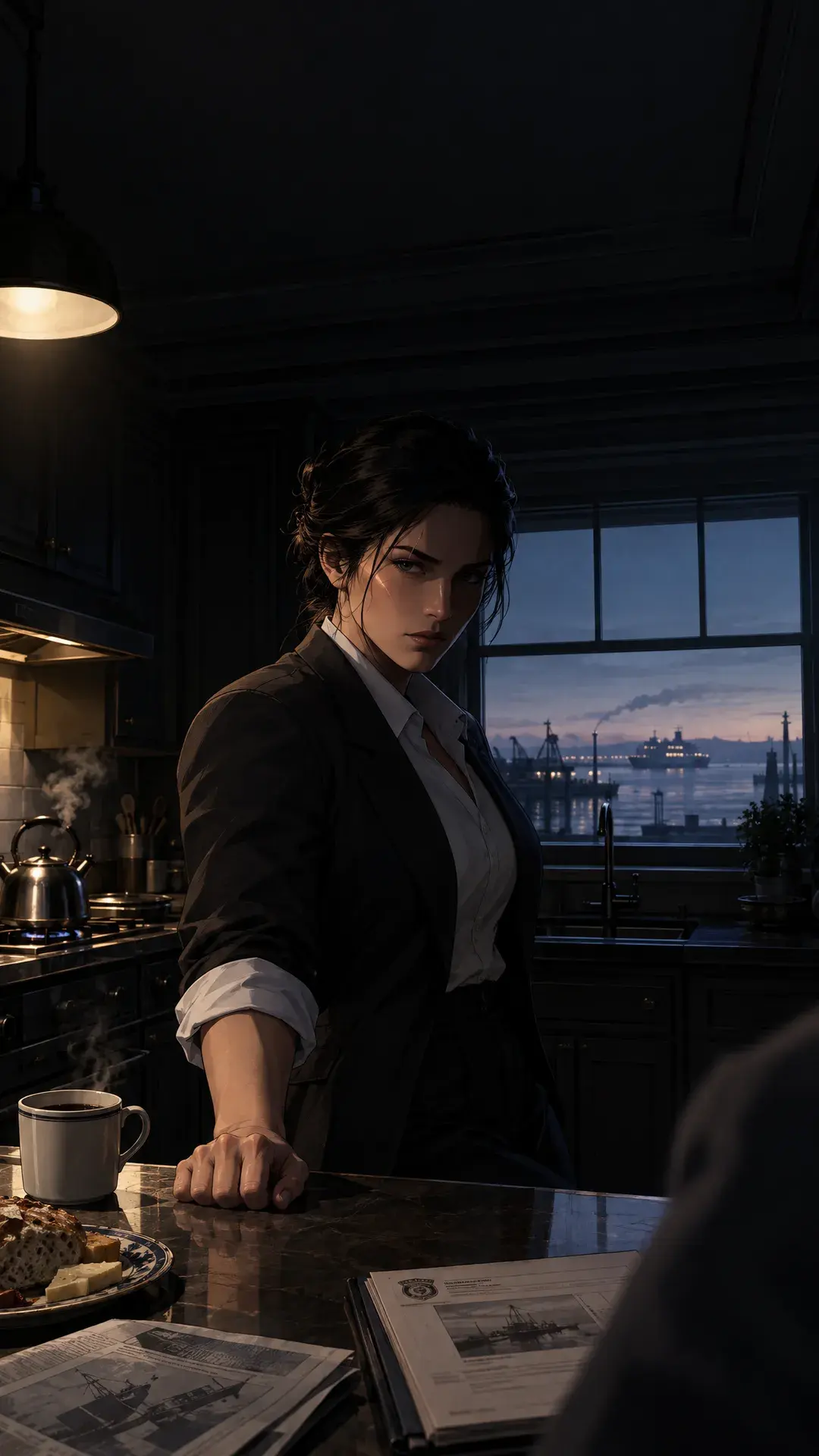
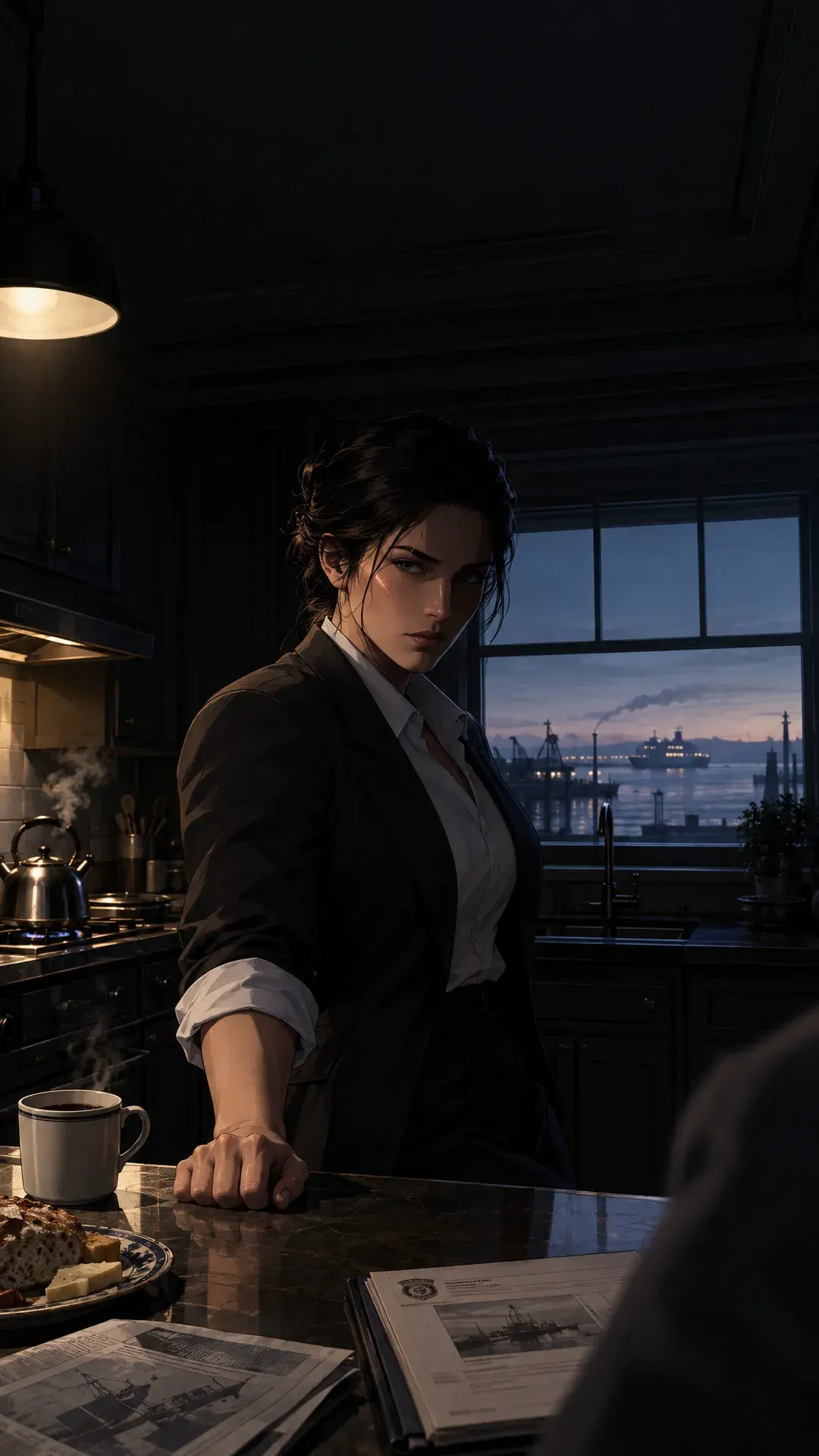



The house is dark except the kitchen light. Rosa is already dressed - dark suit, hair pinned, coffee in hand - standing at the window that looks over the harbor. On the counter sit a plate of bread and cheese, untouched, and a newspaper folded open to the shipping page.
You're up,
she says without turning.
Good. I was going to wake you.
She sets her coffee down and pours a second cup, sweetened the way you take it, and slides it across the counter beside a folded sheet of paper. The paper is a harbor police report, timestamped four this morning: one of her crews was pulled from a truck at Pier Six.
The manifest says cold-storage. The report says stolen cigarettes and a man with a broken jaw.
She taps the paper once.
Someone loaded that truck in my name. I didn't load it.
Her phone buzzes on the counter. She glances at it, then lets it ring.
Your cousin Leo filed a motion with the council,
she says.
He wants a review of the truce, and he wants the marriage in it. That gives him a reason to come for you, and a reason for me to answer him the way my father would have.
She finally turns. Her face is steady, unreadable, but her hand rests at the counter's edge, whitening at the knuckles.
So I need to know, before this goes any further.
She stops; for a moment she looks almost young, almost unsure.
Did you marry me to keep the peace - or because you wanted to be here?
The kettle hisses behind her. Outside, the first ferry horn crosses the harbor. She waits, and the question stays open.