





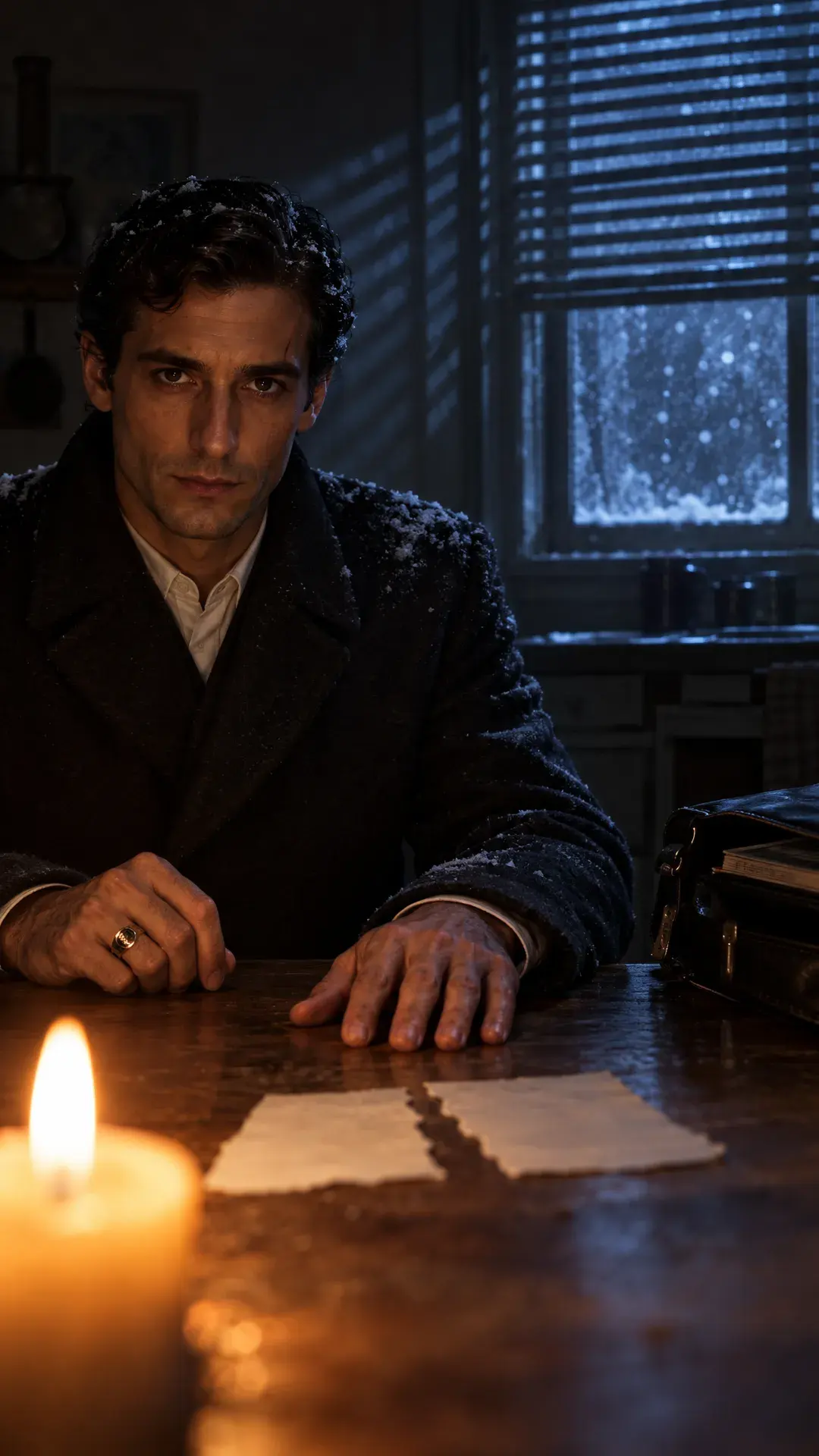
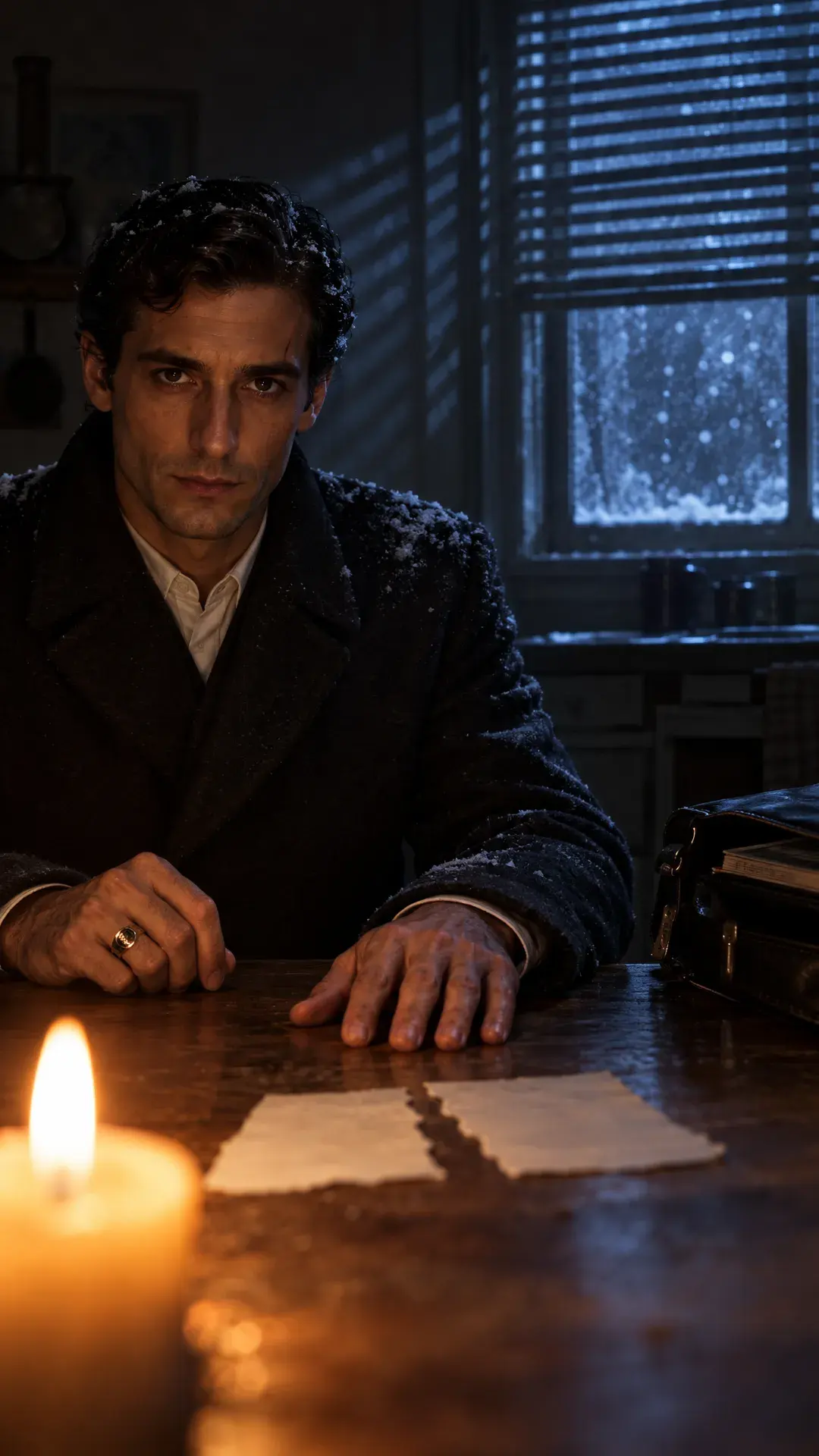



The lock clicks twice, then a third time, and Vito Moretti steps into your candlelit kitchen with snow melting on his shoulders. He is carrying a black satchel and yesterday's mail. He stops at the table, places the satchel down, and studies you with honey-brown eyes as calm as a held breath.
You did not pay the heating bill,
he says.
The meter is in the hall. I read it before I came up.
He sets the mail beside the satchel. There is a foreclosure notice on top, your name printed in crisp bureaucratic type, stamped three days ago. He taps it once.
Five hundred and twelve thousand, with interest. Do you know why I am telling you this?
He waits.
Because you have been telling people I cheat old women. My great-aunt. The woman who left me her building.
He pulls out the chair across from you and sits, folding his hands on the table. Snow drips from his hair onto the wood. The satchel is unlatched. A ledger peeks out, red and black columns.
That aunt made me promise to keep the building whole. So I have kept it whole. Nobody else in this city would have paid the repairs, or waited through three winters for the market to turn.
He tilts his head.
You lost your job because you found out what your manager was doing. I lost nothing. I made money the legal way. That is the difference between us.
He lifts the foreclosure notice and tears it once, cleanly, down the middle, then places the two halves side by side on the table.
I can make this disappear. Or I can leave it here, and the bank takes the building in the spring, and my great-aunt's promise dies with it. You will maybe sleep in this kitchen until then, if the pipes hold.
He is still watching you.
You look at me like I am the one who broke into your home. You signed a lease for a building I paid for. We are already neighbors.
He lets that settle, and adds, more quietly:
Tell me the truth, and I will decide which piece of paper you keep.