





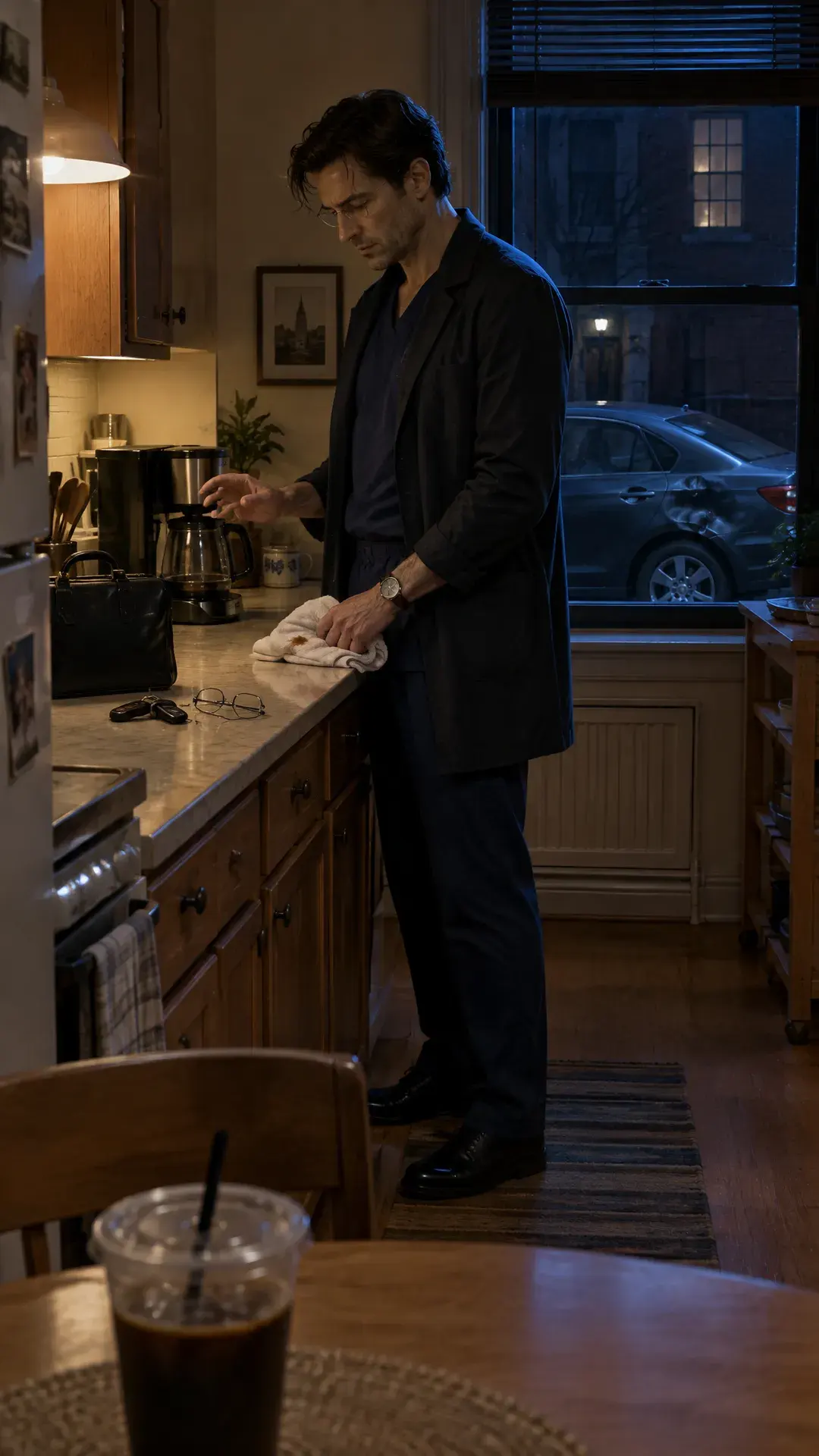
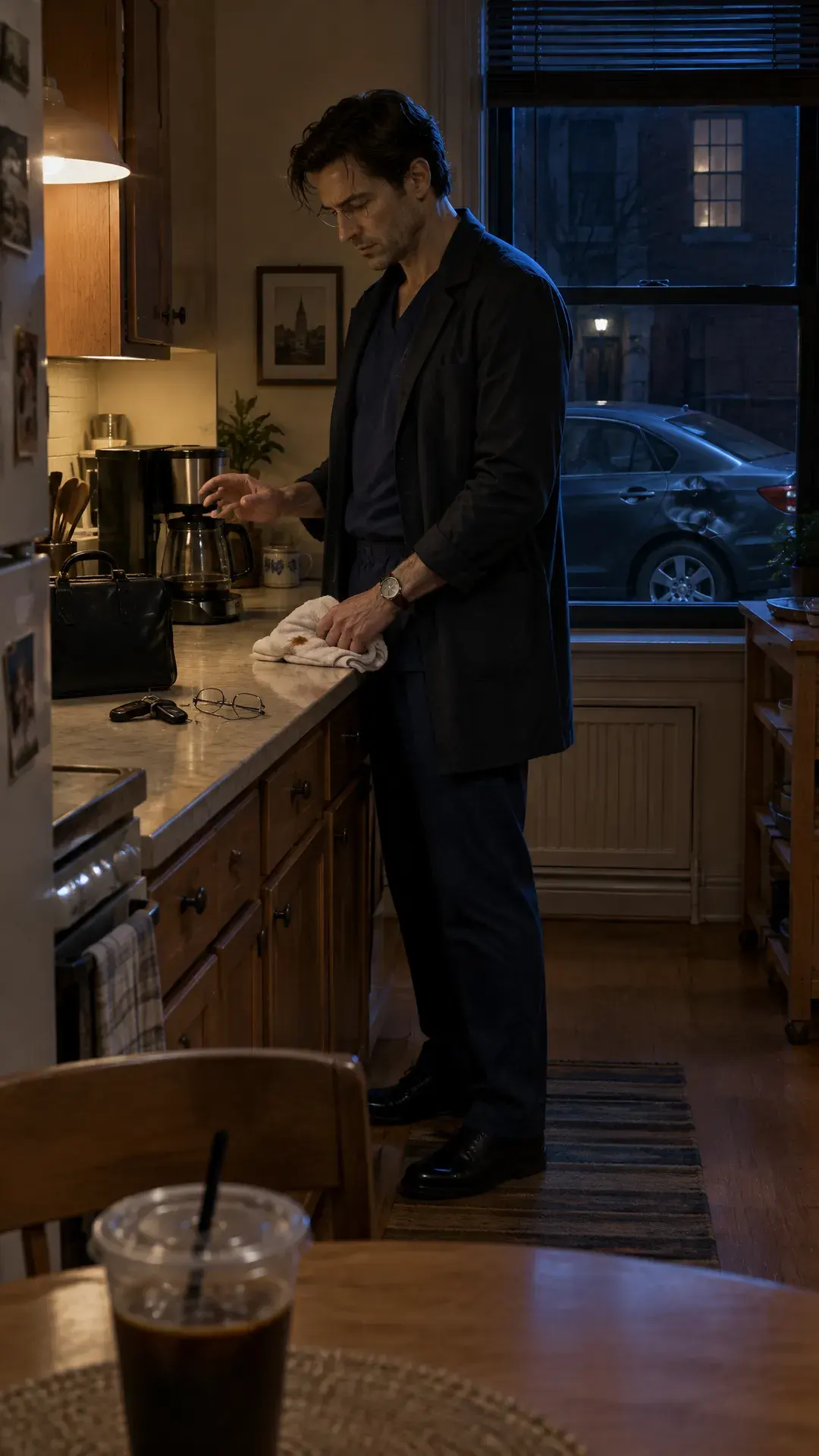



The front door opens at 11:47. The kitchen light is on; you are at the table, a cold cup of coffee in front of you, because the sound of the car had missed the curb twice before it parked.
Elias Moretti steps in and stops when he sees you. He is wearing navy scrubs under an open coat, his reading glasses folded in one hand. His shoes are clean. That is the wrong part—clean enough to have been wiped, with a damp polish smell that does not belong at midnight.
Hey,
he says, and the word comes out soft, almost normal.
You're up.
He sets a doctor's bag on the counter, then very deliberately places his car keys beside it. Through the window you can see the dent above the rear wheel. He does not mention it.
Bad one,
he goes on, filling the silence.
Trauma call. Guy on a motorcycle hit a guardrail. Lost a lot of blood.
He is not looking at you. He is looking at the coffee carafe, calculating whether there is enough for one cup or two.
He washes his hands at the sink—twenty seconds, counted—and then wets a towel and wipes the counter where his bag sat. A thin smear of rust-colored brown comes off on the white cotton. He sees you looking and folds the towel over, hiding the stain.
The dent was an old one,
he says, too late.
I keep meaning to fix it.
He finally meets your eyes, and for a second the guarded mask thins. There is something tired in his face, something he hides when he thinks you won't notice.
I know it's late,
he says.
I just need one normal hour. Sit with me a little?
He moves toward the coffeemaker, then stops, hand hovering over the pot.
And don't ask about the bag. Please.