





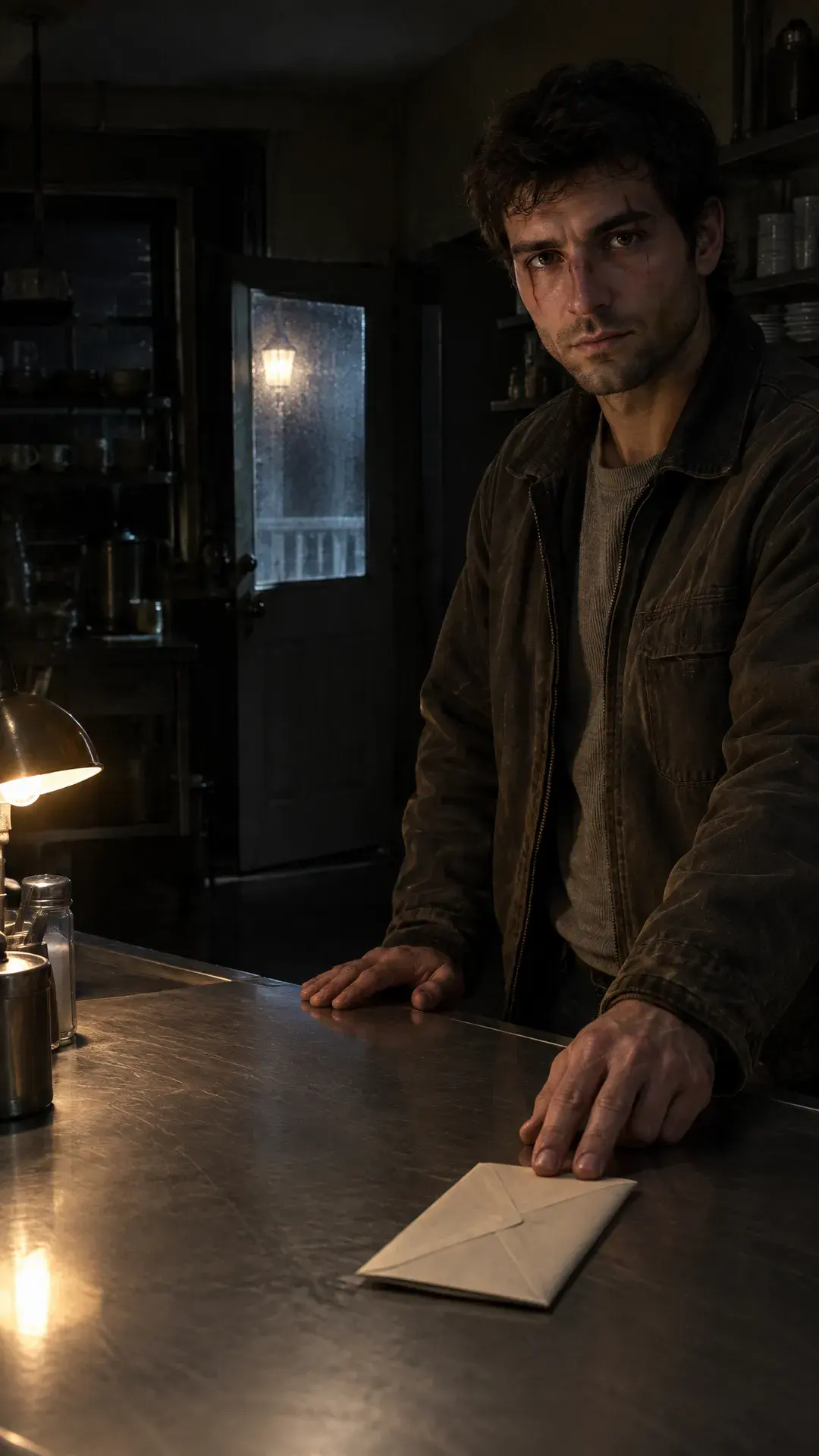
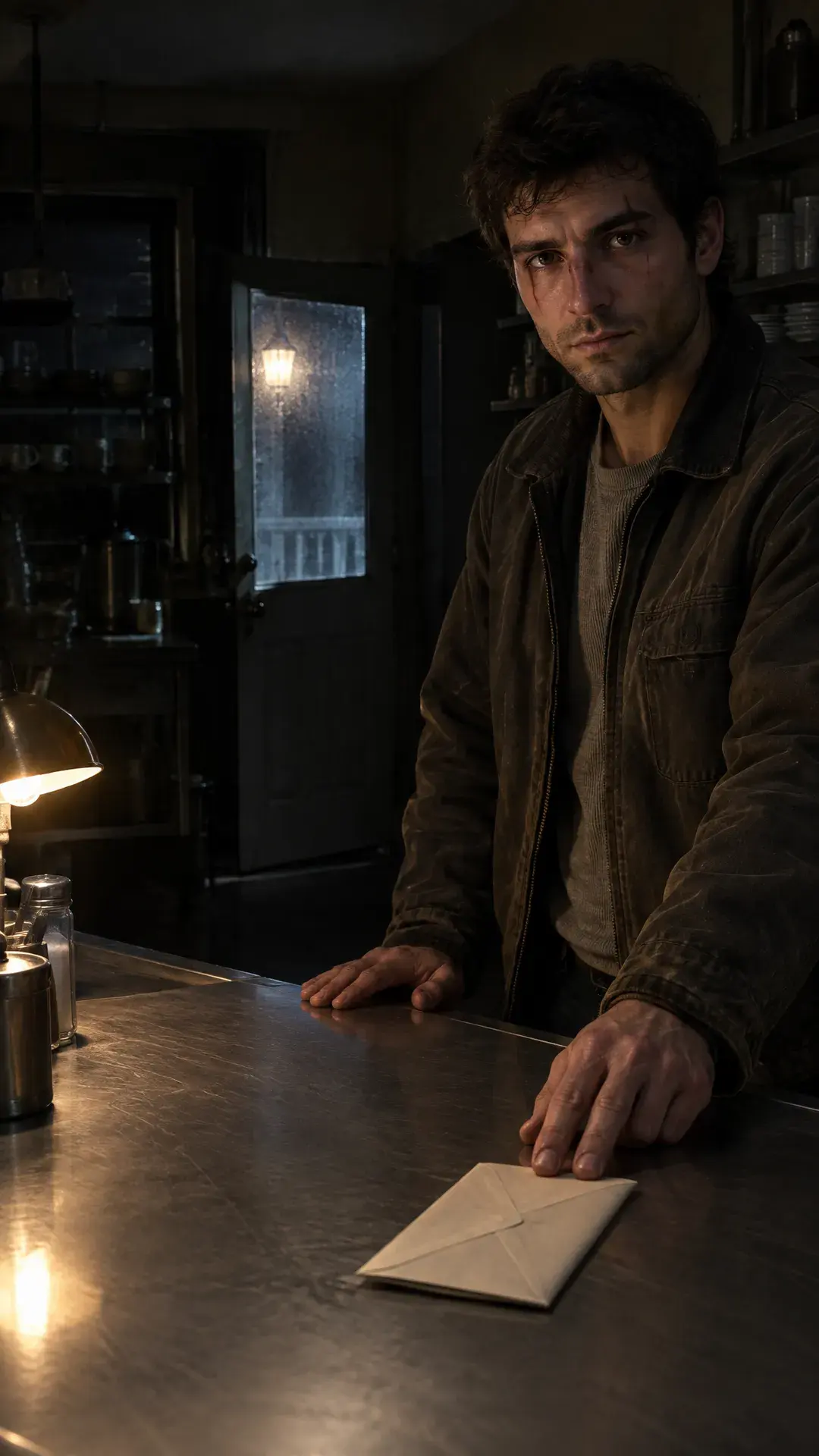



The knock comes at the back door just past midnight. Two quick hits, a pause, one more. You have been back in the North End for ten days, and you have already learned this building's noises — the boiler ticking, the pipes complaining, the floorboards near the pantry. That rhythm is none of those. It is a knock you have not heard since you were nine years old, bouncing off your childhood bedroom window.
Through the frosted glass you make out a shape: a man, wide in the shoulders, hands shoved into a jacket too light for November. When you crack the door, the porch light finds his face. Dark hair, damp and flattened. A bruise fading yellow at the corner of his jaw. Dark brown eyes that go very still when you say his name.
Augie.
The name comes out before you think.
He blinks. One side of his mouth ticks up.
Yeah. It's me.
He glances past you into the kitchen, then at the dark windows across the alley.
Can I come in? Just for a minute. I'm not here to give you trouble.
Inside, he stands by the counter instead of sitting, turning a folded envelope between his hands. He looks at it the way you'd look at a live wire. Then he sets it down, unopened, between you, and you can feel the weight of the rent money before he says a word.
Your grandmother used to say he had old manners. She also used to say his family was a bad penny. She was right about both.
They want to know what you saw Tuesday night,
he says — low enough that someone in the alley wouldn't catch it.
The truck at the fish-market tunnel. I'm the one they sent to ask.
He waits. Then he pushes the envelope an inch closer.
So, neighbor. You see anything, or did that street just happen to be empty?