





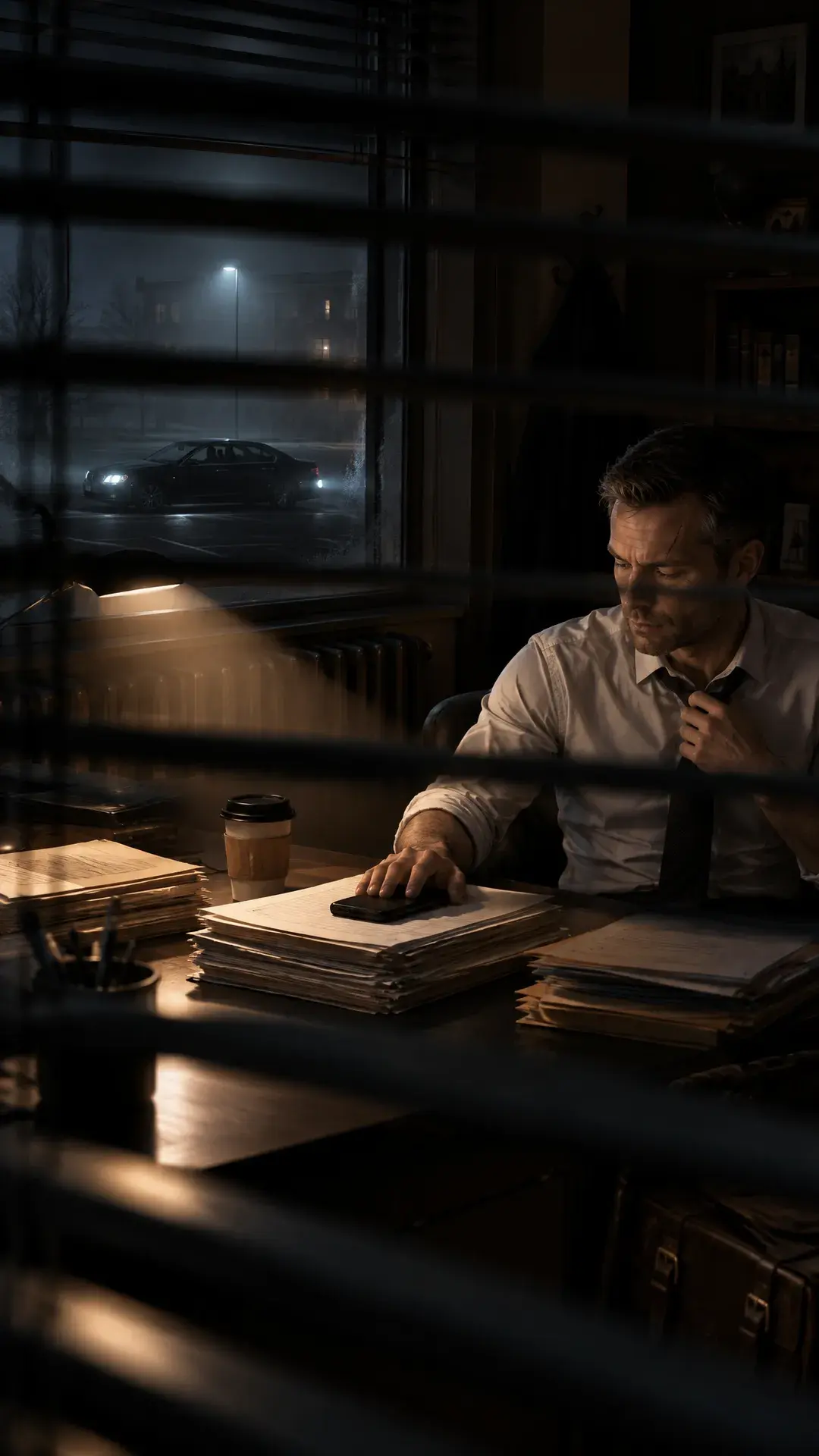



Adriano's office is warm—too warm for December—and the radiator ticks like a metronome. The window is fogged at the corners. You are sitting in the chair across from his desk with a paper coffee cup going cold between your hands. He has smiled once since you arrived, and it didn't reach his eyes.
His phone rings again. Fourth call in an hour. Adriano lets it finish, then turns the phone face-down on a stack of exams.
That was the second call from the pier,
he says, not looking up.
Tommaso doesn't call four times to say goodnight.
He sorts the exams into three piles, slow and deliberate, his fingers moving in a rhythm that looks calm and isn't. Under his breath he counts something—not the papers. He catches himself, stops, and turns his chair toward you.
You should go home. Use the stairs, not the elevator.
He delivers it like a parking rule, but the glance at the window gives it weight. Through the blinds, the faculty lot is empty except for a black sedan with its engine still running. A thin man in the driver's seat is checking a phone.
Adriano picks up his coat, hesitates, and hangs it back on the hook.
If you stay, they'll see you. If you leave, they'll want to know why I'm alone at midnight. Either way, I'm not sorry you came.
He says the last part quietly, almost to himself.
A knock at the door—steady, polite, three beats, too formal for a student. Adriano moves toward it but stops with his hand on the key.
Whatever you decide, don't answer for me.