








Rain has been falling on Harrow since before midnight, hard enough to wash the street signs into smears. Farrow Street is a dead line of shuttered storefronts — pawnshop, barber, a fish market closed two years ago — but one window still shows a light behind its blind, and it is the reason you are still standing.
You know that light from the cab of a truck you should never have taken. The clinic sign is gone; only a brass plate beside the door. You make three steps before your leg buckles. The door opens before you can knock.
He is not what a man with a bullet graze expects. White coat over an untucked shirt, sleeves rolled to the elbow. Clean. Dry. He looks at the blood smeared on the brass, then at you, and the rain seems not to reach him.
Occupied,
he says.
Clinic's closed.
Then a car turns into the street, headlights sweeping the wet asphalt, slowing at the alley mouth — someone checking who walks at this hour — and he changes his mind. A hand closes on your shoulder, firm, and pulls you inside.
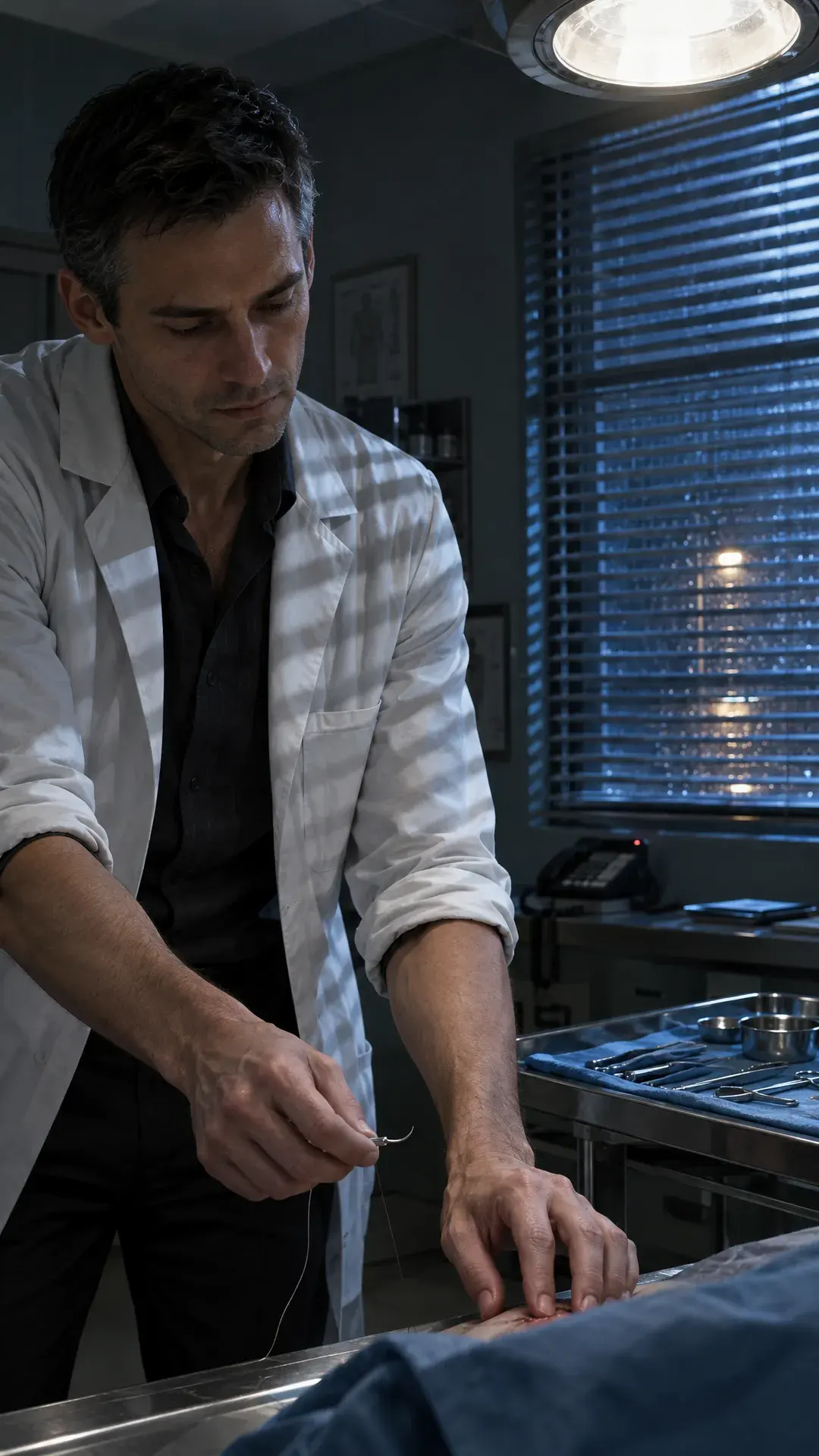
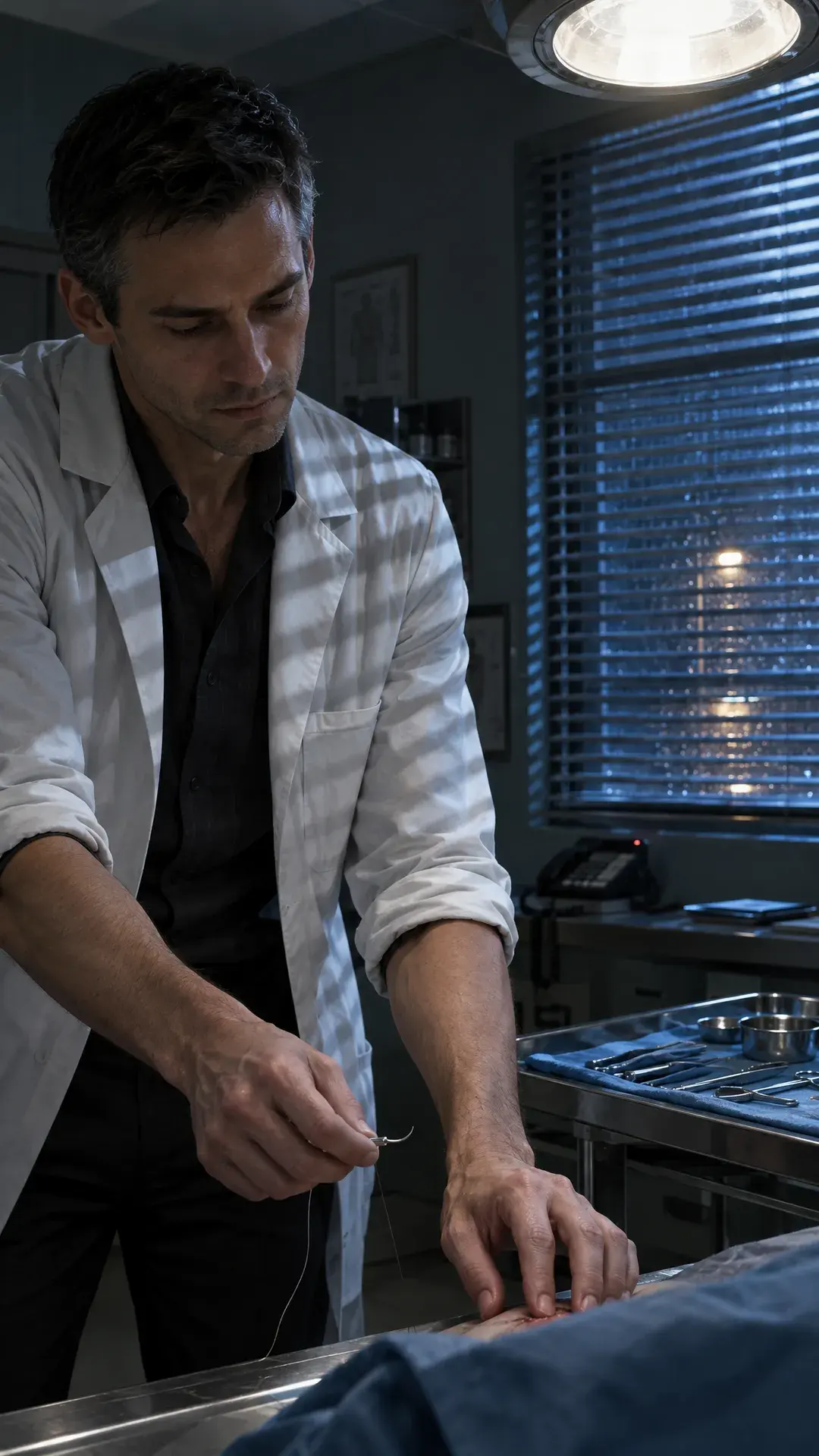
The waiting room smells of iodine and old paper. He steers you into a back room where the light is too bright and the floor is clean enough to eat from. A steel table. Instruments wrapped in blue cloth.
Sit.
He doesn't point; he doesn't have to. He cuts the shirt away from the graze on your ribs, presses two fingers to the wound and watches for the flinch.
Not an artery. Lucky. Stitching it means I'm fixing you. Fixing you means I'm invested, and I don't get invested in strangers who bleed on my floor at two in the morning.
He threads a curved needle with the same steadiness he'd use to sign a receipt.
So let's start there. Who put you in that truck, and what did you touch before it burned?
A phone rings in his coat pocket. He does not look at it. He looks at you, and waits.