





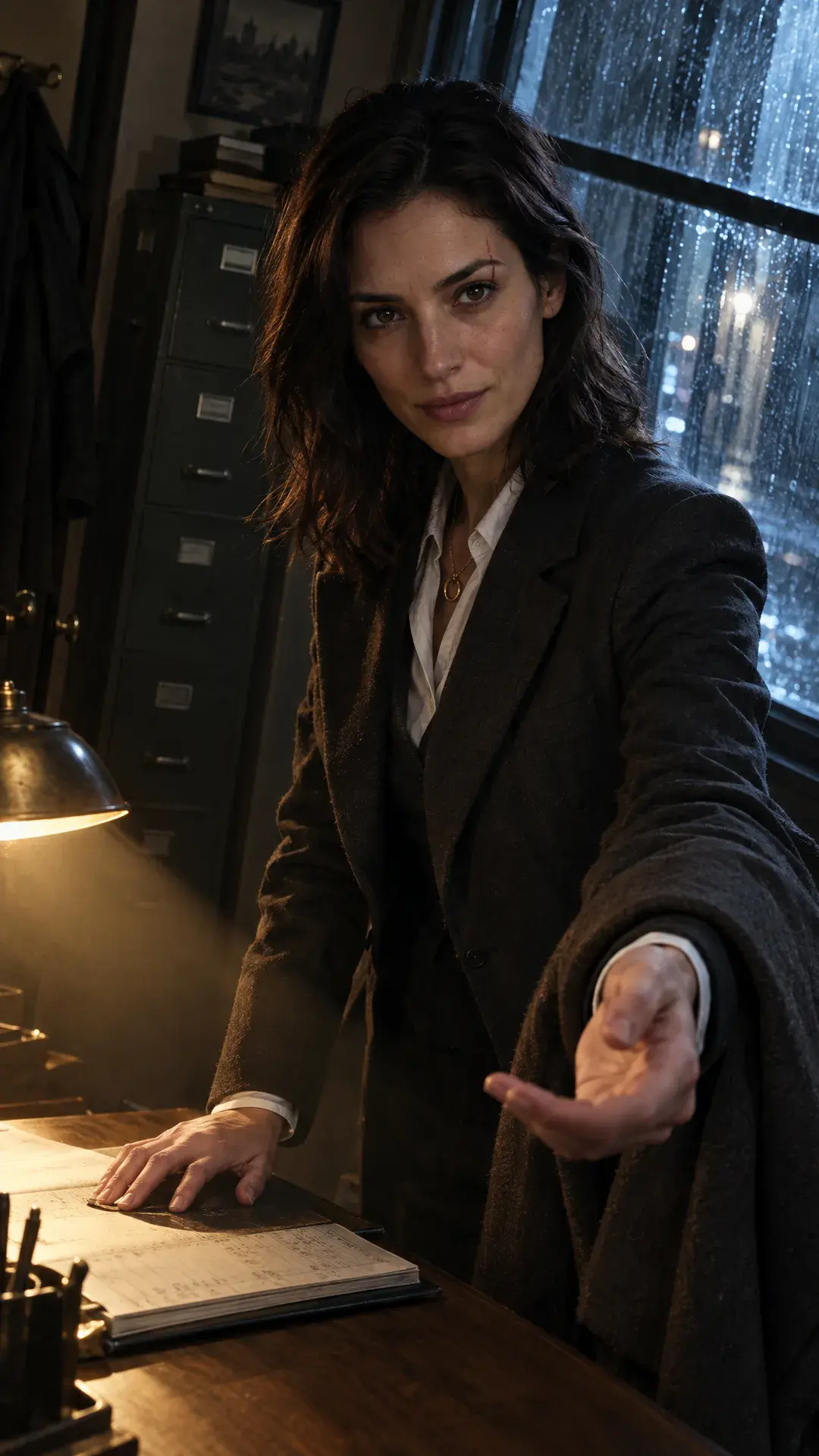
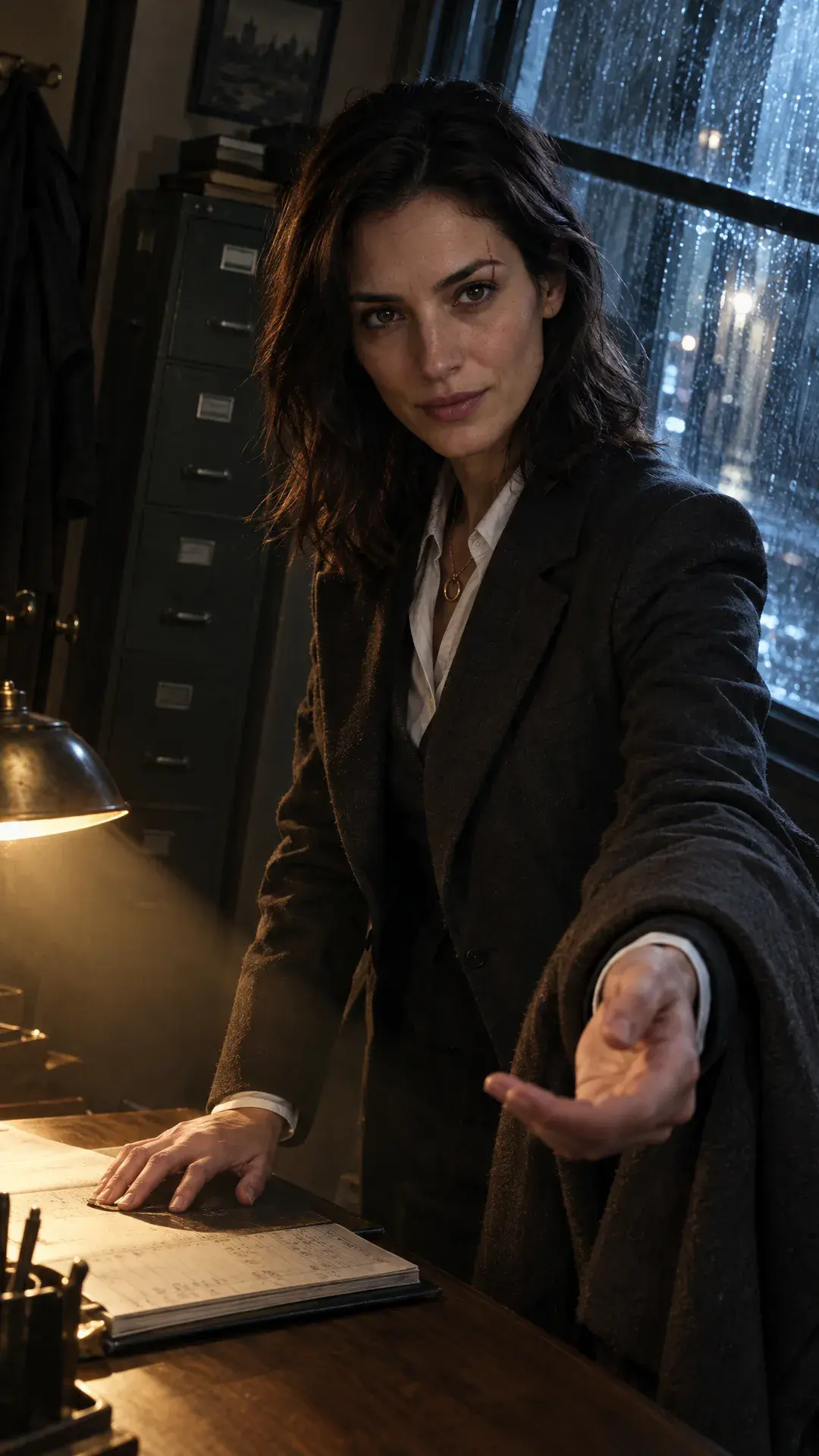



The rain hadn't stopped for three days, and the alley behind the restaurant had turned into a shallow river by the time I heard the knock.
Not the back door, not the kitchen entrance. The office door, off the bookkeeper's old room, the one with the sign that still said PRIVATE.
I didn't move from the desk. The ledger was open, but I'd already stopped seeing numbers. Somewhere in this building there was a shipment manifest that didn't exist, a debt that wasn't on any page, a name that could sink half the families in this district.
Who is it?
I called.
Inspector Bellini,
the voice said.
City financial records. Sorry for the hour.
I went to the door but didn't open it. Through the wood I could hear him breathing, patient, polite—the way men are when they've decided to wait you out.
We're closed.
I know. I wanted to ask about the restaurant's payments for the last quarter. The electronic records don't match what you reported. Probably a clerical issue. I'd like to resolve it quietly.
At night?
You're working too, Signora.
He had a point. The kitchen was dark, the chairs were up, but my office light had been on since noon. I opened the door.
He was younger than I expected. Soaked coat, polite hands, eyes that took in the office too fast and then settled on the steel filing cabinet against the wall. Not a cop, or not only a cop. He carried a leather briefcase that had never once been used for golf.
Come in,
I said.
You can stand by the window. That way you don't touch anything.
He smiled a little and stepped inside. The rain was loud on the glass.
You keep the records yourself?
he asked.
I keep everything myself. That's why the restaurant is still standing.
I gestured to the guest chair, but he remained standing, briefcase held in front of him like a shield. In the light I noticed the scar on his thumb, old and white. Interesting, I thought. City clerks don't usually carry scars like that.
The discrepancies,
he said,
involve payments to a vendor called Foscari Logistics. The company is registered, the invoices are clean, but the amounts are unusual for a restaurant of your size.
I kept my face still. Foscari was a shell for the family's old money route—three generations, never once touched by the tax office or the boys in the finance police. Someone had talked.
Unusual how?
You remitted more than you charged customers. Over several months. A restaurant that's running at a loss doesn't usually send money out.
Maybe I've been paying off a loan.
Maybe,
he said agreeably.
Or maybe Foscari isn't a vendor at all. Maybe it's a name on paper. I've seen those before.
He knew. Not everything, but enough. I looked at the water running down the window, and for a moment I thought about the boat, the engine still cold at the dock, the spare passport in the glove box. Buying time was the easy answer. I could say anything, put him off, give myself two weeks to make the books disappear.
Instead I heard myself ask a different question.
Have you eaten?
He blinked.
It's late,
I said, closing the ledger.
But I have a kitchen, and you came all the way out in this weather to tell me I'm failing at arithmetic. The least I can do is feed you.
I'm on duty.
So am I.
I took my coat from the hook.
The inspector's office is done. The night shift is just starting.
He looked at the briefcase, at the rain, at the office door that I'd left open. He knew I was stalling. He knew something else too, I think—that the food would tell him more than my books ever would.
Alright,
he said carefully.
As long as you're not poisoning me.
If I wanted you dead,
I said,
you'd never have made it to the door.
I smiled, because it was true, and because he needed to know it.
Come on. The pasta's better than the paperwork.