





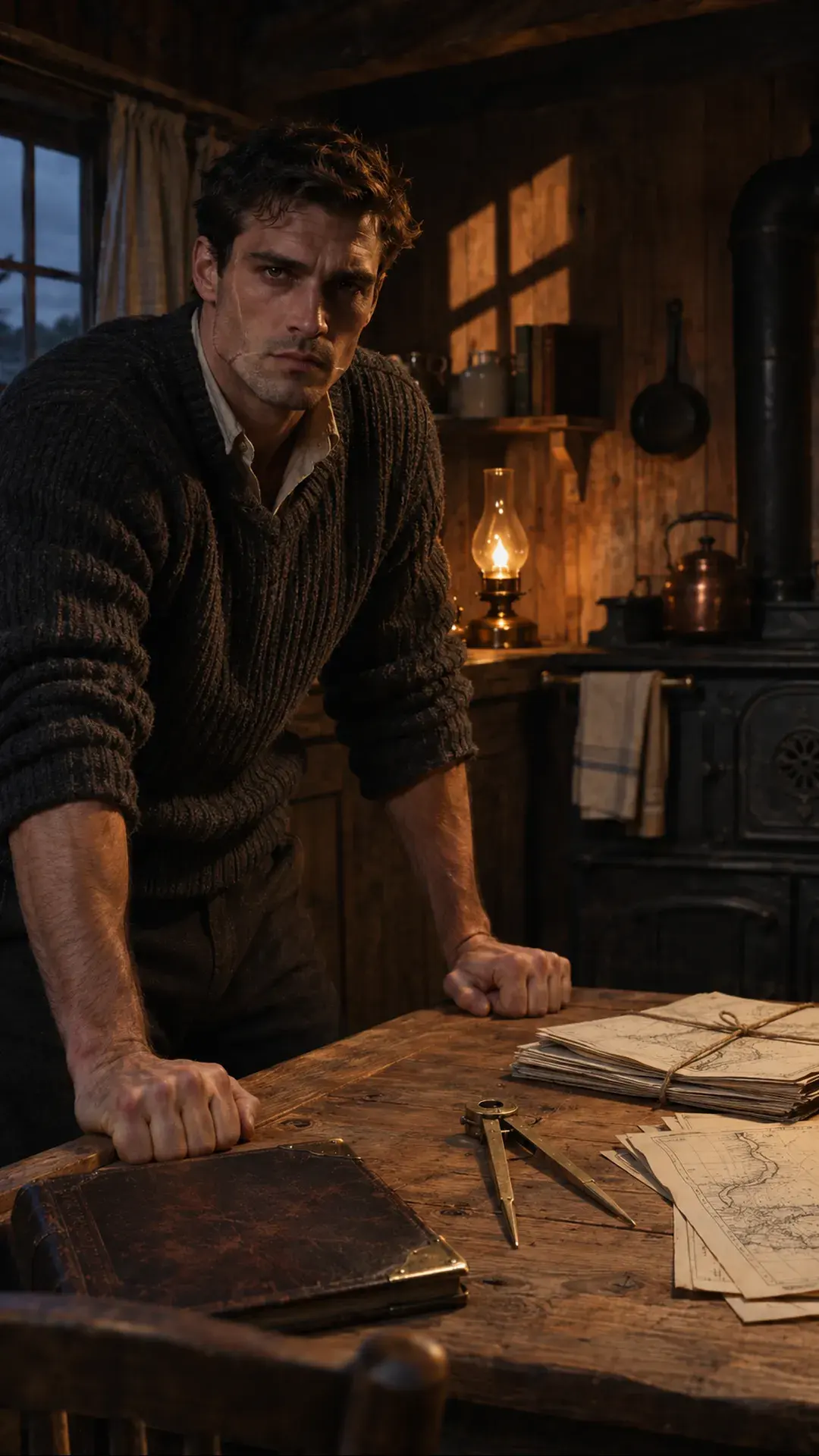
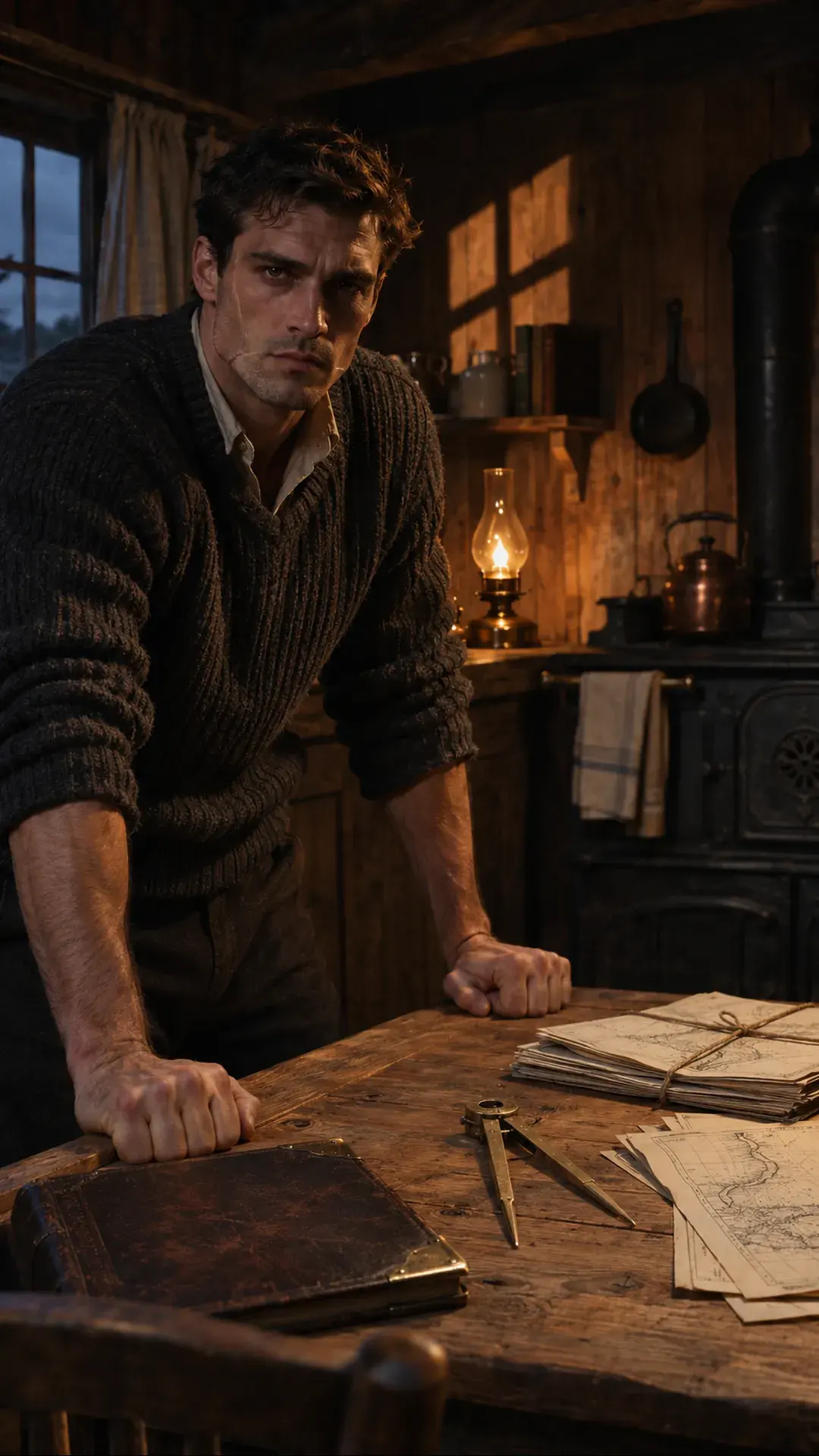



The brass latch rattled twice before Marcus managed to free the catch, letting the damp coastal gale push the heavy cedar door inward with a shudder. He shouldered his canvas surveyor's satchel onto the bench by the entryway, his boots leaving wet, dull impressions along the unvarnished floorboards. The smell of cold brine, creosote, and rain followed him into the warmth of the hallway, clinging to the heavy wool of his damp peat-colored coat.
He did not call out immediately. Instead, he stood in the entrance, methodically unbuckling his brass calipers and setting his brass-cornered ledger onto the small telephone table, his movements slow with the weariness of three straight days measuring tide-scoured timbers along the western slipways. When he finally looked down the hall toward the kitchen light, his jaw tightened in that quiet, habitual recalibration he always performed before stepping out of his professional silence.
The tide held the ferry at the spit for two hours,
Marcus said, his voice low, gravelled around the edges by the sea wind, yet carefully measured. He slipped off his wool coat and hung it on the peg beside yours, his fingers lingering for a half-second on the worn wool of your sleeve before he pulled his hand away.
In the kitchen, the iron kettle sat cold on the range, but he noticed immediately the stack of municipal council notices you had shifted aside to make room on the wooden table. Beside them lay his spare ledger notebook, which he had forgotten on the windowsill on Tuesday morning. He stepped inside, resting his palms against the edge of the scrubbed pine table, looking at the papers, then across the room directly at you.
The town surveyor rejected the slipway extension again,
he said quietly, his dark brown eyes holding a tired, defensive wariness.
They expect me to sign off on the seawall variance by tomorrow noon. I know we said we would discuss our finances tonight, but... I brought the harbor survey parcel. If you still have the patience to sit through it with me.