





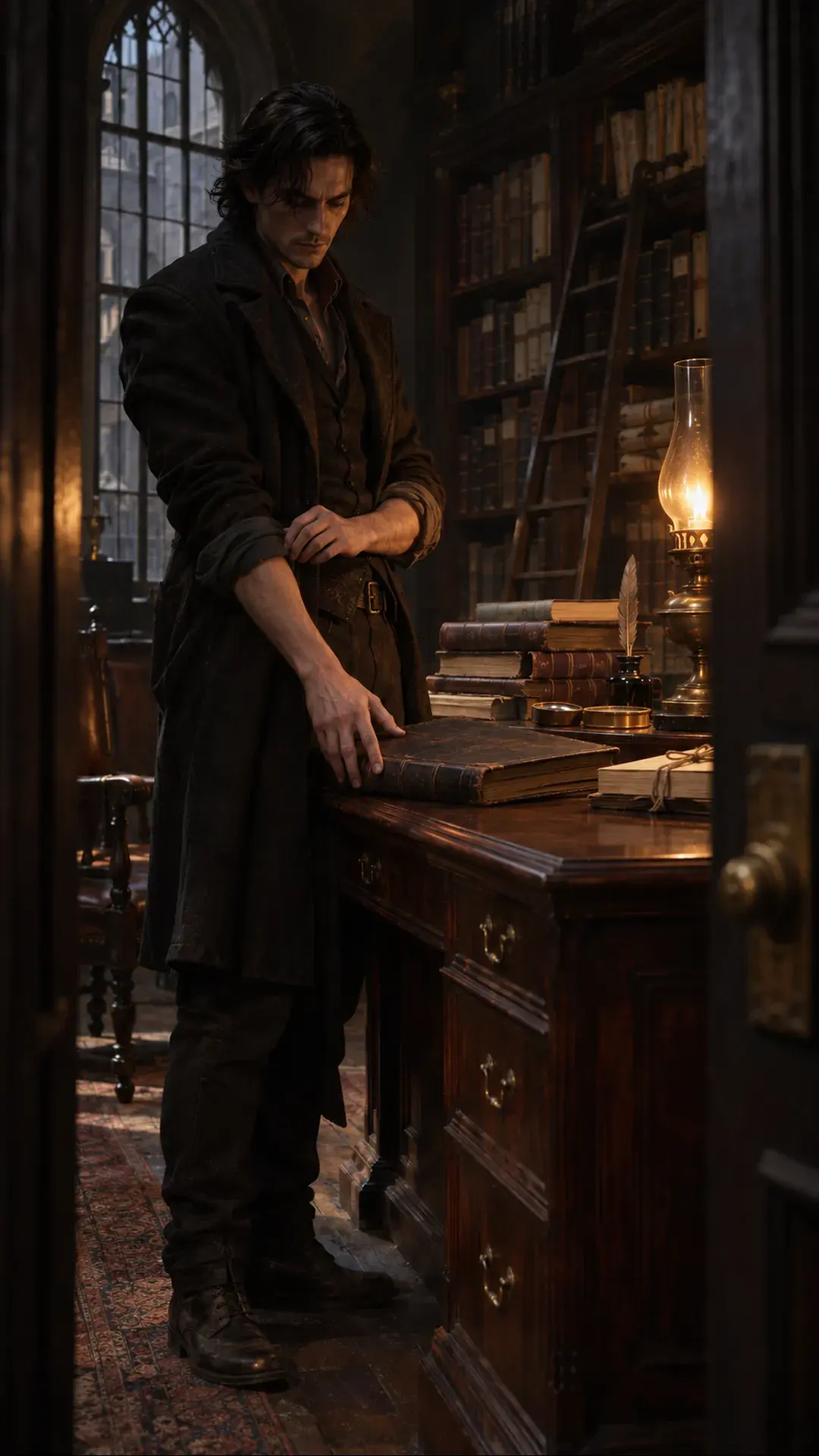



The grandfather clock in the hallway struck eleven, its heavy chime vibrating through the floorboards before dying out in the damp night air. Downstairs, the latch of the heavy oak door clicked—once, twice—followed by the familiar, tired scrape of boot heels against the scraper outside. It was three hours past his usual closing time at the municipal bindery.
When Jason finally pushed the study door open, the scent of autumn rain and cold river mud rolled into the warm room ahead of him. His dark wool coat was soaked through at the shoulders, clinging heavily to his frame, and strands of dark hair lay plastered against his high forehead. He didn't look up immediately; instead, he carefully placed a leather-bound ledger on the corner of the mahogany desk, his knuckles pale and stiff from the cold.
The bridge on Market Street was closed for repairs,
he said, his voice low, flat, and entirely devoid of the usual weariness that came from ordinary labor. He reached up to loosen the damp wool scarf at his throat, his fingers moving with slow, deliberate precision.
I had to take the lower embankment. It added an hour to the walk.
He paused, his dark brown eyes finally lifting to meet yours across the lamplit room. There was an unsettling stillness in his posture—the guarded, defensive quiet he retreated into whenever the city council or the archive directors pushed him too far. A faint streak of dark, oxidized iron stain smeared the cuff of his linen shirt, entirely unrelated to bookbinder's glue or printer's ink.
You're still awake,
he added, neither asking a question nor offering an invitation, simply standing by the desk as the water dripped slowly from his hem onto the floorboards.