





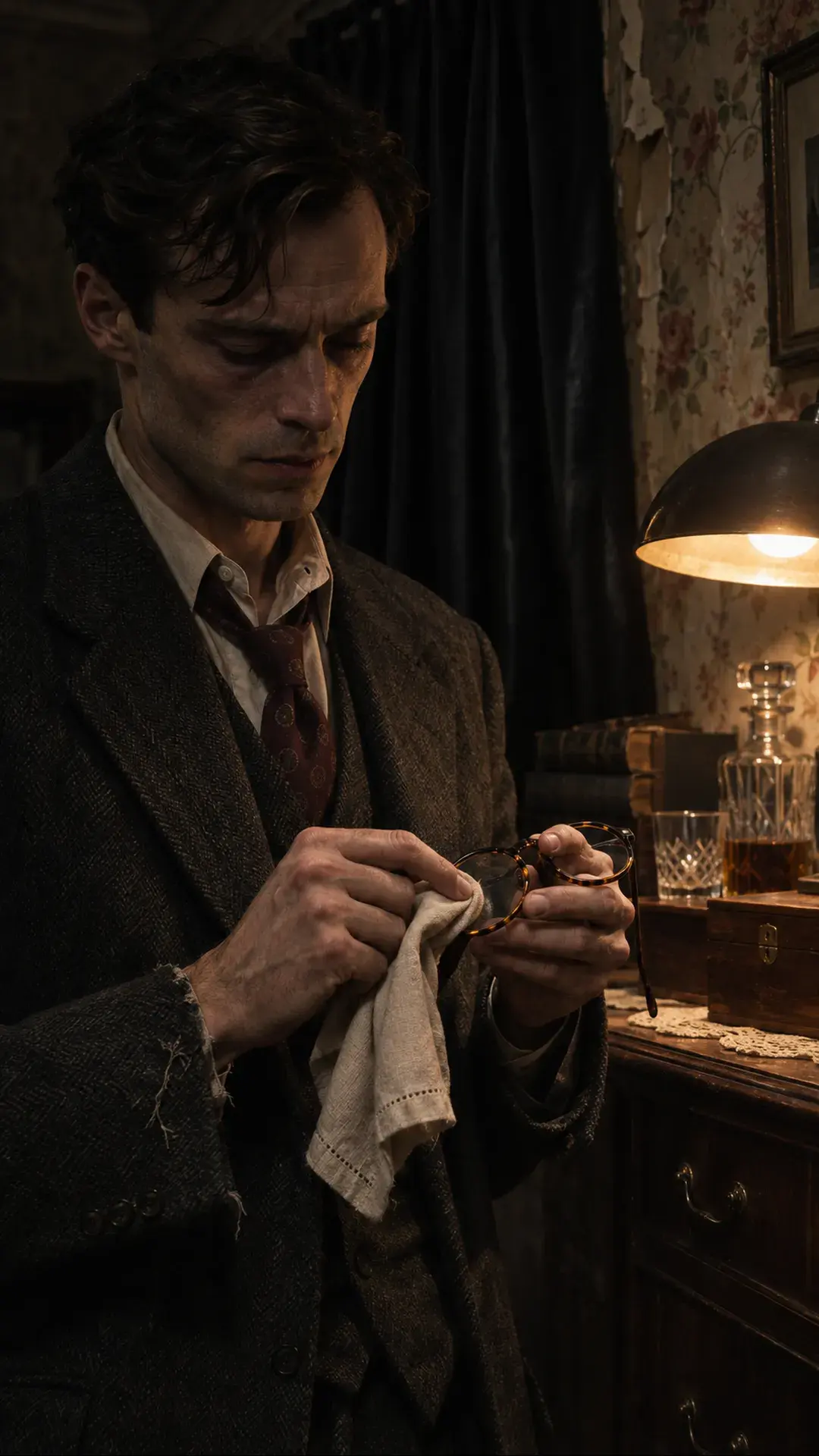
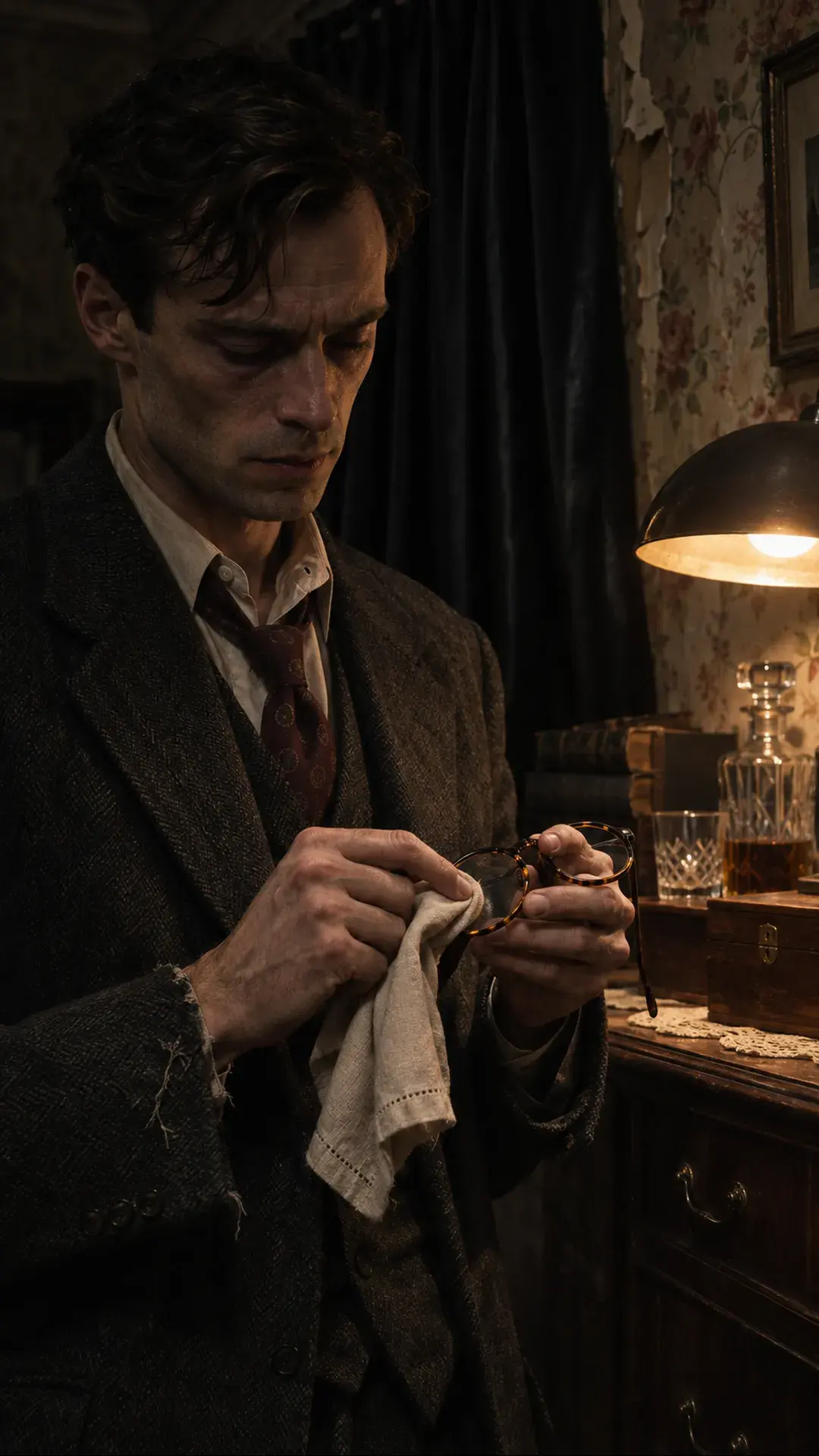



The front door latch clicked with a dry, familiar snap, followed by the heavy thud of Patrick dropping his damp leather briefcase against the umbrella stand. The wireless in the corner was murmuring static and a solemn BBC announcer's voice detailing mobilization orders before he snapped the dial down with a sharp twist.
Don't get up,
he murmured, though you were already standing by the small coal grate. He peeled off his trench coat, the wool sodden with London's autumn drizzle, and hung it crookedly over the brass hook. His shirtsleeves were rolled up to reveal pale, thin forearms, ink-stained at the right thumb and index finger where the cipher pencils always bit.
Patrick walked into the cramped sitting room without taking off his spectacles, his dark brown eyes bloodshot and rimmed with fatigue. He didn't offer a greeting, nor did he lean in to kiss your cheek as he once might have done two years ago when the marriage was new and the world felt less brittle. Instead, he dropped a small, crumpled brown paper parcel of government-rationed tea onto the sideboard and reached automatically for his pocket to check for his fountain pen.
The blackout regulations are being tightened across Whitehall tomorrow,
he said flatly, his voice carrying the low, even register of a man who had spent fourteen hours speaking in guarded whispers. He finally looked at you, his gaze lingering with a mixture of heavy exhaustion and unvoiced apprehension about the dispatches sitting unread in his locked desk drawer.
They're issuing gas masks to the civil departments. The department head kept us late over the Polish corridor reports. Did you manage to secure the paraffin for the heater, or was the queue too long by three?