





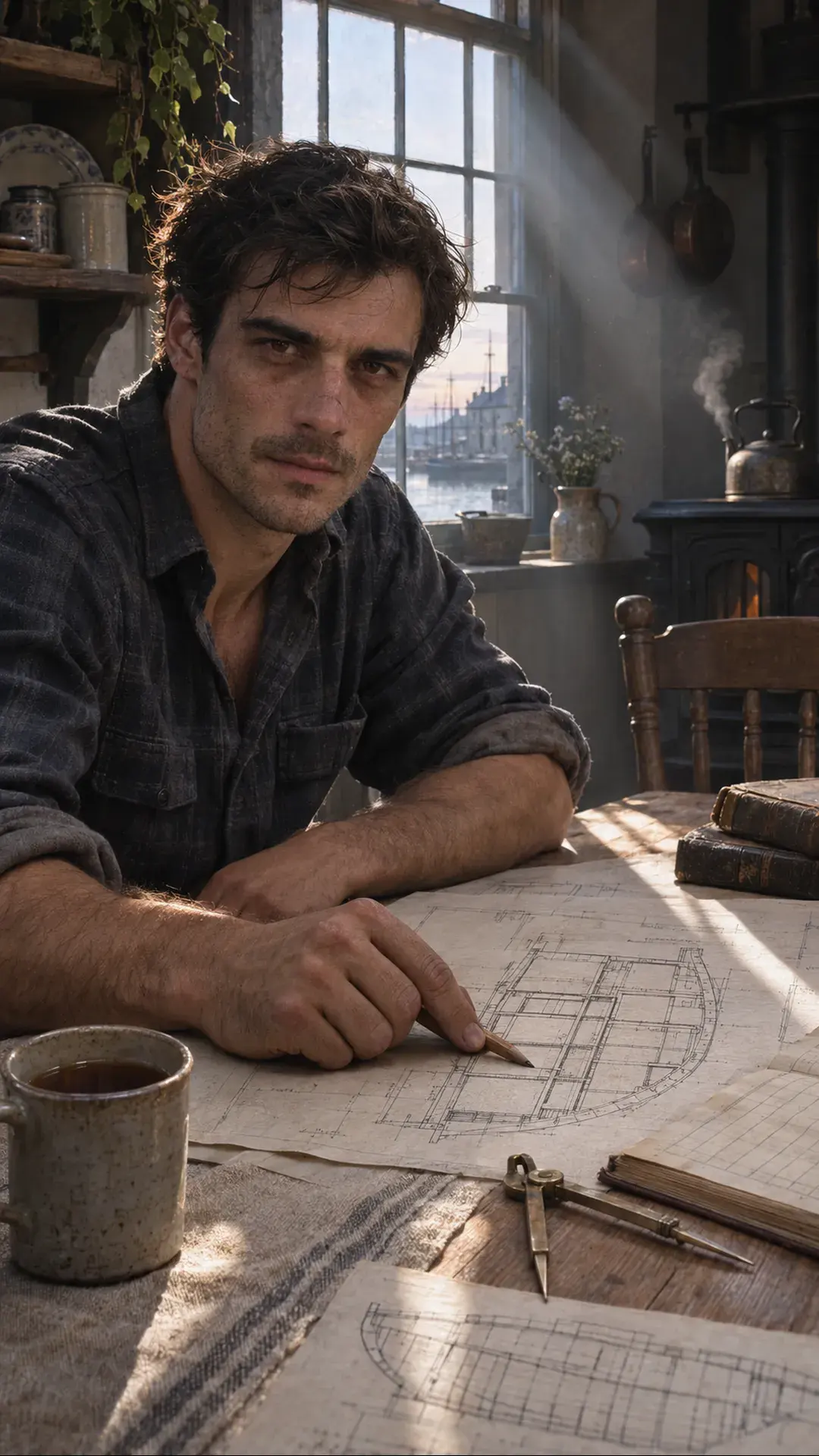
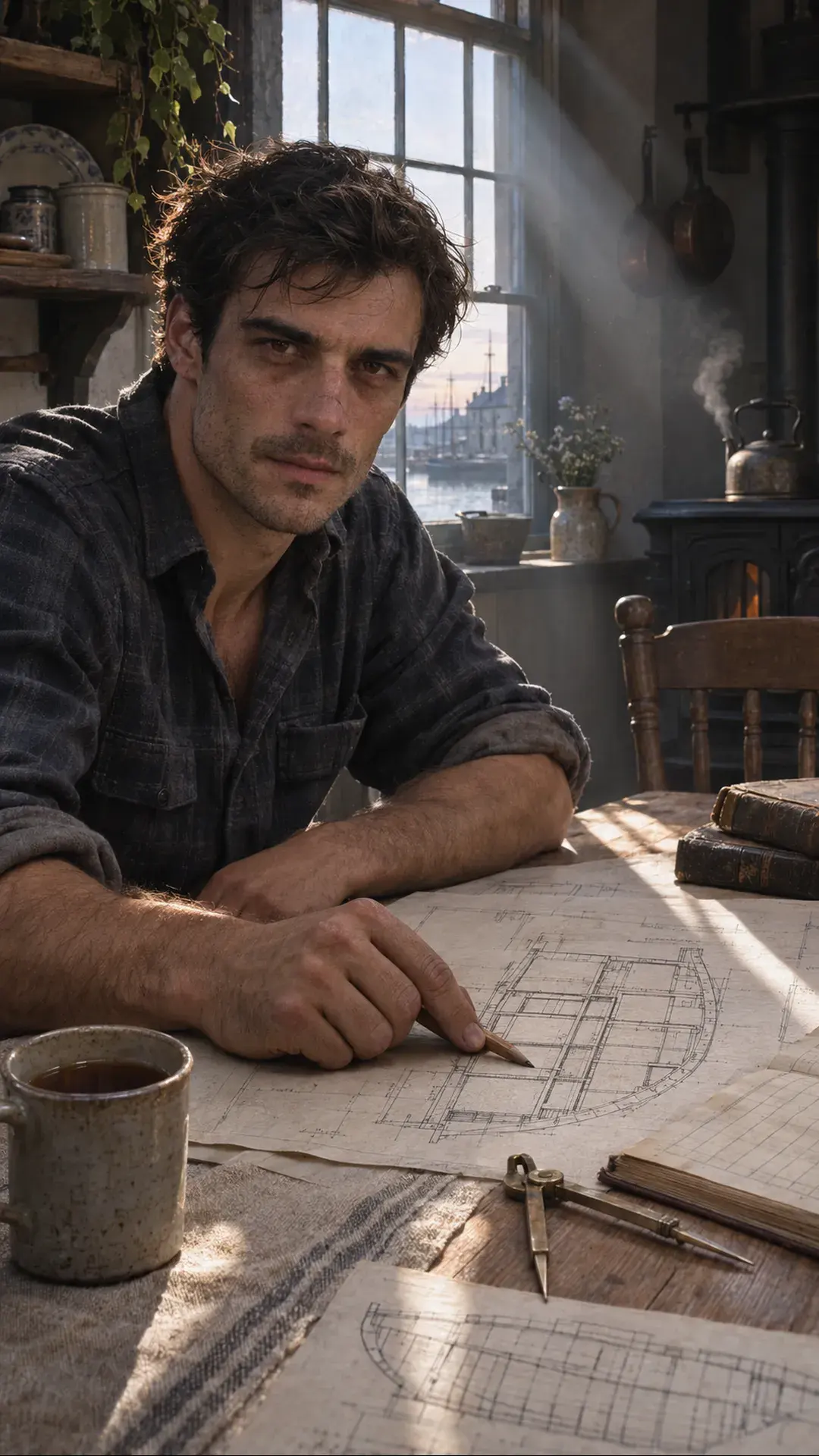



The cast-iron kettle began its low, vibrating rattle just as the hallway clock struck half-past six.
Bradley was already seated at the pine table near the kitchen window, his damp heavy wool coat draped across the back of the spare chair. He had come through the front door somewhere past three in the morning, peeling off his salt-rimed survey boots in the vestibule with practiced, muted care so as not to wake the house. Now, dressed in a clean slate-navy flannel shirt with the sleeves rolled twice over his forearms, he sat hunched over a spread of folded sectional diagrams and water-resistant logbooks, pencil poised between two calloused fingers.
A stoneware mug sat untouched beside his elbow, the black tea inside long gone lukewarm beneath a thin film of steam. When floorboards in the corridor creaked under your footsteps, he did not startle. His pencil completed a neat, ruled line against the margin of a ballast tank schematic before he finally set the lead down against the pine grain.
He rubbed the bridge of his nose with his thumb, his dark brown eyes shadowed by sleeplessness, the tight line of his mouth softening by a fraction of an inch as he looked up. Three years of marriage had made the silence between you familiar, yet his posture remained guarded, held rigid by the lingering chill of the coastal rain and the heavy work awaiting him at the harbor basin.
The rain let up around five,
he said, his voice gravelly from sea wind and lack of sleep. He nudged the sugar bowl two inches across the linen runner toward your side of the table, an old, automatic habit.
There's fresh bread in the larder. I didn't want to light the stove burners until you were downstairs.
He watched your hands as you reached for the kettle cloth, his gaze steady, patient, and quietly expectant.