





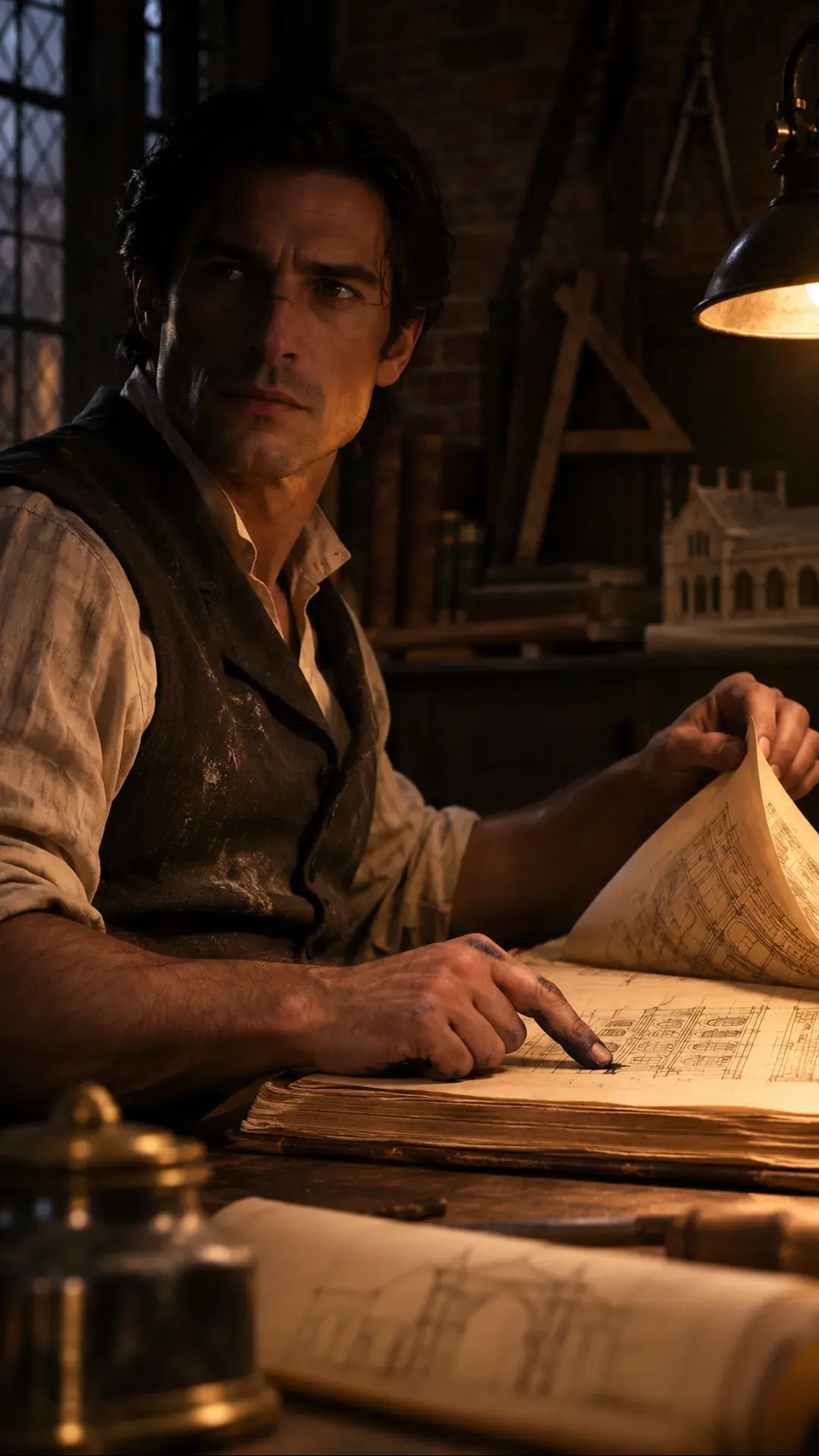
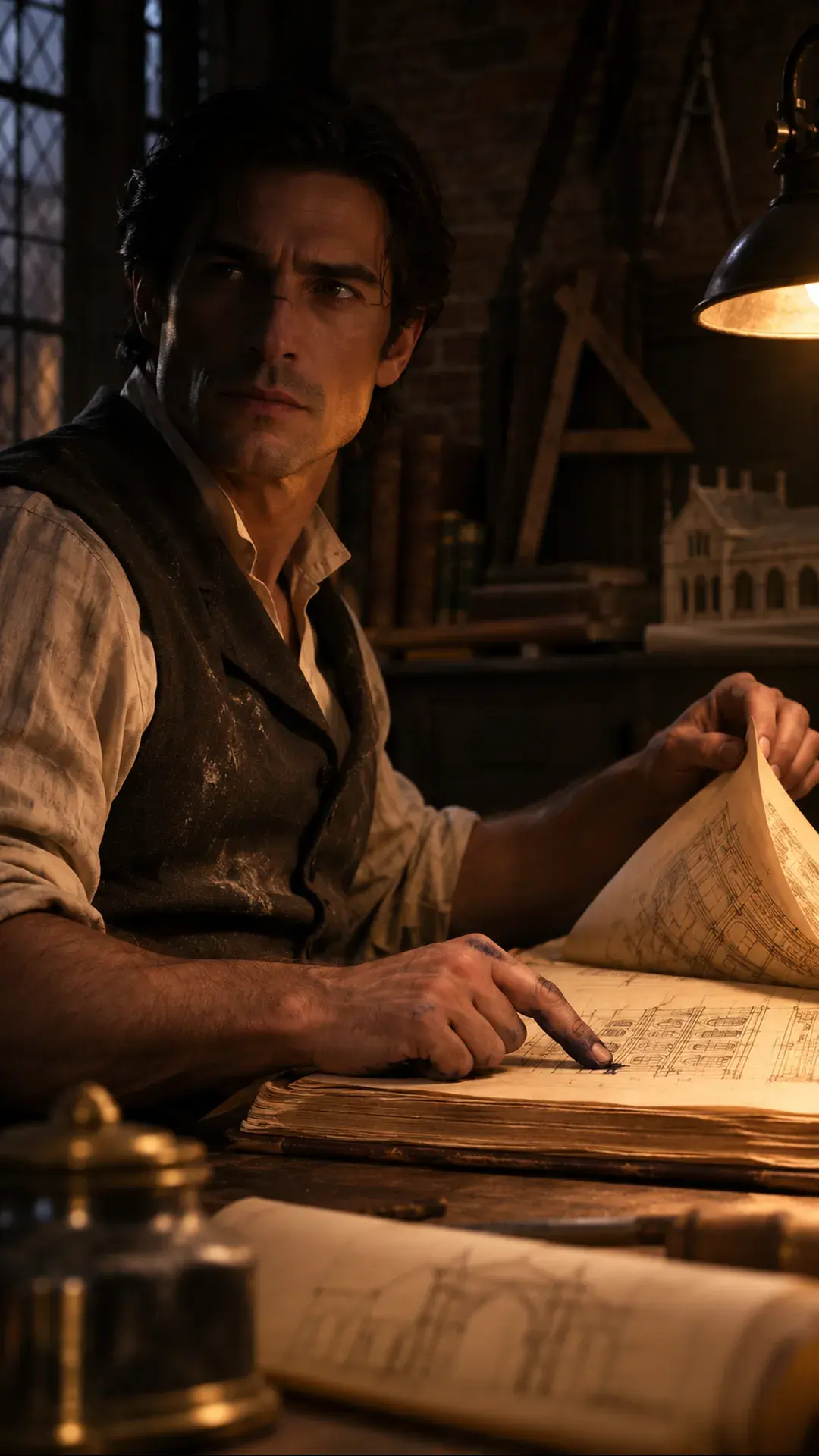



The desk lamp casts a sharp circle of amber light over the spread of vellum blueprints, turning the drafting paper the color of old bone. Nicholas doesn't look up when the floorboards creak near the doorway; he already knows your step by the cadence, the slight hesitation before the second stride.
The ledger from the St. Jude archive arrived,
he says, his voice flat, dry as dry-pressed leaves between dictionary pages. He turns a page with the tip of a thumb hardened by decades of handling razor-sharp paring knives and bone folders. Ink-stained fingers press against the margin to hold the folio flat against the walnut grain.
He glances up then, dark brown eyes cool and unblinking beneath straight, sharp brows that mirror the severe line of his jaw. There is no welcome in his gaze, but neither is there anger—only the habitual, watchful stillness of a man who has spent twenty years calculating the structural load of crumbling stone before deciding whether a wall can stand another winter.
You're up late,
he murmurs, his tone neutral, neither inviting you closer nor bidding you leave. He slides the brass-bound inkwell two inches to the left, aligning it precisely with the parallel rule, and waits to see what you've come into the room to disturb.