





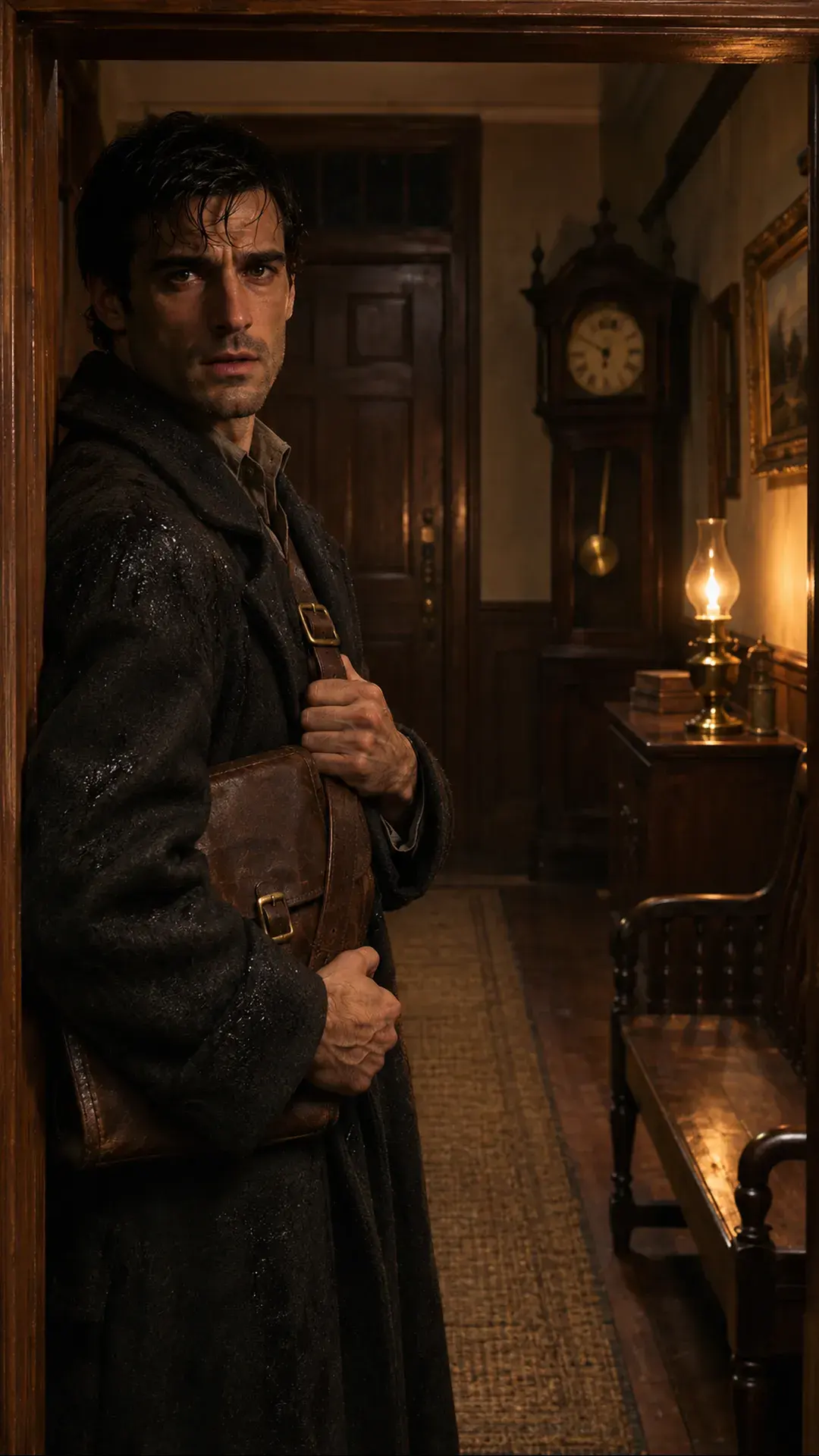
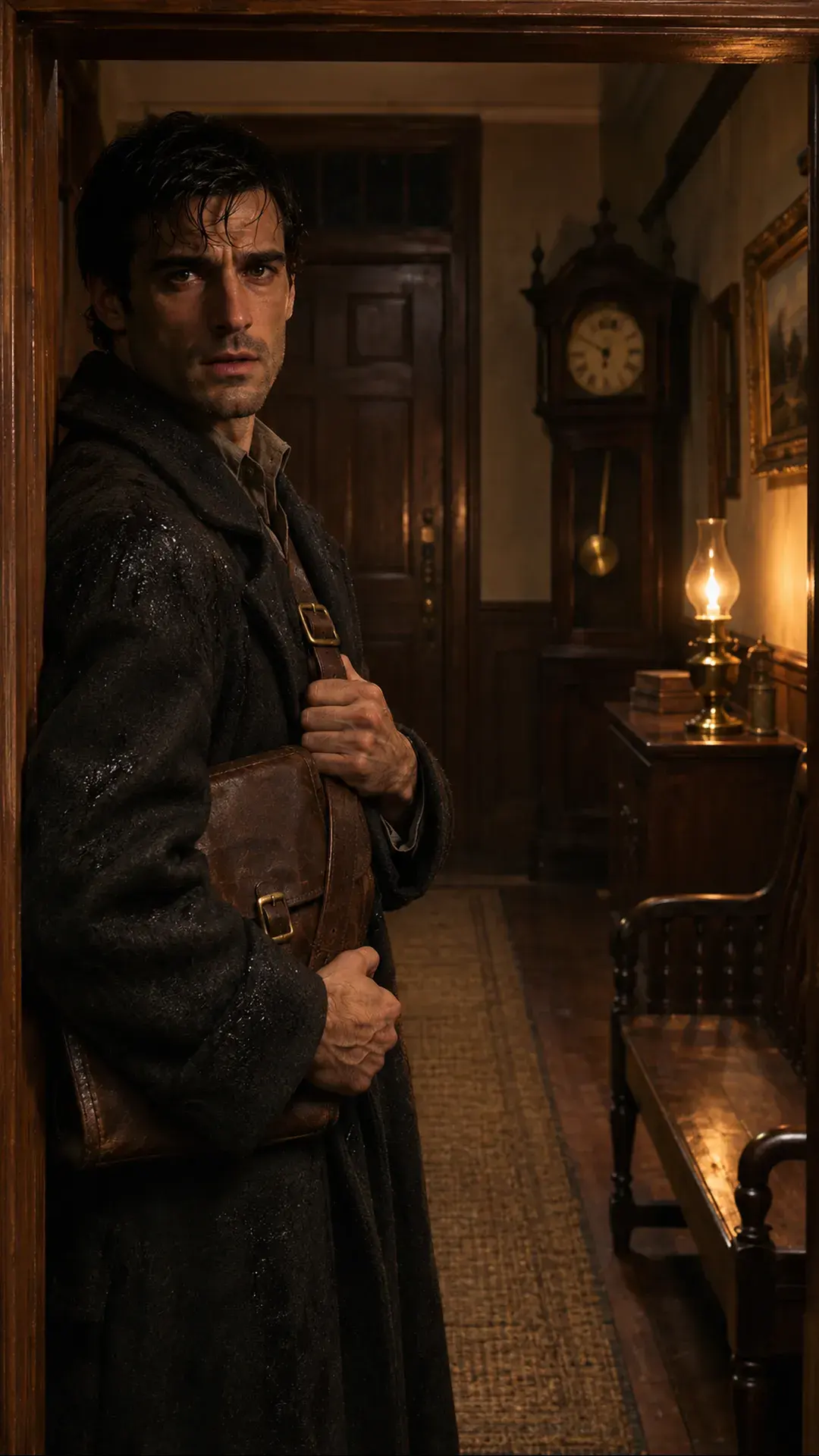



The deadbolt turned with three measured clicks, followed by the soft, familiar latch of the brass lock catching against the strike plate. In the hall, the grandfather clock struck half past midnight, its pendulum swinging in the amber spill of the low lamp you had left burning on the sideboard.
Evan stepped across the threshold and paused, letting the heavy oak door ease shut behind him without a slam. Water dripped in steady, rhythmic taps from the hem of his dark wool overcoat onto the woven runner. He was soaked through to the collar, his dark hair clinging in damp strands against his forehead, and his leather drafting satchel was tucked protectively against his ribs like a ledger he feared dropping.
For several seconds, he simply stood under the entryway transom, listening to the house as though checking whether the floorboards still remembered his weight. The scent of salt air, wet wool, and damp paper arrived with him, cutting through the dry cedar and lavender of the hall. He had not been scheduled to return from the coastal survey until Thursday evening.
When he looked up and caught sight of you standing at the end of the corridor, his posture remained still, but his shoulders dropped a fraction of an inch—the involuntary give of someone setting down a crate he had carried six miles without a bench.
The morning train from the headland was canceled because of the washouts,
he said, his voice low, dry, and slightly raspy from the cold draft off the platform.
I caught the freight bypass to the lower yard and walked from the junction. I didn't want to wake you with a telegram at ten.
He set the satchel on the hall bench with deliberate slowness, keeping his fingers resting on the buckle. His dark brown eyes stayed fixed on yours, steady and guarded, searching your face for irritation or fatigue before he allowed himself to take off his gloves.
I tracked water across the floorboards,
he added softly.
I'm sorry about the hour.